Baby Sleep Regressions by Age: 4, 8, 12, 18 Months and 2 Years

Quick answer: a sleep regression is a stretch of a few days to a few weeks when a baby or toddler who was sleeping reasonably well suddenly wakes more at night, fights bedtime or naps poorly. The ages parents hear about most are around 4 months, 8 to 10 months, 12 months, 18 months and 2 years, usually lining up with big developmental changes such as new motor skills, separation anxiety or shifting nap needs. Not every child has them, the timing is loose, and there is no medical definition of the term. Most regressions settle within one to a few weeks if you keep a steady routine, respond calmly and avoid starting new sleep habits you will not want to keep. Talk to your pediatrician if poor sleep lasts longer than a few weeks, keeps getting worse or comes with signs of illness.
Few things are as discouraging as a baby who was finally sleeping longer stretches and then, almost overnight, starts waking every hour again. This guide explains what a sleep regression really is, what tends to happen at each age, how long it usually lasts, what helps (and what tends to backfire), how to keep sleep safe during this phase and when the wake-ups deserve a call to the doctor.
What is a sleep regression?
“Sleep regression” is a popular parenting term, not a medical diagnosis. It describes a temporary period when a child’s sleep seems to go backward: more night waking, shorter naps, more crying at bedtime or early mornings. Medical News Today notes that there is no medical consensus on a definition and that little published research exists on infant sleep regressions specifically. The Cleveland Clinic makes a similar point: research has not shown regressions arriving like clockwork at a specific age for every baby.
What researchers and pediatric sleep experts do agree on is that baby sleep changes a lot in the first two years. Sleep cycles mature, nap needs drop, babies learn to roll, sit, crawl and stand, and they become more aware of when a parent leaves the room. Each of those changes can disrupt sleep for a while. The word “regression” is a little misleading, because many of these phases reflect progress, not a step back.
Signs your baby may be in a sleep regression
- More frequent night waking after a period of longer stretches
- Harder time falling asleep at bedtime or for naps
- Shorter naps or skipped naps
- More fussiness or clinginess, especially around bedtime
- Practicing new skills in the crib, like rolling, sitting up or pulling to stand
- A sudden change with no fever, rash, ear tugging or other sign of illness
Sleep regressions by age at a glance
The ages below are common reference points, not deadlines. The Sleep Foundation describes regressions as phases that can happen at any point in a child’s development, not something every child is destined to go through at a specific age.
| Age | What is often going on | What tends to help |
|---|---|---|
| About 3 to 4 months | Sleep cycles mature and become more adult-like; babies wake more fully between cycles; rolling may begin | Consistent routine, drowsy-but-awake practice, stop swaddling once rolling starts |
| About 6 months | Rolling and sitting practice, possible teething, night hunger in some babies | Plenty of floor play by day, check daytime feeds, keep night care calm and brief |
| About 8 to 10 months | Crawling, pulling to stand, separation anxiety, nap changes | Practice skills during the day, short reassuring check-ins, predictable goodbyes |
| About 12 months | Standing, cruising, first steps; some babies resist the second nap | Keep two naps until signs of readiness are consistent, adjust bedtime as needed |
| About 18 months | Independence, bedtime protests, separation anxiety, molars | Firm, warm limits, simple choices at bedtime, consistent routine |
| About 2 years | Dropping or shortening the nap, fears, big life changes (new sibling, potty training, new bed) | Adjust nap timing, keep bedtime calm, avoid stacking too many changes at once |
The 4-month sleep regression
The 4-month regression is the one most parents hear about first, and it is different from the others. Newborns sleep in short segments around the clock. By about 3 to 4 months, the Sleep Foundation explains, a baby’s sleep starts to consolidate and becomes more organized into the lighter and deeper stages older children and adults have. Because babies now surface more fully between sleep cycles, a baby who used to drift back to sleep may start waking and calling out, especially if they always fall asleep while feeding, being rocked or being held.
Medical News Today describes this phase as the beginning of a lasting change in sleep pattern rather than a short dip, which is why many families see it as a springboard into more mature sleep. It is also a common time to start practicing putting your baby down drowsy but awake for at least some sleeps, so they have the chance to link sleep cycles on their own.
Around this age many babies also start trying to roll. The American Academy of Pediatrics (AAP) advises stopping swaddling as soon as your baby shows any signs of trying to roll over. Our guide on when babies roll over covers that transition in detail.
The 8- to 10-month sleep regression
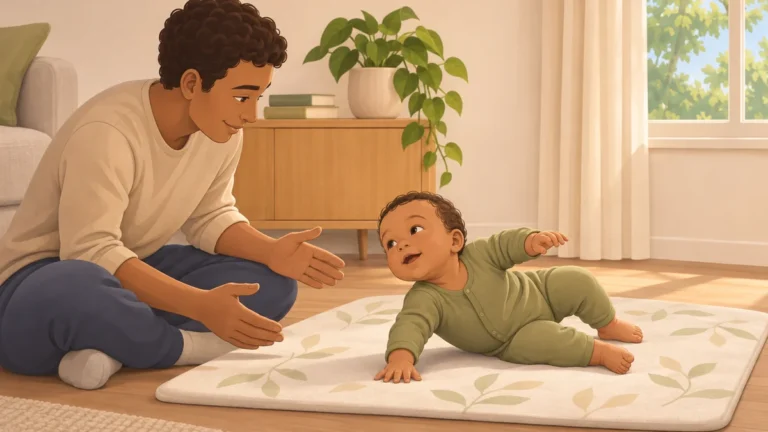
Between 8 and 10 months, babies are often crawling, pulling up to stand and cruising along furniture. The Sleep Foundation lists teething, separation anxiety, overstimulation and new physical abilities as possible causes of the 8-month regression. A baby who has just learned to pull up may stand in the crib, cry and not yet know how to get back down.
Separation anxiety typically shows up in this window, too. Your baby now understands that you still exist when you leave the room, and may protest loudly. Our article on separation anxiety in babies explains why it happens and how to handle goodbyes at bedtime.
What helps most at this age is daytime practice. Give lots of floor time so your baby can practice crawling, pulling up and, importantly, lowering themselves back down by bending their knees. Skills that get plenty of daytime practice tend to be less exciting to rehearse at 2 a.m.
The 12-month sleep regression
Around the first birthday, many babies are cruising or taking first steps, and some start refusing their second nap. That can look like a regression, but dropping to one nap too early often leads to an overtired baby who sleeps worse at night. Most babies make the switch from two naps to one somewhere in the first half of the second year. If your baby skips a nap now and then but still clearly needs it on most days, it is usually worth holding onto two naps a little longer and shifting the timing. Our wake windows by age chart can help you find a better nap schedule.
The 18-month sleep regression
The Sleep Foundation lists several factors that may be involved around 18 months: resistance to bedtime tied to a growing sense of independence or evening overstimulation, restlessness from new physical abilities, separation anxiety, teething discomfort and changes to sleep schedules. Signs include bedtime protests, crying when a parent leaves, more night waking and harder settling. It also notes that many toddlers do not have an 18-month regression at all, and that symptoms rarely last more than a few weeks.
Toddlers this age want control. Offering small, limited choices (“Do you want the blue pajamas or the green ones?” “This book or that one?”) gives them a sense of control without moving bedtime. Calm, predictable limits work better than long negotiations.
The 2-year sleep regression
Around age 2, sleep disruptions often come with nap changes, new fears (such as of the dark) and big life events like a new sibling, starting child care, potty training or moving out of the crib. If you can, avoid stacking several of these changes in the same few weeks. If your toddler is climbing out of the crib, safety comes first; our guide to the Montessori floor bed covers setting up a child-safe room for a big-kid bed.
How long does a sleep regression last?
Most last somewhere between a week or two and a few weeks. The Cleveland Clinic says regressions typically last a week or two before children get back on track. The Sleep Foundation says the 18-month regression rarely lasts more than a few weeks. If sleep has been poor for longer than that, it is worth looking for other causes, such as a schedule that no longer fits, a sleep habit that has become hard to undo, illness, reflux, allergies or snoring.
What helps during a sleep regression
- Keep the bedtime routine the same. A short, predictable sequence (bath, pajamas, feed, book, song, lights out) is one of the most effective tools for helping babies settle. See our bedtime routine guide for sample routines by age.
- Watch timing. Overtiredness makes settling harder. As babies grow, they can stay awake longer between naps; an early bedtime can help on days with short naps.
- Respond calmly and briefly at night. Comfort your baby, but keep lights low, voices quiet and play off the table.
- Practice new skills during the day. Rolling, sitting, crawling and standing practice on the floor can make those skills less novel at night.
- Be careful with new habits. It is completely fine to give extra comfort. Just think twice before starting habits you will want to undo in three weeks, such as a new night feed for a baby who had stopped needing one, or bringing a baby into an adult bed.
- Keep the room sleep-friendly. Dark, quiet, comfortably cool and boring.
- Look after yourself. Take turns with a partner if you can, nap when possible and ask for help. Sleep regressions are hard on parents too.
If your baby was sleeping long stretches before, our guide on when babies sleep through the night explains what is normal by age, so you can tell a temporary dip from a realistic expectation.
Keep sleep safe during a regression
Exhausted parents are more likely to fall asleep holding a baby on a sofa or armchair, which is one of the most dangerous sleep situations. The AAP and the Safe to Sleep campaign from the National Institutes of Health recommend:
- Place your baby on their back for every sleep, naps included.
- Use a firm, flat sleep surface with only a fitted sheet: no pillows, bumpers, blankets or soft toys.
- Share a room, not a bed, ideally for at least the first 6 months.
- Stop swaddling as soon as your baby shows signs of trying to roll.
- Once your baby can roll both ways on their own, you do not need to flip them back if they roll onto their tummy, but always place them down on their back.
- If you feel yourself nodding off while feeding or holding your baby, put them down in their own safe sleep space.
When to call your pediatrician
Most sleep regressions are a normal, temporary part of development. Call your child’s pediatrician if:
- poor sleep lasts longer than a few weeks or keeps getting worse;
- your baby has a fever, seems to be in pain, pulls at their ears, has a rash or is unusually hard to comfort;
- your baby is feeding much less, has fewer wet diapers or is not gaining weight as expected;
- you notice loud snoring, gasping, long pauses in breathing or very noisy breathing during sleep;
- your baby loses skills they used to have;
- you are struggling to cope with exhaustion or feel low, anxious or overwhelmed. Your own health matters, and your doctor can help.
Call emergency services right away if your baby has trouble breathing, turns blue or is very difficult to wake.
Frequently asked questions
Do all babies have sleep regressions?
No. Sleep patterns develop differently for every child. Some babies have obvious rough patches around the classic ages, some have them at other times, and some barely seem to have them at all.
Is the 4-month sleep regression permanent?
The change in sleep structure around 4 months is permanent, because your baby’s sleep is maturing. The rough patch usually is not. Once babies get used to linking sleep cycles, many families see sleep improve again.
Should I start sleep training during a regression?
Many families prefer to wait until a regression passes or a baby is healthy and settled before starting a structured sleep-training method. If you plan to sleep train, talk with your pediatrician about your baby’s age, feeding and health first.
Can teething cause a sleep regression?
Teething discomfort is one of the factors experts mention, especially around 8 and 18 months. True teething discomfort usually lasts a few days around a tooth coming through. Ask your pediatrician before giving any pain reliever, and avoid teething necklaces and numbing gels, which are not considered safe for babies.
How do I know if it is a regression or something else?
A regression usually appears fairly suddenly, coincides with a developmental change and improves within a few weeks. Fever, pain, breathing changes, feeding problems or poor sleep that lasts for months point to something else and are worth discussing with your pediatrician.
Sources
- Sleep Foundation. 4-Month Sleep Regression: Causes, Signs, and Tips for Coping.
- Sleep Foundation. 8-Month Infant Sleep Regression.
- Sleep Foundation. 18-Month Infant Sleep Regression.
- Cleveland Clinic. Infant Sleep Regression and How To Help.
- Medical News Today. Sleep regression: Stages, definition, and more.
- HealthyChildren.org (AAP). How to Keep Your Sleeping Baby Safe: AAP Policy Explained.
- HealthyChildren.org (AAP). Swaddling: Is it Safe for Your Baby?
- HealthyChildren.org (AAP). Getting Your Baby to Sleep.
- Safe to Sleep (NICHD, National Institutes of Health). Safe to Sleep campaign.
This article was researched and written by the BabyU Editorial Team following our Editorial Policy. It is general educational information and does not replace advice from your child’s pediatrician or another qualified professional.