8 Fall Sensory Bin Ideas for Toddlers

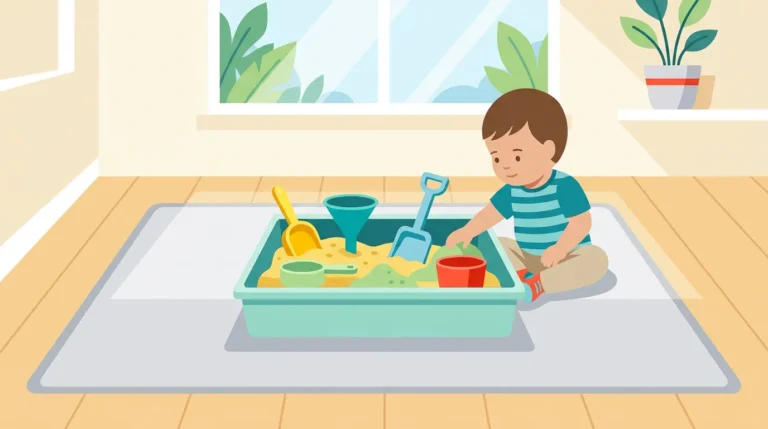
A fall sensory bin does not need dyed rice, dried beans, or a shopping cart full of miniature decorations. Large fabric leaves, a sturdy gourd, a basket, a sponge, or one cup can create a clear seasonal invitation while avoiding many of the small fillers that are poorly suited to toddlers who still mouth objects.
These eight fall sensory bin ideas cover touch, movement, pretend play, observation, pressure, and water. The comparison table helps you choose by setup time, mess, and reusability; the age notes show how to simplify without making the activity less meaningful.
Reviewed and updated July 26, 2026 against current CPSC small-parts and water-bead information, NHS water-play guidance, AAP/HealthyChildren toy guidance, and NAEYC toddler-environment guidance. This article is educational and does not replace individualized medical or developmental advice.
Compare the eight fall setups
| Idea | Best for | Setup | Mess | Reuse |
|---|---|---|---|---|
| leaf texture match | quiet touch and matching | 2 minutes | low | high with fabric leaves |
| gourd roll and stop | movement and cause-and-effect | 2–3 minutes | low | medium |
| felt apple orchard | pretend picking and carrying | 3–5 minutes | low | high |
| autumn breeze basket | visual movement without wet textures | 1–2 minutes | low | high |
| harvest market | sorting and practical pretend play | 3–5 minutes | low | high |
| fall nature observation tray | looking, touching, and vocabulary | 5 minutes | low | low with real leaves |
| pumpkin dough impressions | pressing and resistance | 2–3 minutes | medium | medium |
| fall-color water transfer | squeezing and pouring | 3–5 minutes | medium | high for tools |
Most dry setups cost nothing when you reuse washcloths, a basket, cardboard, cups, and existing age-rated toys. Fabric leaves or felt food require an optional purchase, but they are not necessary. Compare durability, washability, seam quality, age label, and whether the same item will work outside the season before buying a themed set.
Choose materials for how the child actually explores
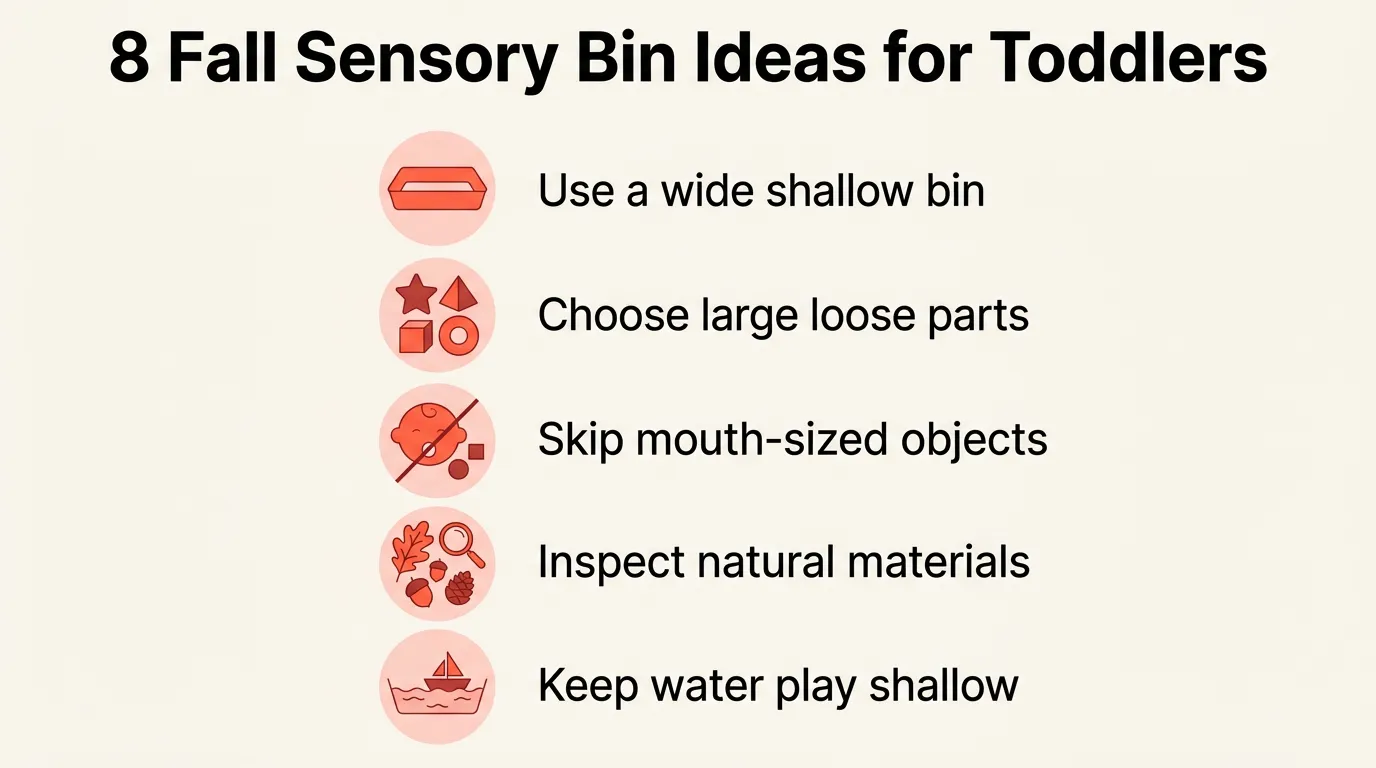
A child who calmly moves large fabric leaves can manage a different setup from a child who chews, throws, or immediately dumps every object. Start with three to five large items, one stable container, and one action. Add complexity only after the first version is comfortable and safe.
The CPSC bans hazardous small parts in products intended for children under three. Its test considers whether an object fits completely into a small-parts cylinder that approximates a young child’s fully expanded throat. Read the CPSC small-parts guidance.
- Do not use acorns, dried beans, rice, kernels, seeds, buttons, beads, small pom-poms, miniature figures, marbles, loose magnets, or button batteries.
- Do not use water beads. The CPSC urges caregivers to remove water beads from environments with children because ingestion can cause serious injury.
- Inspect toys for cracks, loose seams, exposed magnets, peeling paint, or pieces that can detach. Follow the manufacturer’s age label.
- Avoid long scarves, strings, cords, loops, and narrow ribbons. Use short, broad, intact textiles and supervise them from start to finish.
- Do not collect berries, mushrooms, seeds, unknown plants, sharp sticks, splintered wood, or moldy natural materials. Wash hands after handling outdoor finds.
Water needs constant, arm’s-reach adult supervision. Use a shallow amount and empty it immediately afterward. The NHS warns that a young child can drown in less than 5 cm of water in its baby and toddler play guidance.
1. Leaf texture match
Materials: three or four palm-size fabric leaves or large fabric shapes, two short washcloths with different textures, and a shallow tray.
Place one leaf on each cloth, then let the child lift, compare, hide, and move them. Describe what is happening: soft, bumpy, under, on, same color, or different. Matching is optional; repeated lifting and replacing is a complete activity.
For a younger or frequent-mouthing toddler: use one large leaf and one cloth. For an older toddler: sort two colors or match a leaf to a same-color cloth. Remove any textile that frays or sheds.
2. Gourd roll-and-stop bin
Materials: one smooth, firm gourd too large to mouth, a wide shallow cardboard tray or low-sided bin, and a folded towel.
Roll the gourd across the tray and use the towel as a soft stop. The child can push, chase within the tray, lift, or return it. Compare a rounder gourd with a longer one only if both are intact and manageable; different shapes roll in different ways.
For a sitter: keep the tray within reach and roll a short distance. For a walker: place the tray at the end of a short, clear delivery route. Inspect produce before play and discard anything cracked, soft, leaking, or moldy. This is play material during the session, not food to serve afterward.
3. Felt apple orchard harvest
Materials: a simple cardboard tree picture, several palm-size felt or age-rated play apples, and one basket.
Place the apples on and around the tree. Invite the child to pick one and carry it to the basket. The repeated reach, grasp, carry, and release creates a familiar harvest routine without real fruit becoming bruised or dirty.
Make it simpler: use three apples of one color and place the basket beside the tree. Add challenge: use red and green apples with two baskets, or let the child bring the full basket to a pretend kitchen. Choose securely made pieces, check seams often, and avoid small craft cutouts.
4. Autumn breeze basket
Materials: two or three short, broad toddler play scarves or lightweight fabric squares, large fabric leaves, and a sturdy basket.
Lift a fabric square, wave it slowly, drop it, or place a leaf on top and watch what happens when the cloth moves. Words such as float, flutter, fast, slow, light, and heavy connect language to visible changes.
Make it quieter: use one cloth while seated. Add movement: carry a leaf across the room on the fabric. Keep the floor clear, avoid cords and loops, and put all textiles away when supervised play ends.
5. Harvest market sorting bin
Materials: large age-rated play produce, two sturdy bowls or baskets, and a lightweight reusable shopping bag with short handles.
Let the child shop, carry, unload, and restock. Give one sorting idea at a time: apples in one basket and pumpkins in another, or everything red in the bag. A picture card beside each basket can show the choice without repeated verbal directions.
For a younger toddler: use one bag and three large items. For an older toddler: add a pretend checkout bowl or a two-step prompt—choose, then deliver. Do not require correct sorting; familiar pretend actions are the main value.
The AAP notes that traditional pretend, manipulative, art, language, and movement toys can support different kinds of play and that the best choice matches a child’s current abilities. See HealthyChildren.org’s toy-buying guide.
6. Fall nature observation tray
Materials: two or three large freshly fallen leaves from known non-toxic plants, a white tray, and an age-rated child magnifier if available.
Use the tray for close looking rather than filling and dumping. Compare veins, edges, color patches, and smooth or bumpy surfaces. Place a leaf under paper and rub with a jumbo crayon if the child already uses crayons without mouthing them.
For a child who avoids touch: keep leaves on the tray and point with the magnifier. For an older toddler: arrange leaves from light to dark or match two similar shapes. Do not include acorns, berries, seeds, mushrooms, soil, prickly cones, sharp stems, or unknown plants. Discard leaves as soon as they become damp, brittle, or moldy, and wash hands.
7. Pumpkin dough impressions
Materials: a small amount of commercially labeled, age-appropriate dough, one large pumpkin cutter or toddler roller, and a rimmed tray.
Press, flatten, roll, and lift. A large fabric leaf can make a texture impression, but remove it if dough clings to threads. There is no need to produce a recognizable pumpkin; changing the material is the activity.
For a child who dislikes sticky hands: use a roller or cutter first. Add challenge: invite the child to steady the tray with one hand while pressing with the other. Non-toxic dough is not edible. Avoid essential oils, loose spices, glitter, and small seasonal decorations.
8. Fall-color water transfer
Materials: a wide shallow bin, a small amount of plain water, one large orange or yellow sponge, two unbreakable cups, and a towel.
Soak the sponge, lift it, squeeze over a cup, and pour the water back. The changing weight and shape of the sponge provide the sensory interest, so food dye and loose floating fillers are unnecessary.
For a first water bin: use one sponge and one cup. For an older toddler: transfer between two cups or compare a dry and wet sponge. Stay within arm’s reach, keep your full attention on the child, wipe spills promptly, and empty the bin immediately when play ends.
Adapt for sensory preferences, age, and groups
No texture is universally calming, educational, or appropriate. Offer genuine choices: a dry cloth instead of water, a tool instead of bare hands, or watching before joining. Keep a towel nearby and let the child leave. Sensory play is an invitation, not treatment; follow any individual plan from the child’s qualified clinician or early-intervention team.
- Frequent mouthing: use one or two large, durable items and stop when they go into the mouth.
- Roughly 12–23 months: focus on one action—lift, roll, carry, press, or squeeze.
- Roughly 24–36 months: add one simple sort, pretend role, or two-step prompt while keeping materials safely large.
- Two or more children: use separate small trays or duplicate the main tool. Defined spaces reduce crowding better than one large shared pile.
NAEYC’s description of high-quality toddler environments emphasizes organized areas for quiet and active play, secure spaces, and materials children can explore with their senses. See what a high-quality toddler program looks like.
Create a September-to-November rotation
| Month | Use what is easy to find | Reuse from the previous month | Swap one element |
|---|---|---|---|
| September | apples, red and yellow cloths | baskets and cups | set up the orchard or market |
| October | pumpkins, gourds, orange dough | same tray and tools | add rolling or pumpkin impressions |
| November | large leaves, brown and gold fabrics | same basket and sponge | use breeze, nature, or water transfer |
Change one material rather than rebuilding the whole bin. Clean plastic tools and cups can serve all three months. Launder textiles as needed. Store only completely dry materials, and discard damp natural items instead of saving them.
For a general setup framework, compare sensory-bin containers, fillers, tools, and cleanup. For a larger non-seasonal idea bank, see 45 sensory bin ideas for toddlers. If you want pumpkins without frightening themes, the not-scary Halloween sensory guide focuses on gentle seasonal symbols and intensity.
Frequently asked questions
What is a cheap filler instead of rice or beans?
Skip loose filler entirely. Use washcloths, large fabric leaves, a sponge, cups, a basket, or large age-rated play food already at home. These materials still support lifting, hiding, carrying, squeezing, and sorting while reducing scattered small objects.
What should I do if my toddler mouths the materials?
End or simplify the activity. Switch to one or two larger, durable items and stay close enough to intervene immediately. Do not replace one small filler with another, and do not assume supervision makes rice, beans, kernels, beads, acorns, or small craft pieces appropriate.
How can a child participate without touching messy textures?
Choose the leaf match, gourd roll, orchard, breeze basket, market, or observation tray. Offer a scoop, cup, roller, brush, or magnifier, keep a towel nearby, and allow watching. Do not pressure a child to put hands in water or dough.
How long should a fall sensory bin last?
There is no target time. One roll, several leaf deliveries, or a few sponge squeezes can be enough. Stop when interest fades, materials are mouthed or thrown, an item is damaged, or the child signals discomfort. Water must be emptied immediately, even after a very short turn.
Sources and review notes
Safety and play claims were reviewed on July 26, 2026. Primary references:
- CPSC: Small Parts Ban and Choking Hazard Labeling
- CPSC: Water Beads Information Center, including the March 2026 standard update
- NHS: Baby and Toddler Play Ideas, reviewed August 27, 2024
- HealthyChildren.org: Toy Buying Tips for Babies & Young Children
- NAEYC: What Does a High-Quality Program for Toddlers Look Like?