45 Sensory Bin Ideas for Toddlers and Preschoolers

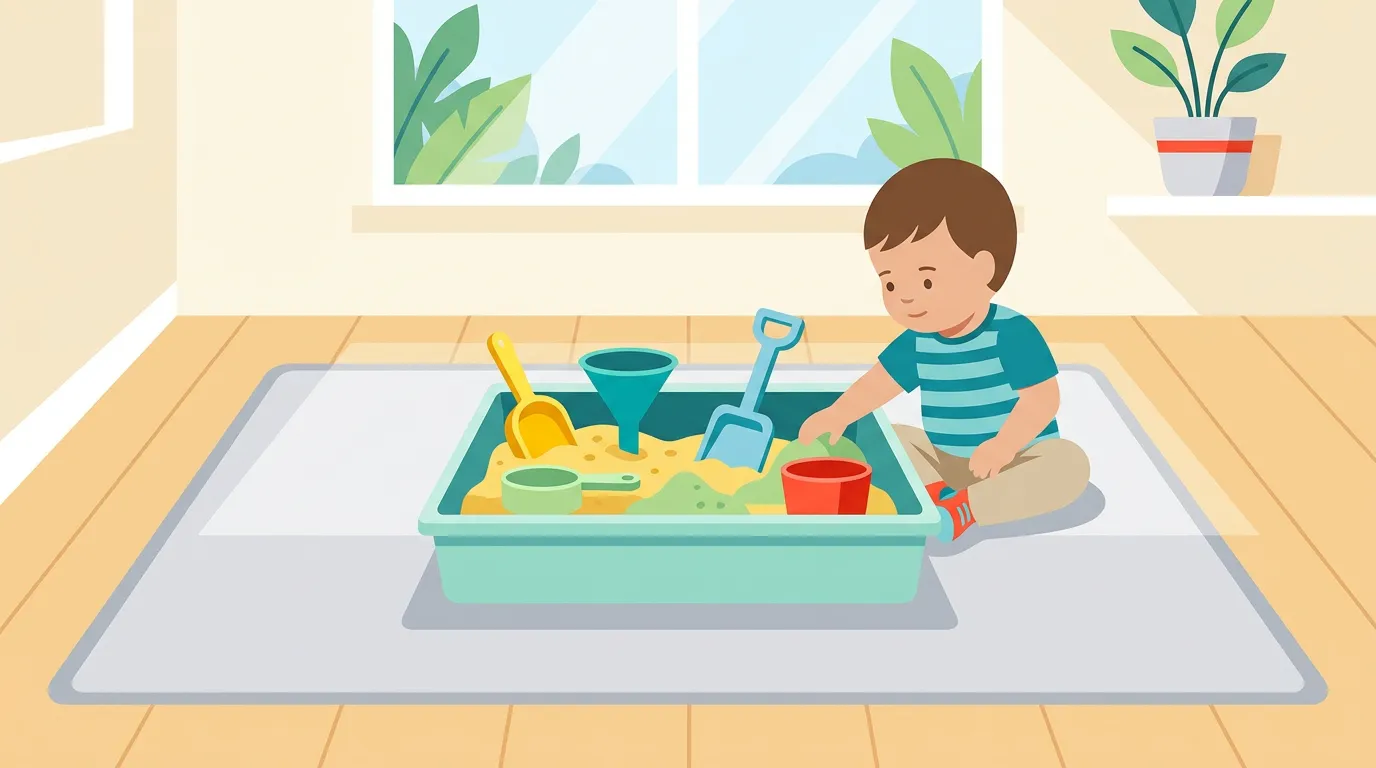
A sensory bin can be as simple as three washcloths and a cup. The container gives play a boundary; the child supplies the experiment. Pouring, hiding, washing, pressing and pretending matter more than elaborate decoration.
This collection includes 45 planning-ready ideas, from large-object bins for toddlers who still mouth materials to loose-filler setups for older preschoolers. None is presented as a personal home test. Each idea has instead been reviewed against current CPSC, AAP, CDC, Head Start and NAEYC guidance, then labeled by the ability it requires and the cleanup it creates.
Choose the right section in 30 seconds
| If your child… | Start here | Skip for now |
|---|---|---|
| Still mouths toys or filler | Ideas 1–9: large-object, no-loose-filler bins | Rice, beans, pasta, pom-poms, beads, coins and small toys |
| Is 3+ and reliably keeps play material out of the mouth | Ideas 10–18: dry filler and molding material | Anything below a product’s age label or difficult to supervise |
| Enjoys pouring or getting messy | Ideas 19–27: water, paint and wet sand | Water when an adult cannot stay within arm’s reach |
| Likes stories and familiar routines | Ideas 28–36: pretend-play bins | Prop-heavy scenes; begin with two or three objects |
| Wants a theme | Ideas 37–45: nature, travel and seasonal scenes | Decorative small parts that do not add play value |
These are conservative starting points, not promises based on age alone. A 3-year-old who still mouths objects needs the large-object section. A younger toddler can enjoy water or a simple pretend scene when every object is suitable and an adult stays close.
Safety rules before any filler goes in
- Small parts: The CPSC treats accessible small parts in products intended for children under 3 as choking, aspiration and ingestion hazards. Do not assume that supervision makes beads, rice or small toys appropriate for a mouthing toddler.
- Water beads: Exclude them entirely. Current CPSC guidance tells caregivers not to allow children to play with water beads and urges their removal from environments with children because ingestion or insertion can cause severe injury.
- Water: Stay within arm’s reach, keep your attention on the child and empty the bin immediately after play. The AAP recommends close, constant touch supervision for toddlers around water.
- Food fillers: Check allergies and prevent eating during play. CDC guidance for early-care and school settings recommends avoiding known allergens in classroom arts, crafts and other activities.
- Paint and dough: Follow the product’s age and hazard labels. HealthyChildren.org recommends art material marked as conforming to ASTM D4236 and carrying the Approved Product seal; “non-toxic” is not the same as food.
- Condition: Inspect every tub, tool and toy for cracks, sharp edges, loose batteries, detachable magnets and wear. NAEYC recommends well-made, shatter-resistant, easily cleaned play material and frequent condition checks.
If you need help choosing a container, filler depth or tools, read How to Make a Sensory Bin first. That guide also includes a measured colored-rice method.
What the time and cost labels mean
| Type | Typical adult setup | Cleanup load | Likely spend |
|---|---|---|---|
| Large household objects | 2–5 minutes | Low; return or wash a few items | Often none if you use what you own |
| Dry loose filler | 5–10 minutes; colored rice takes separate adult prep and drying | Medium to high; grains travel | Low to medium depending on filler and tub size |
| Water or wet play | 5–10 minutes | Medium to high; towel and immediate emptying needed | Usually low |
| Themed scene | 5–15 minutes | Depends on the base | Low when existing toys and cardboard do the work |
Times are planning estimates, not tested performance claims. Prepare cleanup before play: towel for water, brush and dustpan for filler, and a lidded container only for material that is clean and completely dry.
9 large-object bins for toddlers who mouth materials
These setups avoid loose small filler. Stay present, use intact one-piece objects and remove anything the child chews apart.
- Washcloth pull bin. Tuck three clean washcloths into an open box with one corner showing. Invite pulling, stuffing and hiding a large cup. Prep: 2 minutes. Cleanup: low; wash mouthed cloths.
- Kitchen-tool discovery. Add a large silicone spatula, wooden spoon, whole sponge and nesting cup to an empty tub. The child can tap, stack or carry them. Prep: 2 minutes. Cleanup: low.
- Block drop and dump. Pair three large age-labeled blocks with a broad plastic bowl. “Can it go in?” is enough of an invitation. Prep: 1 minute. Cleanup: low.
- Soft-ball roll bin. Put two large soft balls in a wide empty tub and tilt it gently with the child to make them roll. Make sure neither ball can fit in the mouth. Prep: 2 minutes. Cleanup: low.
- Dry sponge press. Offer two whole sponges with different textures and one large cup. Press, stack and squeeze without water. Retire torn sponges. Prep: 1 minute. Cleanup: very low.
- Cardboard flap box. Fold large pieces of clean corrugated cardboard into an empty bin so the child can lift and close “doors.” Remove staples, tape and torn pieces. Prep: 5 minutes. Cleanup: low.
- Sock basket. Place four clean adult socks and a small laundry basket in the tub. Gather, carry and find a matching pair; avoid socks with detachable decorations. Prep: 2 minutes. Cleanup: low.
- Texture mat stack. Layer a silicone placemat, washcloth and small bath mat in a broad bin. Let the child lift, pat and rearrange them on the floor. Prep: 3 minutes. Cleanup: low.
- Damp-cloth toy wipe. Add one large washable toy, one damp washcloth and one dry towel. Wipe and dry without a standing water container. Prep: 3 minutes. Cleanup: low.
9 dry-filler bins for children 3+ who do not mouth materials
Use these only when the child reliably keeps filler out of the mouth, every toy suits the child’s age and an adult actively supervises. Younger siblings and pets should not have access to spills.
- Rice construction site. Add a shallow layer of plain rice, one scoop, one cup and two age-appropriate vehicles. Move “loads” from one side to the other. Prep: 5 minutes. Cleanup: high.
- Colored-rice pour lab. Use two colors of completely dry rice, a clear cup and funnel that will not jam. Compare layers before mixing them. Prep: 5 minutes after the rice is made. Cleanup: high.
- Large-pasta scoop. Pair dry pasta with a ladle and two bowls. Sort two shapes or simply transfer. Check wheat allergies and discard cracked, dirty or damp pasta. Prep: 4 minutes. Cleanup: medium.
- Bean farm. Use dry beans as “soil” with two age-appropriate farm animals and a wide scoop. Beans are hard small objects, so reserve this for a non-mouthing child 3+. Prep: 5 minutes. Cleanup: high.
- Oat bakery. Add rolled oats, a scoop and two large silicone baking cups. Treat the oats as play material, not food, and check allergy concerns. Prep: 4 minutes. Cleanup: high and dusty.
- Shredded-paper rescue. Hide three age-appropriate animals in clean matte paper strips. Avoid staples, receipts and contaminated packaging. Prep: 7 minutes. Cleanup: medium; recycle clean paper.
- Play-sand tracks. Use a child play-sand product according to its label with one vehicle and a rake. Keep dust down and use a mat or outdoor space. Prep: 5 minutes. Cleanup: high.
- Kinetic-sand garden. Follow the product’s age label, then add two large faux flowers and a scoop. Skip loose stones and miniature pots. Prep: 5 minutes. Cleanup: medium.
- Dough stamp tray. Put age-labeled modeling dough in the bin with one roller and two chunky stamps. Check ingredients for allergens and prevent eating. Prep: 4 minutes. Cleanup: low.
9 water, paint and messy-play bins
Set these on the floor or a stable low surface, place a towel beside the bin and keep the child within arm’s reach whenever water is present.
- Two-cup pouring. Use a small amount of water and two large cups. Start with one cup if tipping becomes frantic. Prep: 3 minutes. Mess: medium.
- Sponge toy wash. Add one whole sponge, two large washable toys and shallow water. Wash, squeeze and dry. Remove a sponge that tears. Prep: 5 minutes. Mess: medium.
- Large-object sink or float. Choose three oversized washable objects with no detachable parts. Place one at a time in water and describe what happens without predicting for the child. Prep: 5 minutes. Mess: medium.
- Toy laundry. Wash two doll cloths or washcloths, squeeze them and hang them over the bin edge. Do not add cords or clips. Prep: 5 minutes. Mess: high.
- Water-wall painting. Put a wide brush and a small cup of water in the bin, then paint an outdoor wall or dark plastic tray. Watch the marks evaporate. Prep: 3 minutes. Mess: low.
- Two-color water mix. Offer two small cups of colored water and one empty clear cup. Food coloring can stain, so protect surfaces and begin pale. Prep: 5 minutes. Mess: high.
- Large ice-block reveal. Freeze a shallow block of colored water, then place the single block in the bin with a wide brush and water. Remove broken pieces before they become mouth-sized. Prep: 5 minutes plus freezing. Mess: medium.
- Bubble-foam scoop. Use an age-appropriate bubble product, water, foam and two large scoops. Keep foam from eyes and mouths and stop for irritation. Prep: 7 minutes. Mess: high.
- Wet-sand road. Combine labeled play sand with a little water and one large vehicle. Make tracks, then smooth them away. Prep: 5 minutes. Mess: high.
Head Start recommends a defined, easy-to-clean messy-play space and following the child’s cues. A child may watch, use a tool or decline a texture. Never place their hands into paint, foam or sand.
9 pretend-play bins built around familiar actions
A convincing theme needs only a setting, two or three props and a problem the child can solve. Reduce the prop count before buying more.
- Construction delivery. Use an empty bin, three large blocks, one truck and a cardboard “site.” Ask, “Where should this block go?” Add a labeled filler only for an older child who can use it safely. Mess: low.
- Farm morning. Lay a green washcloth in the bin with two large animals and a cup as a “feed bucket.” Move the animals, cover them or invent breakfast. Mess: low.
- Veterinary checkup. Add two large animal toys, a washcloth and cardboard “bed.” Pretend to look, wipe and rest. Skip miniature medical-kit parts. Mess: low.
- Grocery delivery. Use large age-appropriate play food, a basket and two empty clean cartons. Pack, deliver and unpack. Remove caps, tabs and damaged packaging. Mess: low.
- Bakery counter. Pair age-labeled dough with two large silicone molds and a spoon. Make, serve and flatten pretend bread. Check dough allergens. Mess: low.
- Garden planting. Press large faux flowers into labeled kinetic sand or dough. For a younger child, use rolled washcloths as “soil” instead. Mess: low to medium.
- Car garage. Put two large vehicles in an empty bin with cardboard parking spaces. Park by picture, color or choice; there is no need to sort correctly. Mess: low.
- Mail route. Use three large postcards or pieces of cardstock and two open cardboard boxes. Deliver, collect and deliver again. Avoid envelopes with small seals or fasteners. Mess: low.
- Pretend soup kitchen. Offer an empty pot, ladle and large pretend ingredients in a dry bin. For water “soup,” stay within arm’s reach and empty it immediately. Mess: low dry, high wet.
9 nature, travel and seasonal sensory-bin themes
- Pond. Use a blue towel, two large frogs and a cup “lily pad.” For a wet version, add shallow water only with touch supervision. Prep: 4 minutes.
- Beach. Put a blue cloth beside labeled play sand with one large cup and shovel. A no-sand version uses tan and blue towels. Avoid small shells and stones. Prep: 5 minutes.
- Forest walk. Layer brown and green cloths with two large animals and a cardboard tube too large to mouth. If using natural items, inspect them carefully and supervise. Prep: 5 minutes.
- Outer space. Add a dark cloth, one large ball “planet,” two cardboard stars and a large figure. Skip glitter, sequins and miniature astronauts. Prep: 6 minutes.
- Road trip. Tape a paper road to the bottom of an empty bin and add two large vehicles plus one cardboard stop. Ask where to go first. Prep: 7 minutes.
- Winter mitten search. Hide two adult-size fabric mittens under white washcloths and add a basket. This gives a winter theme without artificial snow or loose foam. Prep: 3 minutes.
- Fall leaf delivery. Use large fabric leaves, a basket and one truck. For more seasonal variations, see 8 fall sensory bin ideas. Prep: 4 minutes.
- Not-scary Halloween. Combine orange and black washcloths, a large toy pumpkin and a cup. Avoid candy, plastic spiders and tiny decorative pieces. See the not-scary Halloween sensory bins for more. Prep: 4 minutes.
- Birthday party. Put age-labeled dough or folded cloth “cakes” in the bin with two large silicone cups and fabric napkins. Skip candles, sprinkles and confetti. Prep: 5 minutes.
A theme is optional. If the child spends the entire session filling the same cup, the bin is working. For a winter-specific collection, continue to 10 Christmas and winter sensory bins.
Adapt one idea across ages
Take the car garage:
- For a mouthing toddler: use an empty bin, one large vehicle and one cardboard parking space. The action is “in and out.”
- For an older toddler: add a second vehicle and two large picture spaces. Offer a choice rather than a sorting rule.
- For a preschooler: add a paper road, cardboard gas station and a three-step picture sequence: drive, park, repair.
- For a child avoiding touch: keep the bin dry and familiar. Let them watch or move only the vehicle.
- For limited hand control: use a larger vehicle, lower bin wall and non-slip mat. Remove tongs and other tools that add frustration.
For a broader ability-based progression outside bins, use Sensory Play by Age.
Make cleanup part of the design
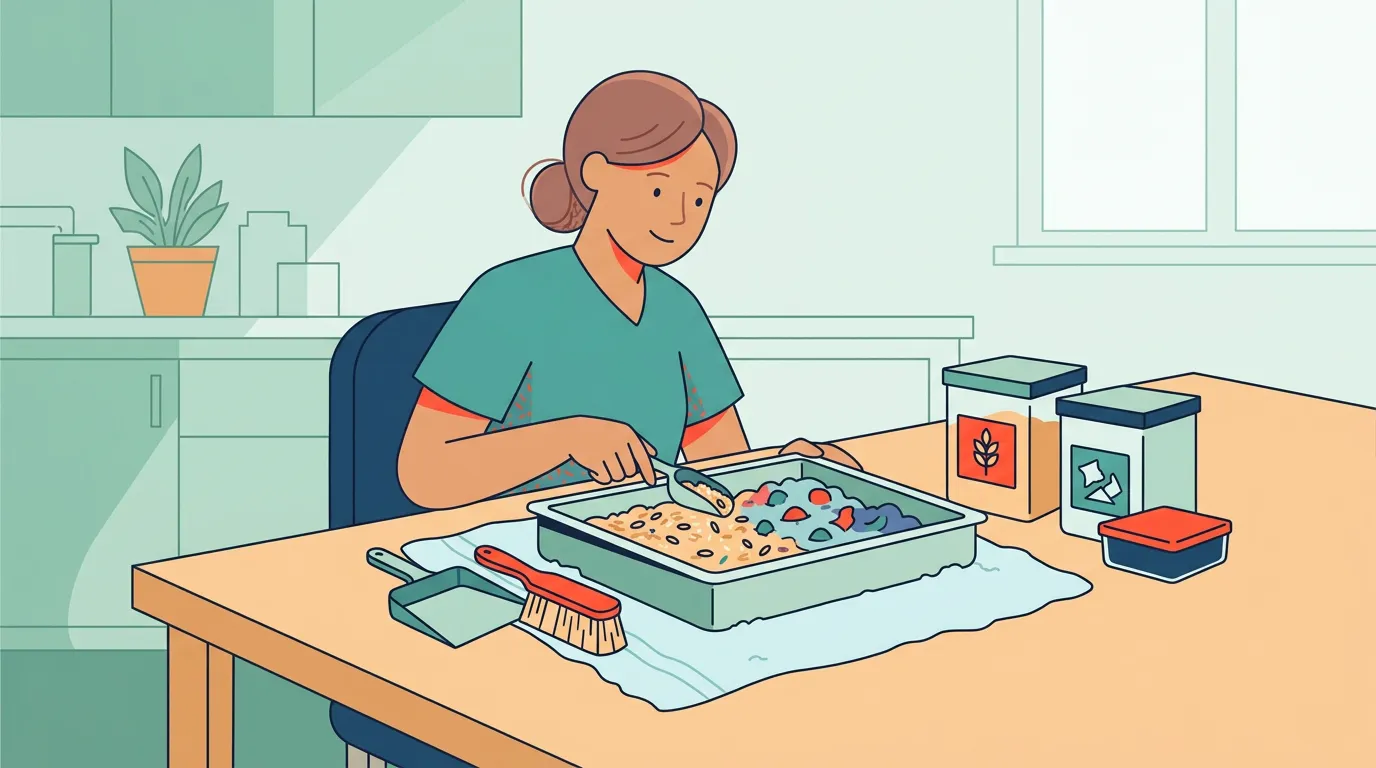
- Remove large toys and tools before sweeping or vacuuming.
- Empty water and wet mixtures immediately. Do not store them in the bin.
- Discard food filler that became wet, was mouthed, mixed with other food, exposed to pets or scattered where you cannot verify cleanliness.
- Wash reusable tools and the tub, then dry them fully.
- Store only clean, completely dry filler in a labeled container with a secure lid, out of children’s and pets’ reach.
- Check under furniture, the mat and shoes for escaped small pieces.
Reuse is worthwhile only when you can vouch for the material’s condition. Moisture, odor, mold, pests, unknown debris or an allergy cross-contact concern are reasons to discard it.
Sources and safety references
Last source review: July 26, 2026. Recheck product age labels and current official guidance before adapting an idea.
- CPSC: Small Parts Ban and Choking Hazard Labeling
- CPSC: Water Beads
- American Academy of Pediatrics: Water Safety and Young Children
- CDC: Food Allergies in Schools and Early Care
- Head Start: Messy Play
- NAEYC: Good Toys by Age and Stage
- American Academy of Pediatrics: Choosing Safe Art and Craft Supplies
Frequently asked questions
What can I use in a sensory bin for a toddler who mouths everything?
Use an empty bin with large, intact, washable items: washcloths, silicone cups, large blocks, whole sponges and large age-labeled toys. Water can work with constant arm’s-reach supervision. Avoid loose rice, beans, pasta, beads, pom-poms and small toys.
Are dry rice and beans safe for toddlers?
They are small, hard loose materials and can be swallowed or inhaled. This guide reserves them for children 3+ who no longer mouth play materials, with active adult supervision and no younger child or pet able to reach spills. Choose a large-object bin for younger or mouthing children.
What is the easiest sensory bin to clean?
An empty bin with washcloths, socks, large blocks or silicone kitchen tools has the lowest cleanup burden. A damp-cloth toy wipe adds tactile play without standing water or scattered filler.
How long should a sensory-bin session last?
There is no required time. Begin with one action and stop when the child turns away, mouths unsafe material, repeatedly throws, becomes distressed or when the adult can no longer supervise fully. A few engaged minutes are enough.
Can I reuse sensory-bin filler?
Reuse only filler that stayed clean and completely dry. Discard wet food, mouthed material, filler exposed to pets or outdoor contamination, and anything with odor, mold, pests or unknown debris. Store reusable material in a labeled secure container out of reach.