7 Halloween Sensory Bins for Toddlers That Are Not Scary

Halloween can be interesting to a toddler without being frightening. Orange fabric, a smooth pumpkin, a quiet scoop, or a friendly face offers seasonal color and texture without masks, jump scares, gore, or a crowded bin of tiny decorations.
These seven Halloween sensory bins are organized by the kind of input they offer—soft touch, water, resistance, color, sound, temperature, and movement. Each setup uses a few large materials and can be made gentler or more active without changing the theme.
Compare the seven setups before choosing
| Bin | Main experience | Setup | Mess | Likely extra cost |
|---|---|---|---|---|
| soft pumpkin search | soft touch and hide-and-find | 2 minutes | low | none if using existing fabric |
| pumpkin washing | water, squeezing, care routine | 3–5 minutes | medium | none if materials are on hand |
| jack-o’-lantern dough | pressure and shape change | 2–3 minutes | medium | optional dough purchase |
| colorful cauldron | pull, drop, and color | 2 minutes | low | none if using existing fabric |
| friendly sound basket | sound and rhythm | 1 minute | low | optional age-rated shaker |
| pumpkin ice rescue | cold and melting | 5 minutes plus freezing | medium | none if materials are on hand |
| leaf delivery bin | scooping and whole-body movement | 2–3 minutes | low | none if using existing fabric |
Cost ranges assume you may already own a bowl, towels, cups, and a tray. There is no reason to buy a themed kit. Plain household colors and one large pumpkin prop are enough to make the activity seasonal.
Toddler sensory-bin safety is not optional
Stay close enough to intervene immediately from setup through cleanup. Sensory play is not independent play for a toddler who mouths, throws, climbs on, or wraps materials.
- Skip tiny fillers. Do not use dry beans, rice, kernels, acorns, buttons, beads, pom-poms, sequins, miniature spiders, googly eyes, coins, marbles, or other loose small objects. The CPSC small-parts guidance explains that products intended for children under three cannot present choking, aspiration, or ingestion hazards from small parts.
- Do not use water beads. The CPSC urges caregivers to remove them from environments with children because swallowed beads can expand and cause serious injury. See the CPSC Water Beads Information Center.
- Use touch supervision around water. Stay within arm’s reach, keep the amount shallow, and empty the bin immediately. The NHS notes that a young child can drown in less than 5 cm of water in its play guidance.
- Inspect every prop. Follow age labels and remove anything cracked, frayed, moldy, splintered, or shedding a part. Avoid loose magnets, button batteries, long ribbons, strings, and loops.
- Stop when materials are mouthed. Non-toxic dough is not food, and supervision does not make a choking-size object suitable.
1. Soft pumpkin patch search
Materials: a shallow basket, three or four large fabric squares or short washcloths, and one or two palm-size, one-piece felt pumpkins or age-rated plush pumpkins.
Loosely cover one pumpkin and invite the child to lift the cloth and find it. Put a second basket beside the first if the child enjoys moving each pumpkin after the reveal. Use a simple observation such as “The orange pumpkin was under the soft cloth” instead of testing colors or memory.
Make it gentler: leave most of the pumpkin visible or use one familiar washcloth. Add challenge: hide two large pumpkins under separate cloths. Use only short, intact textiles; put them away when play ends so they cannot be wrapped around the neck.
2. Friendly pumpkin washing station
Materials: one smooth, intact pumpkin or large pumpkin bath toy, a shallow tub, plain water, a sponge, one unbreakable cup, and a towel.
Set the pumpkin in a small amount of water. Demonstrate wet, wipe, squeeze, and dry once, then let the child repeat whichever action interests them. The care routine gives Halloween water play a familiar purpose without needing a spooky story.
Make it gentler: use a damp cloth on a dry tray instead of a tub. Add challenge: invite an older toddler to wash, dry, then move the pumpkin to a basket. Stay within arm’s reach for the entire water activity and empty the tub before doing anything else.
3. Jack-o’-lantern dough tray
Materials: commercially labeled, age-appropriate orange dough, a rimmed tray, and one or two large blunt tools such as a toddler roller or large pumpkin cutter.
Flatten the dough and use a fingertip or blunt tool to press two dots and a curved line. A child can copy, erase the marks, or simply squeeze the dough. There is no need to attach eyes, buttons, beans, or other face pieces; impressions create a jack-o’-lantern without loose parts.
Make it gentler: offer a tool so hands do not have to touch the dough. Add challenge: let the child hold the tray with one hand while rolling with the other. Non-toxic dough is not edible; stop if it is mouthed.
4. Colorful cauldron pull-and-drop bin
Materials: a wide stable bowl and four to six short, hemmed fabric pieces in orange, purple, green, and black.
Call the bowl a cauldron only if the word feels fun to the child. Pull out one cloth, name its color, and drop it back. Tip the bowl and start again. The same setup can become a simple sort by putting orange fabric in one bowl and purple fabric in another.
Make it gentler: use a plain bowl and two colors. Add challenge: ask the child to find one named color or hold the bowl steady while dropping. Do not use long ribbons, loops, frayed fabric, or pieces with sewn-on decorations.
5. Friendly Halloween sound basket
Materials: an upside-down sturdy plastic bowl as a drum, one large wooden spoon, and an age-rated toddler shaker if you already own one.
Make one soft tap and wait. Try loud and quiet, fast and slow, or a simple tap-and-pause exchange. Orange or purple fabric under the bowl supplies the Halloween color without changing the sound activity. Use a commercially made shaker rather than a homemade bottle filled with rice or beads.
Make it gentler: tap with hands or wrap the spoon head in a washcloth held by the adult. Add challenge: alternate drum and shaker turns. Stop immediately if the noise causes discomfort or the tool is waved near a face.
6. Pumpkin ice rescue
Materials: one large, smooth orange bath toy, a shallow freezer-safe container, water, a rimmed tray, a sponge, and a small cup of lukewarm water.
Freeze the large toy partly into a shallow ice block. On the tray, let the child touch briefly, slide the block, squeeze lukewarm water from the sponge, and watch the toy loosen. Use concrete words such as cold, hard, wet, smaller, and free.
Make it gentler: let the child watch while the adult uses the sponge. Add challenge: alternate sponge and cup. Never freeze small toys or loose decorations into ice. Limit direct cold contact, stop at signs of discomfort, dry spills promptly, and treat the melting setup as water play with arm’s-reach supervision.
7. Leaf delivery bin
Materials: large intact fabric leaves, a shallow bin, a large cup or scoop, and a bucket a few steps away.
Invite the child to scoop or carry one leaf to the bucket, dump it, and return. A sitter or crawler can use two containers placed side by side. This is the most active option in the list and works without wet or sticky materials.
Make it gentler: use two leaves and adjacent containers. Add challenge: sort two colors at the delivery point. Natural leaves can crumble or bring in sharp stems and mold; durable fabric leaves are more predictable for repeated indoor play.
Make Halloween less intense, not more elaborate
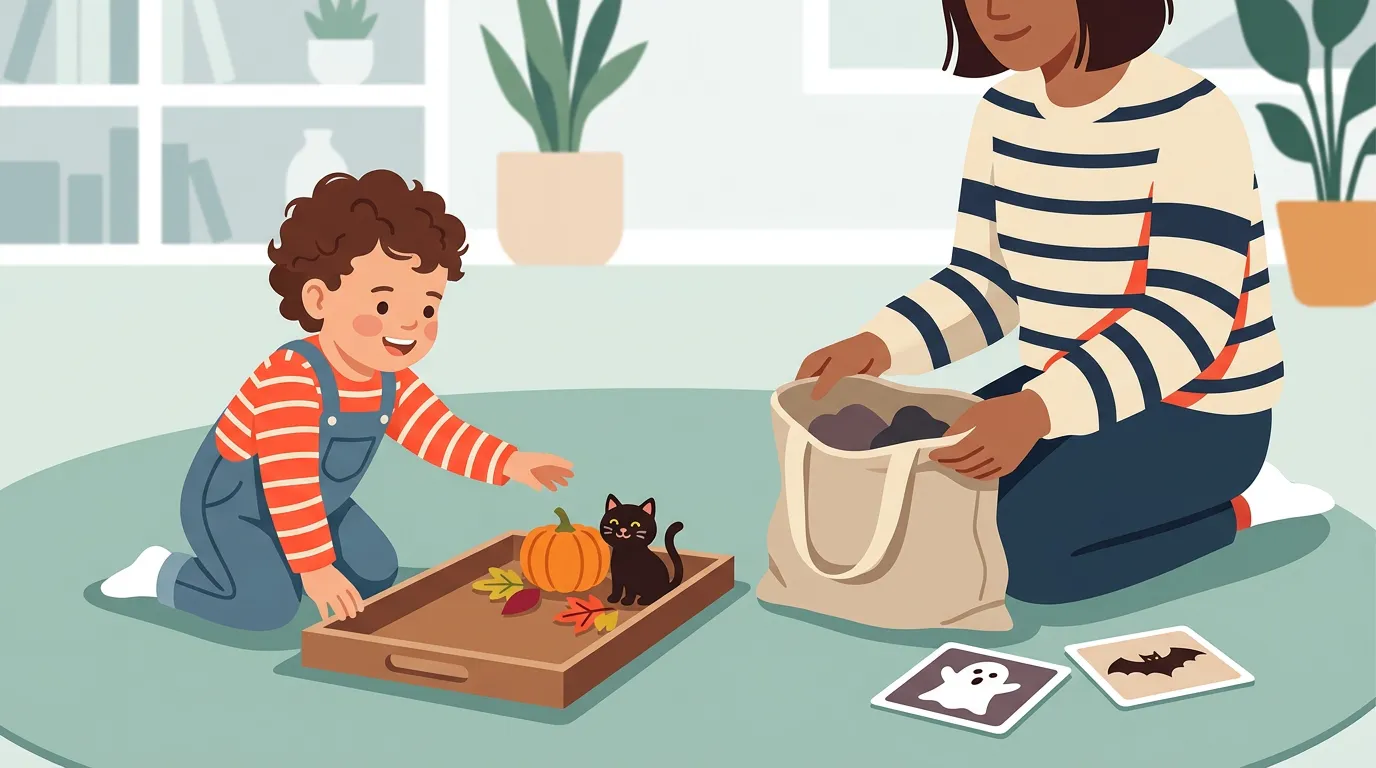
Toddlers do not need to be exposed to frightening images as practice. Use cheerful or neutral faces, familiar household materials, and ordinary words. If a cauldron, jack-o’-lantern, costume, or sound worries the child, remove it and continue with a plain bowl, orange dough, or fabric leaves.
A visible rimmed tray can feel more predictable than reaching into a deep bin. Put two or three items on the tray with space between them and let the child look before touching. NAEYC describes meaningful play as enjoyable, intrinsically motivated, and flexible; adult pressure to touch or complete a task works against that purpose. See NAEYC’s five essentials of meaningful play.
- Reduce to one color or one action when the setup feels busy.
- Offer a scoop, brush, or sponge so direct hand contact is optional.
- Keep a towel nearby and allow the child to step away.
- Stop at turning away, freezing, crying, repeated throwing, mouthing, or any sign of discomfort.
If a contained visual activity works better than an open bin, compare the designs and sealing precautions in our DIY sensory bottle guide.
Plan cleanup before play begins
Place the bin on a rimmed tray, washable mat, or easy-clean floor. Keep spare materials out of reach. Name one predictable final action, such as “One more scoop, then leaves in the basket,” without insisting that the child do all the cleanup.
- Empty and dry water setups immediately.
- Wash nonporous tools and launder fabric when needed.
- Discard damaged dough and any torn, frayed, or moldy material.
- Store only clean, completely dry items in a closed adult-controlled container.
For a general framework on container size, fillers, tools, and storage, see how to make a sensory bin. For seasonal ideas without Halloween symbols, use the fall sensory bin guide.
Frequently asked questions
What should never go in a toddler Halloween sensory bin?
Exclude water beads, magnets, button batteries, balloons, beads, dry beans, kernels, rice, acorns, buttons, pom-poms, sequins, miniature figures, googly eyes, long ribbons, cords, and damaged toys. Use large, intact, age-appropriate materials and direct supervision.
How can I make a Halloween bin less messy?
Choose the fabric search, cauldron cloth drop, sound basket, or leaf delivery bin. Use one container and one tool on a rimmed tray, put out only four to six items, and end before dumping spreads beyond the play area.
How long should the activity last?
There is no required length. One reveal, a few taps, or several sponge squeezes can be enough. Continue only while the child remains interested, comfortable, and safe; a short positive turn is more useful than completing a planned sequence.
What if my toddler is afraid of Halloween decorations?
Remove the decoration and keep the familiar action. A pumpkin wash can become toy washing, a cauldron can become a plain bowl, and Halloween colors can become any two colors the child likes. Do not use surprise, masks, or forced touching to make a child get used to the theme.
Sources and review notes
Safety and play claims were reviewed on July 26, 2026. Primary references:
- CPSC: Small Parts Ban and Choking Hazard Labeling
- CPSC: Water Beads Information Center, including the March 2026 standard update
- NHS: Baby and Toddler Play Ideas, reviewed August 27, 2024
- NAEYC: Five Essentials to Meaningful Play