45 At-Home Activities for 1-Year-Olds (12–23 Months)

A one-year-old can be absorbed by a cardboard box and restless beside a full toy shelf five minutes later. That change does not mean you need a new activity every time. It usually means the next idea should match the child’s current need: movement, connection, a simple hand task, a quieter sensory experience, or a chance to copy what you are doing.
Here are 45 at-home activities for one-year-olds from 12 through 23 months. They work for different mobility levels, use mostly ordinary materials, and can be repeated without turning the day into a lesson plan. The age notes draw on current CDC guidance, with practical safety checks for common household setups.
Choose the next activity in 30 seconds
| What you notice | Try first | If the child is not walking | Setup |
|---|---|---|---|
| restless after sitting | ball chase or soft-toy delivery | roll the ball across the floor or place the toy just beyond reach | under 2 minutes |
| tired or overstimulated | window watching or board book | sit together with support | none |
| dropping everything | basket fill-and-dump | put both containers within reach | 1 minute |
| following you around | washcloth laundry or table wiping | work on the floor | 1–2 minutes |
| seeking touch or pressure | damp sponge or dough press | offer the material on a stable tray | 2–3 minutes |
| ready for interaction | copy-my-move or sing-and-pause | all versions work seated | none |
Offer one change of pace, then wait. Adding five toys at once can make it harder to see what the child actually wants to do.
What changes across 12–23 months
A one-year-old spans a wide developmental range. At 15 months, CDC milestones include trying to use familiar objects appropriately, stacking two small objects, and taking a few independent steps. At 18 months, the list includes copying simple chores, scribbling, trying a spoon, and walking without support. These are skills most children—75% or more—do by the stated age; they are not deadlines or a substitute for developmental screening. Review the current 15-month and 18-month CDC checklists.
- About 12–14 months: keep materials large, present one action, and plan for watching, mouthing, carrying, or a few brief attempts.
- About 15–17 months: add simple imitation, a choice between two familiar items, or a short carry-and-drop task.
- About 18–23 months: add one-step pretend play, a basic sort, or a two-part routine such as wipe then basket.
Mobility matters more than the birthday for movement ideas. A sitter, crawler, cruiser, and confident walker can use the same ball or basket in different positions.
Screen every activity for safety first
Active supervision means staying close enough to intervene immediately. One-year-olds may put materials in their mouths, pull themselves up on unstable objects, or lose balance while holding a tool.
- Use sturdy, age-rated toys with intact parts. Follow the age label and inspect for damage before play.
- Keep small loose objects, button batteries, loose or high-powered magnets, water beads, deflated balloons, and balloon fragments completely out of the activity. See the CPSC small-parts guidance and water-bead warning.
- Keep movement at floor level, away from stairs, hard edges, hot surfaces, and furniture that can tip. Do not turn boxes, baskets, or furniture into ride-on toys.
- For water play, stay within arm’s reach, use only a shallow amount, and empty the container immediately. The NHS notes that a young child can drown in less than 5 cm of water in its baby and toddler play guidance.
- Non-toxic and washable do not mean edible. Stop art or dough play when materials are repeatedly mouthed.
Simplify or stop when the child becomes tired, distressed, overstimulated, or unsafe. Finishing an activity is never more important than ending it calmly.
Eight movement activities
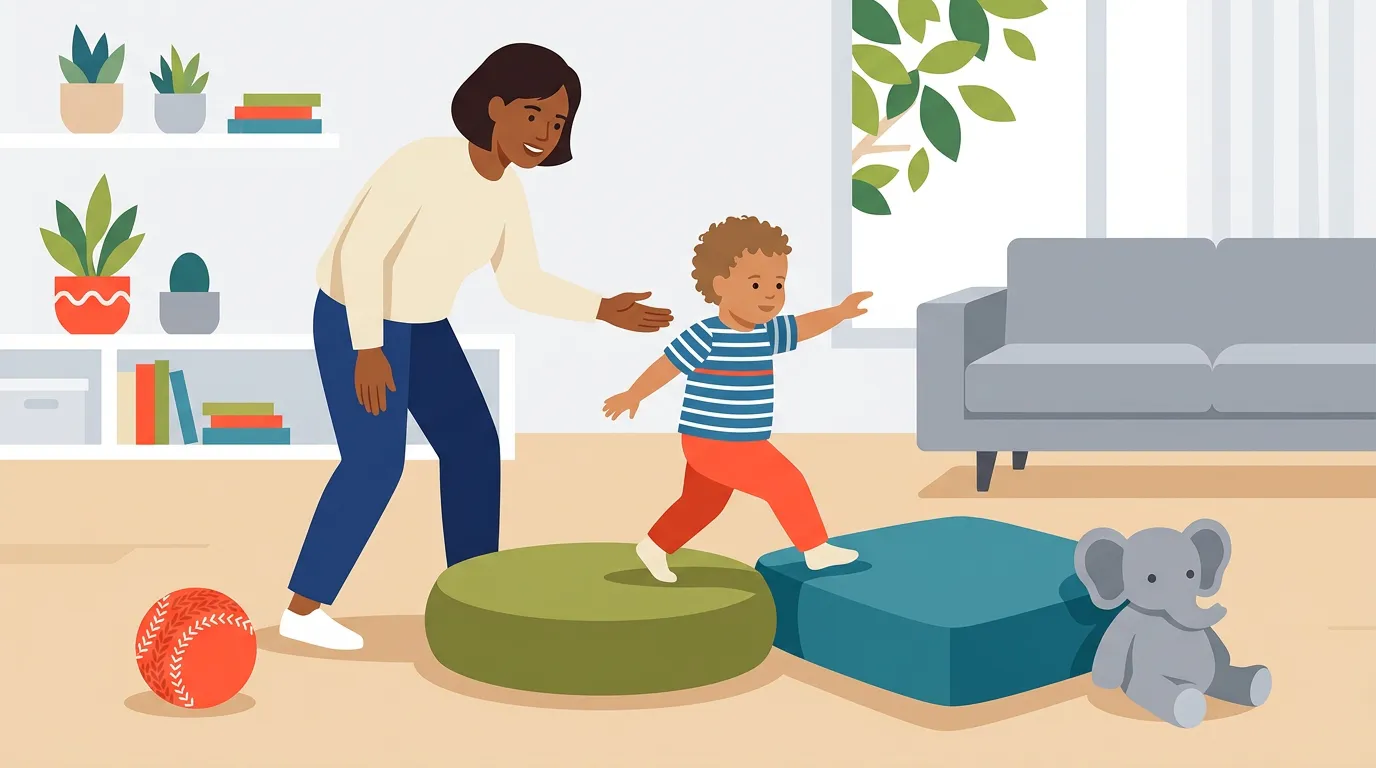
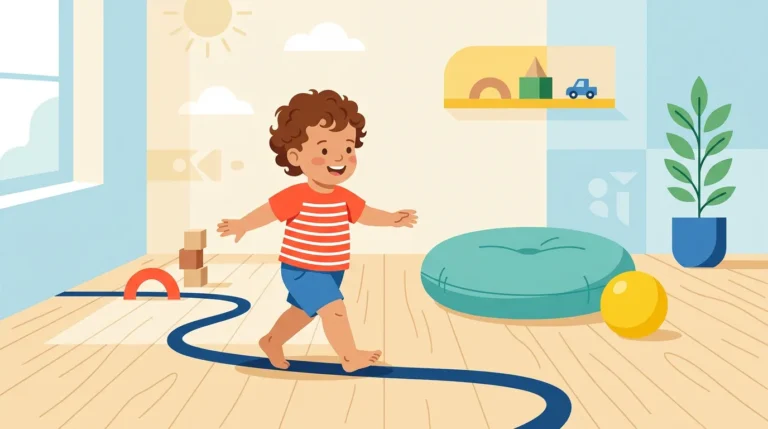
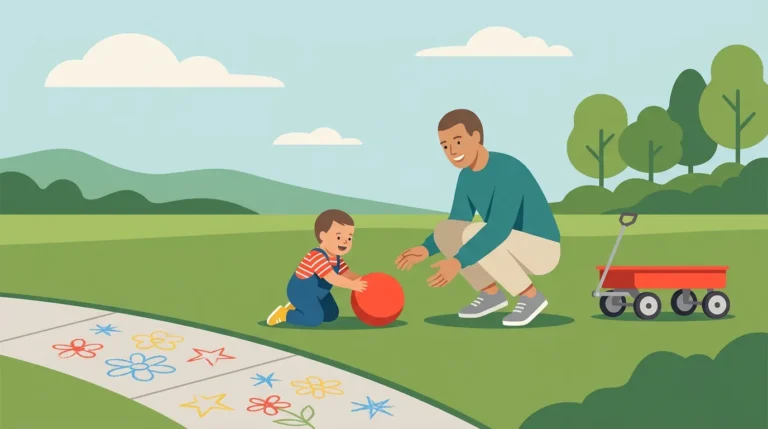
- Short-distance ball roll. Sit facing the child and roll one large soft ball between you. A crawler can chase it; a walker can return it by carrying or kicking.
- Soft-toy delivery. Move a stuffed animal between two safe spots. Place both spots on the floor for a sitter or crawler.
- Flat cushion crossing. Put one or two firm cushions flat on a clear floor. Invite crawling or supported stepping; do not stack them into a climbing tower.
- Copy my move. Clap, reach, pat knees, or sit down, then copy an action the child invents.
- Dance and pause. Play a short song, move together, stop the sound, and wait. The child does not need to freeze on cue.
- Play tunnel. Use a wide children’s tunnel or a stable, fully open box with packing materials removed. Stay beside the opening.
- Towel islands. Lay two flat towels on a nonslip floor and move from one to the other. A non-walker can crawl or place a toy on each towel.
- Push-toy route. A steady walker can use an age-appropriate push toy on a flat, clear surface. Follow the manufacturer’s directions; do not substitute a laundry basket that can tip.
For a deeper movement-only list, see 25 gross motor activities for toddlers. Outdoor versions are covered separately in our outdoor activity guide.
Eight activities for grasping, turning, and placing
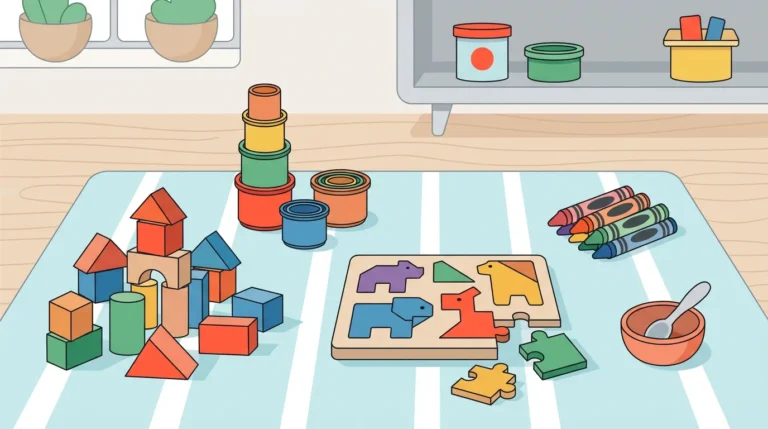
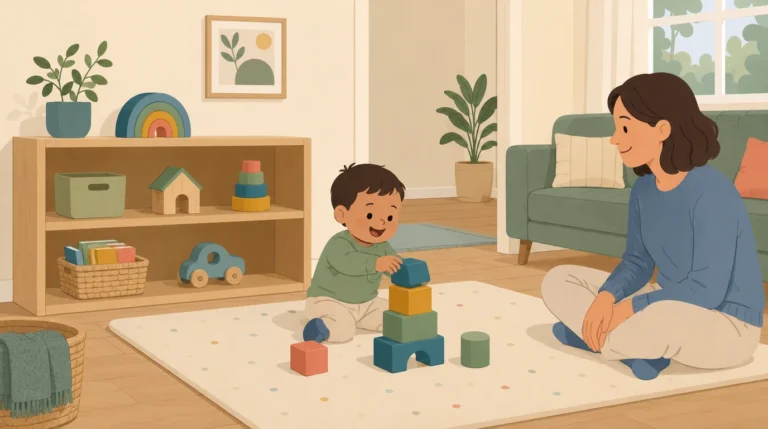
- Basket fill-and-dump. Put four large blocks beside a stable basket. Filling and tipping are the whole game.
- Nesting cups. Begin with two cups, then add more if the child keeps exploring.
- Short block tower. Stack two blocks and invite one addition or a knockdown. Height is not the goal.
- Large ring stack. Offer two or three rings on a toddler-designed, stable base. Any order works.
- Large-knob puzzle. Put one piece beside the board. Turning or tapping it near the space is useful exploration.
- Board-book pages. Let the child turn thick pages, skip ahead, and revisit favorites.
- Easy container lids. Use large unbreakable containers with simple fitted lids and no detachable pieces.
- Painter’s-tape peel. Fold back one end of three short strips attached to a tray. Supervise and discard every strip afterward.
For skill-by-skill adjustments and 12 more options, use the fine motor activities for one- and two-year-olds.
Seven sensory activities without a special kit
- Textured washcloth basket. Offer three large clean cloths in smooth cotton, terry, and fleece, and name only what the child notices.
- Damp sponge squeeze. Put one lightly damp sponge over an empty bowl. Stay within arm’s reach and put it away when play ends.
- Adult-blown bubbles. Blow a few at a time while keeping the solution out of reach. Wash hands if solution lands on them.
- Cool and dry cloths. Compare one cool damp cloth with one room-temperature dry cloth. Avoid ice and hot materials.
- One-piece dough press. Offer age-appropriate dough on a tray for pressing and pulling. Stop if it is mouthed.
- Window or porch noticing. Watch a bus, bird, rain, or moving leaves and name what captures attention.
- Fabric hide-and-find. Hide one large block under a washcloth and reveal it together. Avoid long scarves, strings, and loops.
Sensory play is optional; no child needs to touch every texture. Let them watch, use a tool, or choose a dry alternative. For a broader age-based approach, see sensory play by age.
Eight language and connection games
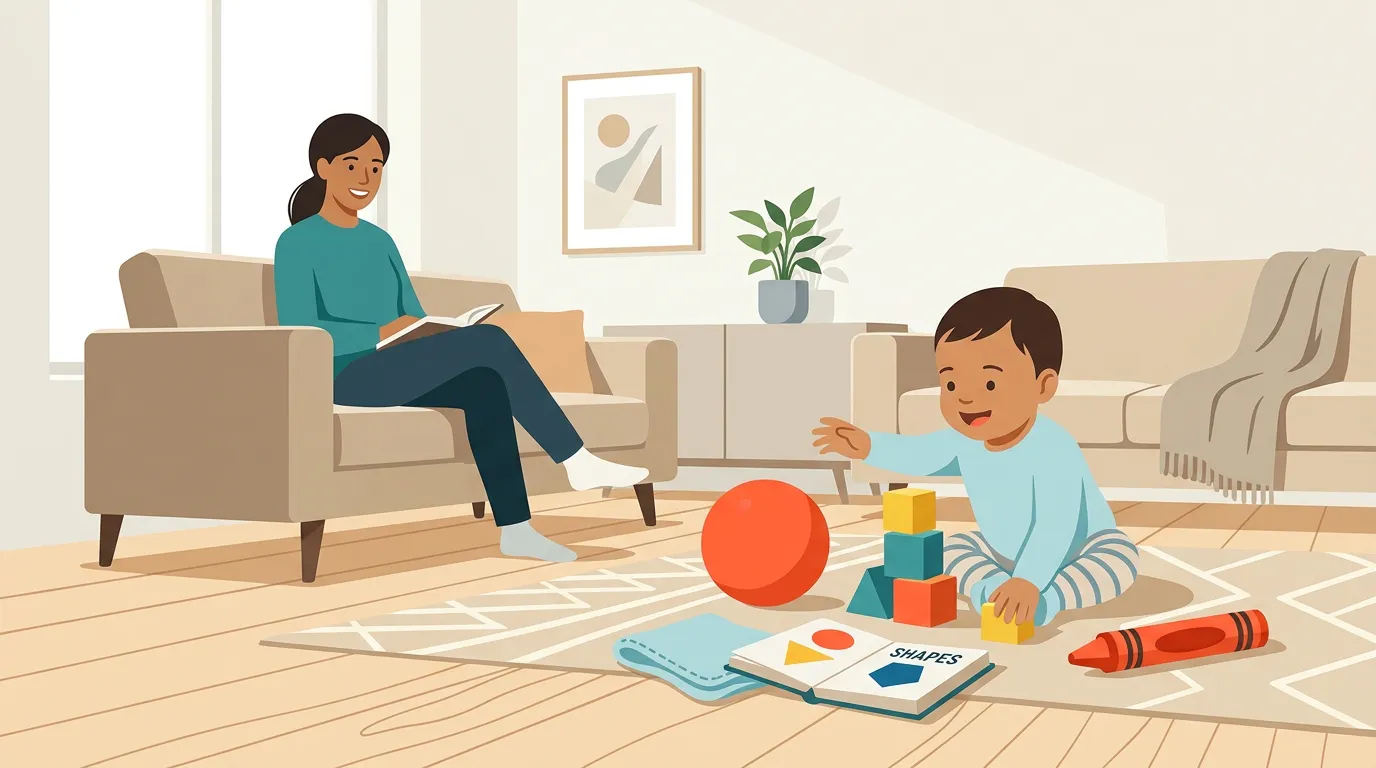
- Picture-book follow-along. Name one item the child looks at and pause for a gesture, sound, or page turn.
- Family-photo book. Use a small album of familiar people and add one concrete detail: “Grandpa’s hat.”
- Two-object choice. Hold up a cup and bear, ask which one, then name the item the child reaches toward.
- Sing and pause. Stop before a repeated word or motion and wait briefly for any response before continuing.
- Gesture copy. Wave, clap, point, or nod, then copy the child’s gesture back.
- Body-part mirror game. Use a child-safe mirror to name hands, nose, feet, or hair without quizzing.
- One-step toy direction. Say “Bear in basket” while pointing. Help only if invited and describe the result.
- Narrate a routine. Use short phrases during dressing, diapering, or washing: “Sock on. Other foot.”
A look, reach, babble, smile, or repeated action is a response. Face-to-face interaction matters more than making the child repeat a word. The AAP’s toy guidance emphasizes that digital toys should not replace real interaction.
Seven everyday tasks that become play
- Washcloth laundry. Put three clean cloths into a low basket. Matching and folding are unnecessary.
- Water-only table wipe. Give the child a damp cloth for a child-safe surface. Adults keep cleaners and wipes out of reach.
- Book return. Carry one board book to a stable low basket after reading.
- Pack and unpack a tote. Use a lightweight bag and two large soft toys. Keep the load light and handles short.
- Feed a stuffed animal. Offer a large empty bowl and large spoon for simple pretend play.
- Napkin delivery. Let a walker carry one cloth napkin to the table; a sitter can move it into a nearby bowl. Keep the child away from hot food and cookware.
- Water a plant with help. An older one-year-old can tip a tiny amount of plain water from an unbreakable cup while an adult steadies it. Wipe spills immediately and choose a non-toxic plant kept otherwise out of reach.
Participation may last ten seconds. These are invitations to copy a familiar routine, not chores the child is expected to complete.
Seven creative and music activities
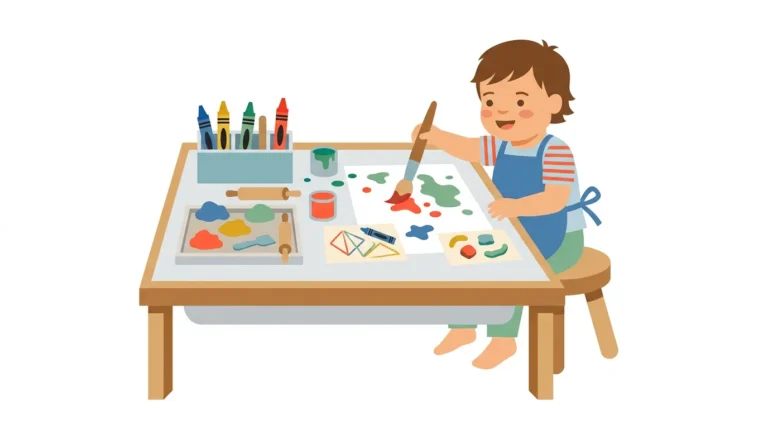
- Jumbo-crayon marks. Secure paper and offer one washable jumbo crayon. Remove it if mouthed or broken.
- Large stickers. Partly peel one sticker at a time and let the child press it anywhere on paper.
- Finger paint. Use a small amount of child-labeled washable paint on taped paper. End if it goes toward the mouth.
- Water painting. Use plain water and a wide brush on dark paper or an outdoor surface.
- Container drum. Turn a sturdy plastic container upside down and tap it with hands or one large spoon.
- Age-rated shaker. Use a commercially made toddler instrument, not a homemade bottle filled with loose pieces. Try fast, slow, and quiet turns.
- Music-and-marks turn. Draw or dab paint during one short song, then stop when the song ends.
Our 25 toddler art and craft activities compares mess, time, supply labels, and age adaptations in more detail.
Build a realistic day, not a 45-item schedule
A useful rhythm might include one active choice, one shared book or song, and one hands-on or household invitation. Meals, naps, caregiving, outdoor time, and unstructured pauses make up most of the day. The CDC advises letting toddlers be active and notes that children ages one to two need 11–14 hours of sleep in 24 hours, including naps; see its positive parenting guidance.
A rainy morning could be ball rolling after breakfast, a board book before lunch, and washcloth laundry later. That is enough. Keep five reliable ideas on a phone note or refrigerator list so tired adults do not have to search a 45-item article every time.
Repetition is useful. Repeat the same basket game for several days, then change one object or location. For more ways to protect time for child-led play, see 30 screen-free activities and an independent-play guide.
How to compare local toddler classes
Library story time, caregiver-and-child music, swim programs, and movement groups can offer a change of setting, but they are optional. Before paying, check:
- the exact age range and whether an adult participates;
- class length, group size, noise level, and whether families can step out;
- equipment condition, hygiene procedures, and supervision expectations;
- accessibility and accommodations;
- current price, registration fee, cancellation or make-up policy, and sibling rules;
- whether a free trial, observation, drop-in, or library alternative is available.
A child who watches from a caregiver’s lap or leaves early has still gathered information about a new environment. Do not buy a long package before you know whether the format fits the child and family schedule.
When to bring observations to a professional
An activity list cannot screen or diagnose development. Talk with your child’s pediatric healthcare professional if the child loses a skill, movement causes pain, or you have concerns about how they play, move, communicate, hear, see, or use either side of the body. Bring specific examples and the age-appropriate CDC checklist to the conversation.
Frequently asked questions
What can I do with a one-year-old without buying toys?
Use safe, large household materials: washcloths in a basket, a sturdy container to drum, board books, an unbreakable bowl and spoon, cardboard to scribble on, or a damp sponge. Inspect every item and supervise it as a play material, even if it is familiar around the home.
How do I adapt activities for a child who is not walking?
Keep materials at floor level and within a safe reach. Roll a ball to a sitter, place a basket beside a crawler, use a tunnel for crawling, or move a soft toy between two nearby containers. Walking is not required for language, sensory, hand, music, or practical-life activities.
How long should one activity last?
There is no required time. Looking closely, repeating an action, returning after a pause, or making two attempts can all show engagement. End when the child moves away, becomes tired or distressed, mouths the material, or begins using it unsafely.
Can a one-year-old do messy or water play?
Yes, with a very simple setup and direct supervision. Stay within arm’s reach of water, use a shallow amount, and empty it immediately afterward. For paint, dough, crayons, and stickers, use age-appropriate products and stop when they are mouthed. Wash hands when play ends.
Do activities need to teach colors, numbers, or letters?
No. At this age, shared attention, movement, imitation, exploration, and everyday communication are enough. Name what the child notices without turning every game into a quiz. A toy or activity does not need an educational label to support useful play.
Sources and review notes
Developmental, play, and safety claims were reviewed on July 26, 2026. Primary references:
- CDC: Milestones by 15 Months, updated May 15, 2026
- CDC: Milestones by 18 Months, updated May 15, 2026
- CDC: Positive Parenting Tips for Toddlers
- CPSC: Small Parts Ban and Choking Hazard Labeling
- NHS: Baby and Toddler Play Ideas, reviewed August 27, 2024