35 Outdoor Activities for 1- and 2-Year-Olds by Setting

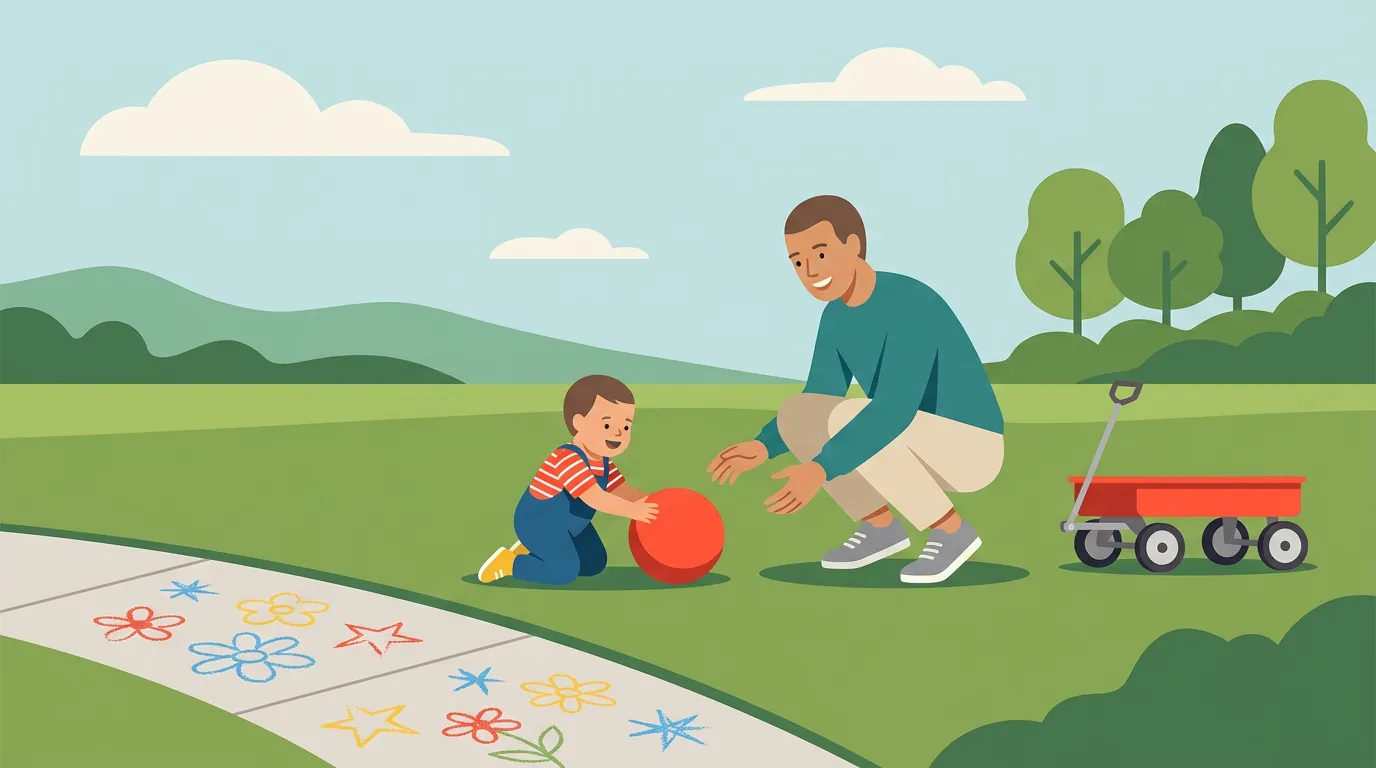
A toddler does not need a destination for outside time to count. Rolling a ball on a patio, carrying a cup to one plant, watching an ant from a safe distance, or walking to the end of the block can be the whole activity.
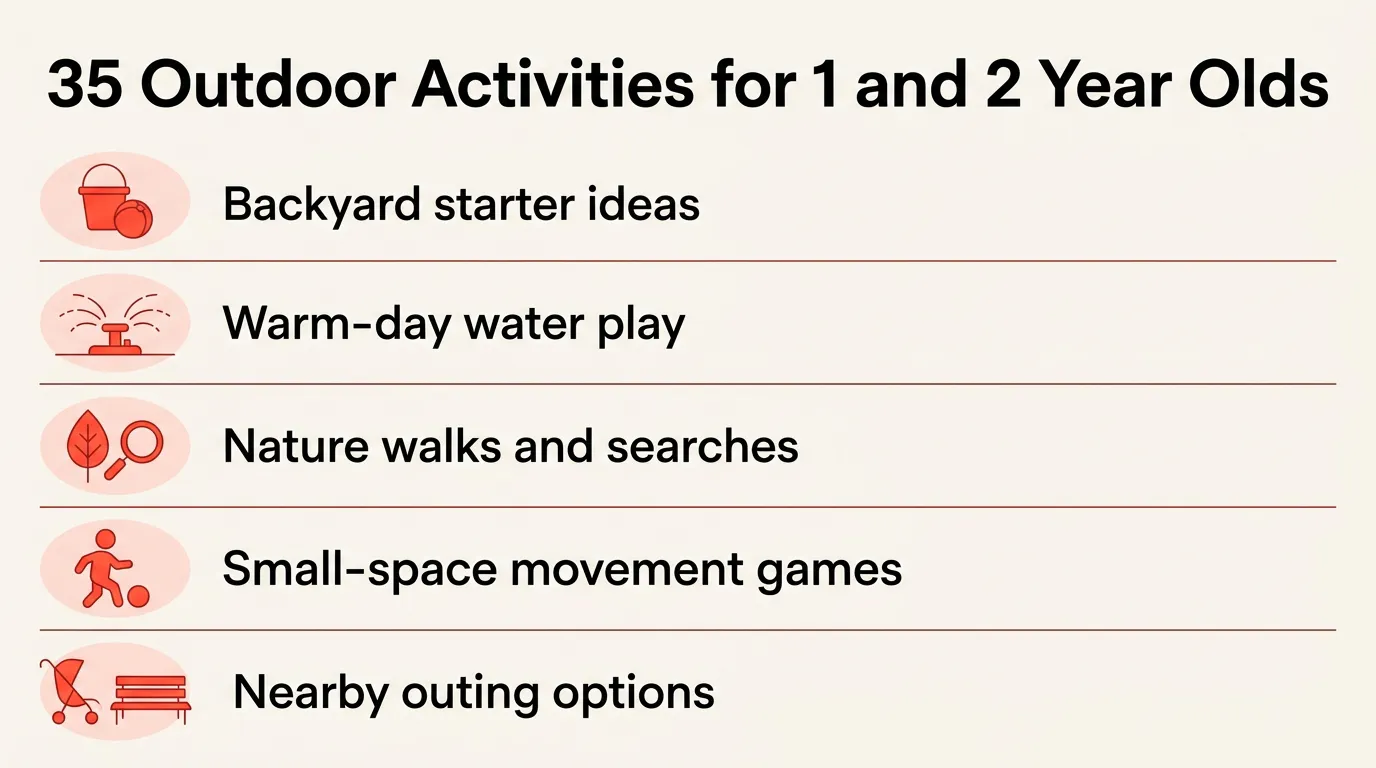
This guide contains 35 ideas for yards, sidewalks, parks, and nearby community spaces. Most are free or use one household item. Each one has a younger-toddler version, a next step, and the practical boundary that matters most.
Start with the situation you actually have
| If you have… | Try first | Bring | Main caution |
|---|---|---|---|
| 5 minutes | Ball roll, bubble watch, one chalk line | One item | Clear the route |
| No yard | Doorstep sound pause, short sidewalk walk, park path | Stroller if useful | Traffic and parking areas |
| A hot day | Shaded blanket play or brief water painting | Water, shade, sun protection | Heat, hot surfaces, hydration |
| A cold day | Short walk, chalk mark on a dry surface, active songs | Dry layers and spare clothing | Wet clothing and cold stress |
| Energy to burn | Run-and-stop, hill walk, ball kick | Large soft ball if desired | Vehicle-free space |
| Low caregiver energy | Blanket picnic, bird watch, water one plant | Familiar snack or small cup | Stay present; keep setup contained |
The World Health Organization recommends at least 180 minutes of varied physical activity at any intensity, spread through the day, for children ages 1 and 2. This does not mean planning three hours of activities. Walking, active routines, free play, and a handful of short outdoor bursts can add up. WHO guidance for children under 5.
7 backyard or patio starters
- Bubble watch and chase. Blow a few bubbles at a time. A one-year-old may watch and point; a two-year-old may reach, squat, or chase. Keep solution out of reach and wipe slippery spills.
- One-line chalk play. Draw a line, circle, or parking spot on an appropriate surface. A younger toddler can make marks; an older toddler can follow the line or park a large vehicle. Check property rules on shared pavement.
- Large-ball roll. Sit a short distance apart and roll a soft ball. The child may return, chase, or carry it. Move back only when returning the ball is comfortable.
- Blanket snack outdoors. Serve a familiar snack in the same safe shape and texture used indoors. Sitting on a blanket changes the setting without adding a new food or activity kit. Keep the child seated while eating and supervise for choking.
- Water one plant. Use a small cup or light watering can with a little water. A younger toddler can tip it with help; an older toddler can choose between two plants. Empty larger containers immediately.
- Cardboard-box station. Put a clean, sturdy box on dry grass or a patio for filling, hiding, or pretend driving. Remove staples, plastic wrap, cord handles, and loose tape. Bring it inside before it becomes wet or weak.
- Push-toy delivery. Make a short straight route with a stable age-appropriate push toy. Add one soft item to deliver. Stay away from steps, driveways, slopes, pools, and traffic.
7 water and sensory ideas for warm weather
Water changes the supervision requirement. The AAP recommends constant ‘touch supervision,’ meaning an adult within arm’s reach, for toddlers in or around water. A small amount in a tub, bucket, or tray can still be hazardous, and an older child is not a substitute for an adult. AAP drowning prevention for toddlers, updated 2026.
- Pour between two large cups. Put a shallow amount of water in a low, stable tub on level ground. Start with one cup; add a second when the child is settled. Empty and store the tub immediately afterward.
- Wash sturdy toys. Offer plain water, a large washcloth, and two washable age-appropriate toys. A younger toddler may wipe; an older one may scrub and line them up.
- Sponge squeeze. Move water from one shallow dish to another with one large intact sponge. Remove it when it starts to tear. Keep both dishes within the adult’s reach.
- Paint with plain water. Use a wide brush on a suitable fence, cardboard sheet, or patio. The marks disappear as they dry. A small cup works; a full bucket does not add play value.
- Shallow-puddle step. Use a clean puddle away from traffic and storm drains, with suitable footwear. Step instead of jump if the surface is slick.
- Mud mixing. In a designated soil patch, offer one large bowl and spoon for mixing soil and water. This is pretend play, not food. Avoid contaminated soil, animal waste, treated garden areas, and mouthing; wash hands before eating.
- Large-ice melt. Put one large block of plain ice on a rimmed tray and spoon a little warm, not hot, water over it. Do not freeze small objects inside. Remove fragments that could enter the mouth and end if the child tries to bite the ice.
6 nature activities at toddler pace
- Leaf basket. Collect a few fallen leaves in a small basket. A younger toddler can fill and empty; an older toddler can look for a large or yellow leaf. Do not pick unknown plants.
- One-color hunt. Choose a single color and point to safe examples: green grass, a red sign, a grey stone. There is no list to finish.
- Ten-second sound pause. Stop and name one sound: wind, a bird, a bus, or a dog. A child does not need to stay quiet or identify it correctly.
- Bird watch. Sit on a step, bench, or blanket and watch birds land or fly. Do not approach nests, feed wildlife, or encourage chasing.
- Insect look, no handling. Watch an ant, snail, or butterfly from a comfortable distance. Move away from stinging insects, webs, animal waste, and unfamiliar plants.
- Ground marks. On a designated bare-soil or sand area, make a line with a finger or a sturdy adult-approved tool. Do not hand over splintered sticks or allow found objects in the mouth.
For nature play, the rule is simple: adults identify the area and set the boundary; toddlers do not eat berries, mushrooms, plants, dirt, or found objects. Wash hands after soil, animals, shared equipment, and before snacks.
7 movement games for small outdoor spaces
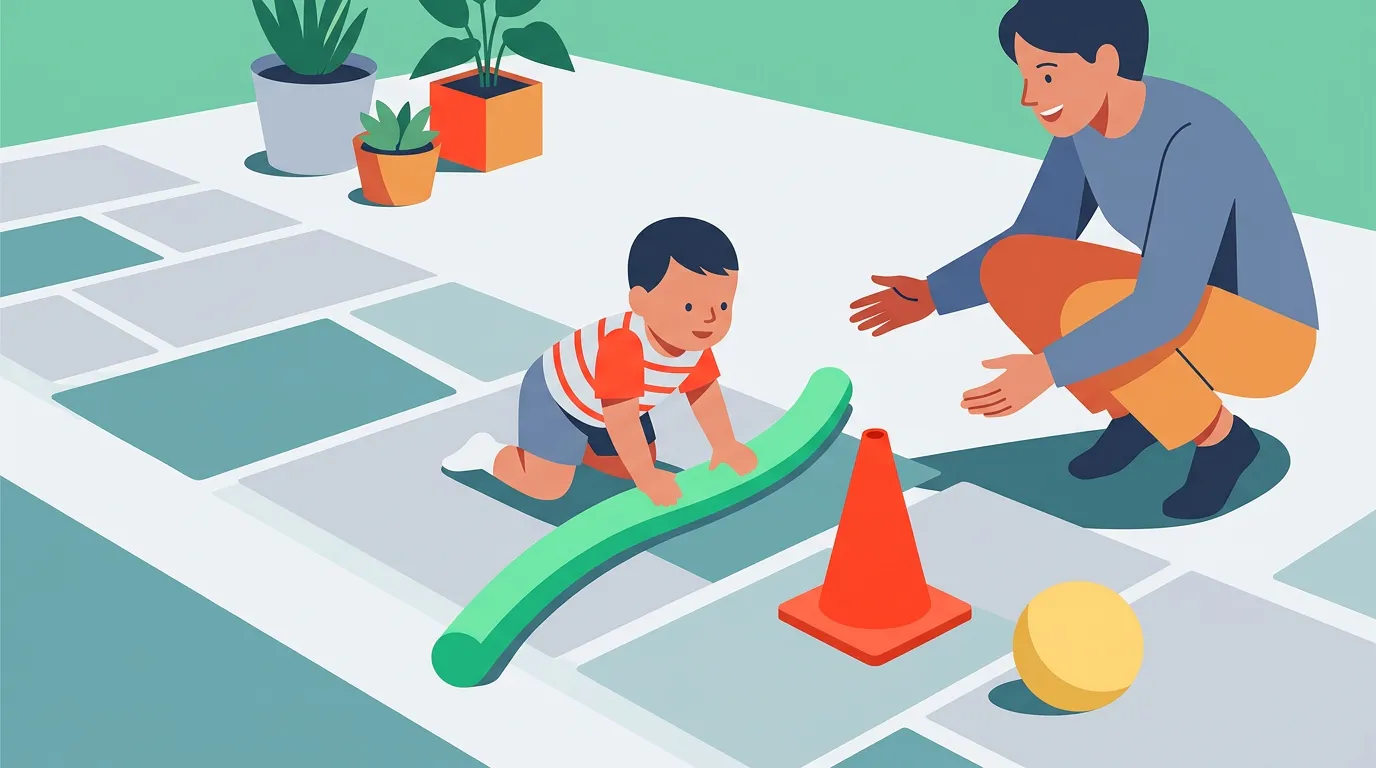
- Ground-level obstacle route. Walk around a cone, step over a pool noodle lying flat, and carry a soft ball. Offer one action to a younger toddler and two linked actions to a ready two-year-old. Never use stacked furniture or elevated improvised equipment.
- Gentle hill walk. Walk up a dry low slope and return by the easiest route. Hold hands where needed. Stop if footing becomes wet or uneven.
- Two-action follow-the-leader. Try ‘clap, then walk’ or ‘touch the fence, then turn.’ A younger toddler can copy one action.
- Animal movement. Waddle, stomp, stretch, or take tiny steps. Accept the child’s version rather than correcting form.
- One-song dance. Dance outside to one familiar song and stop when it ends, or earlier if interest changes. Keep the device in the adult’s control and volume low enough to hear the environment.
- Wide-line balance. Follow a broad chalk line or the edge of a patio slab at ground level. Stepping off is part of the game, not a mistake.
- Run-and-stop. In a fenced or clearly vehicle-free space, start with walking on ‘go’ and pausing on ‘stop.’ Let a two-year-old give the signal after the pattern is familiar.
For more progressions in kicking, balance, crawling, pushing, and throwing, see 25 gross motor activities for toddlers.
8 free or low-cost local outings
- Age-appropriate playground. Check posted age ranges, broken equipment, hot surfaces, gates, and the landing surface. Stay close during climbing. Do not take a child down a slide on an adult’s lap; the CPSC warns that a caught foot can cause a leg fracture.
- One-block stroller or walking loop. Let the child stop to notice a gate, flower, truck, or dog. Turn back before the route becomes a struggle.
- Vehicle watching from a protected spot. Use a bench, wide sidewalk, or legal viewing area well back from the curb. Parking-lot lanes, construction entrances, railroad tracks, and driveways are not viewing spots.
- Public park path. Choose a short, accessible loop. Check local parking, entrance, restroom, and pet rules; public does not always mean free.
- Outdoor library program. Confirm date, registration, age range, accessibility, and weather cancellation before leaving. Arriving for ten minutes can be enough.
- Community garden visit. Stay on designated paths and get permission before entering or touching plants. Gardens may be private, locked, or treated with products not intended for play.
- Farmers market walk-through. Notice colors and sounds without needing to buy. Keep the child contained or close beside you around crowds, carts, parking, hot food, and breakable displays.
- Splash pad. Check operating status, age rules, water-quality notices, surface condition, and footwear guidance. An adult remains within arm’s reach; a lifeguard or facility attendant does not replace caregiver supervision.
What is worth buying, and what can stay at the store
| Item | Worth considering when… | Skip or substitute when… |
|---|---|---|
| Large soft ball | You have a safe rolling/kicking space and no suitable ball | Rolled socks work for indoor throwing; do not use small balls |
| Washable sidewalk chalk | You have an approved surface and can supervise mouthing | Use water and a brush on a suitable surface |
| Small watering can | The handle and weight fit the child | A lightweight cup works just as well |
| Water table | You can follow setup instructions, supervise at arm’s reach, and empty/store it every time | A shallow stable tray offers the same basic pouring action |
| Ride-on toy | You have flat, vehicle-free space and can follow the age, size, and protective-gear guidance | Use a stable push toy or ball route |
| Themed outdoor kit | Its pieces are age-rated, durable, and solve a real need | One ball, cup, brush, and chalk already cover many activities |
Cost varies by country and retailer, so brand-free ‘best’ claims are not useful here. Fit, condition, age grading, safe storage, and the space where an item will be used matter more than the number of pieces in a kit.
Adapt one activity for a 1-year-old or 2-year-old
| Activity | Often works for a younger/newly mobile toddler | Possible next step for a ready 2-year-old |
|---|---|---|
| Ball | Push or roll from sitting | Kick toward a very wide target |
| Leaves | Put one leaf in a basket | Find a large or yellow leaf |
| Water | Scoop with one cup | Transfer between two cups |
| Chalk | Make any mark | Follow or invent a short route |
| Walk | Take supported steps or ride for part of it | Choose between two directions |
Use present ability, not the birthday, as the starting point. A child who mouths objects needs larger, simpler materials. A child who is newly walking needs flat routes and closer support. A child with an individual mobility, sensory, respiratory, or medical need may require advice from their clinician or therapist.
For a wider set tailored to the younger year, see 45 activities for 1-year-olds.
Weather and environment checks
Heat and sun
Young children depend on adults to keep them cool and hydrated. The CDC recommends shade, lightweight clothing, fluids, breaks, and planning around local heat and air-quality information. Its outdoor-play guidance notes that sunburn can happen on cloudy or cool days and recommends following age-appropriate sunscreen directions. CDC outdoor play and safety guidance, November 2025.
Check play surfaces with your hand; slides, dark rubber, metal, and artificial turf can become hot. Shorten active play when a child becomes flushed, unusually tired, dizzy, nauseated, confused, or less coordinated. Heat stroke is an emergency.
Cold and wet weather
Use several thin, dry layers, warm footwear, mittens or gloves, and a hat. The AAP’s cold-weather guidance suggests one more clothing layer for older babies and young children than an adult would wear in the same conditions. Go indoors when clothing becomes wet or the child is uncomfortable, shivering, sluggish, clumsy, or unusually tired. AAP cold-weather safety.
Air quality, wind, and storms
Check local alerts rather than relying on how the sky looks. Strong wind turns loose materials into hazards and makes cold conditions harder to judge. Move play indoors during thunderstorms, smoke events, dangerous heat, or other official alerts. The U.S. EPA recommends checking AirNow and limiting outdoor activity on poor-air-quality days. EPA guidance for protecting children from environmental risks.
A 30-second outdoor safety scan
- Close gates and block access to pools, ponds, streets, driveways, grills, tools, and chemicals.
- Look for broken glass, animal waste, sharp plants, hot surfaces, standing water, and damaged equipment.
- Choose age-matched playground equipment and usable protective surfacing.
- Remove necklaces, cords, drawstrings, and straps around playground structures.
- Empty buckets, tubs, and water tables immediately and store them where they cannot collect rain.
- Keep snacks seated and calm; outdoor movement does not remove choking risk.
The CPSC’s July 2025 Public Playground Safety Handbook emphasizes age-appropriate equipment, attentive supervision, maintained surfacing, and checks for broken equipment, entanglement, hot surfaces, and unsafe modifications.
Make outdoor time repeatable
Pick three defaults for the week: one doorstep or yard option, one walk, and one movement game. Keep a small exit basket with chalk, a large ball, a cloth, and whatever weather item is needed. Do not pack a full activity kit for a five-minute window.
A workable rotation might be:
- Low-energy day: blanket snack and bird watch.
- High-energy day: run-and-stop and ball kicks.
- Hot day: short shaded water painting with touch supervision.
- No-yard day: one-block walk and a sound pause.
When going out is not practical, the screen-free activity guide includes indoor movement and contained play. Repeating an activity is not a failure of planning; it is how toddlers gain control and predict what happens next.
Frequently asked questions
What can I do outside with a 2-year-old in ten minutes?
Roll a large ball, draw one chalk route, water one plant, watch vehicles from a protected spot, or take a short child-led walk. Choose one action and let the child repeat it instead of trying to complete several ideas.
Do toddlers need to be outside every day?
Regular outdoor play can support movement, exploration, and new sensory experiences, but weather, air quality, safety, health, and access vary. Use safe outdoor windows when available and substitute indoor movement when conditions are poor.
How do I make water play safe?
Use a shallow, stable setup on level ground and keep a capable adult within arm’s reach with continuous attention. Empty and store every container immediately. A small amount of water, a splash pad attendant, or an older sibling does not remove the need for touch supervision.
What if we do not have a yard?
A doorstep, legal sidewalk route, courtyard, public park path, library lawn, or short stroller loop can work. Check access, traffic, weather, fees, and opening information before making a special trip.
What outdoor toys are actually necessary?
None are essential. A large soft ball, cup, brush, cloth, and washable chalk cover many actions. Buy equipment only when its size, age guidance, storage, and the space needed to use it safely all fit your household.
Sources and review notes
Outdoor, weather, water, and playground guidance was reviewed in July 2026. Key references include:
- CDC: outdoor play and safety (November 16, 2025)
- American Academy of Pediatrics: toddler drowning prevention (2026)
- CPSC: Public Playground Safety Handbook (July 2025)
- WHO: activity guidance for children under 5 (April 24, 2019)