Activities for 2 Year Olds, Sorted by What You Can Give

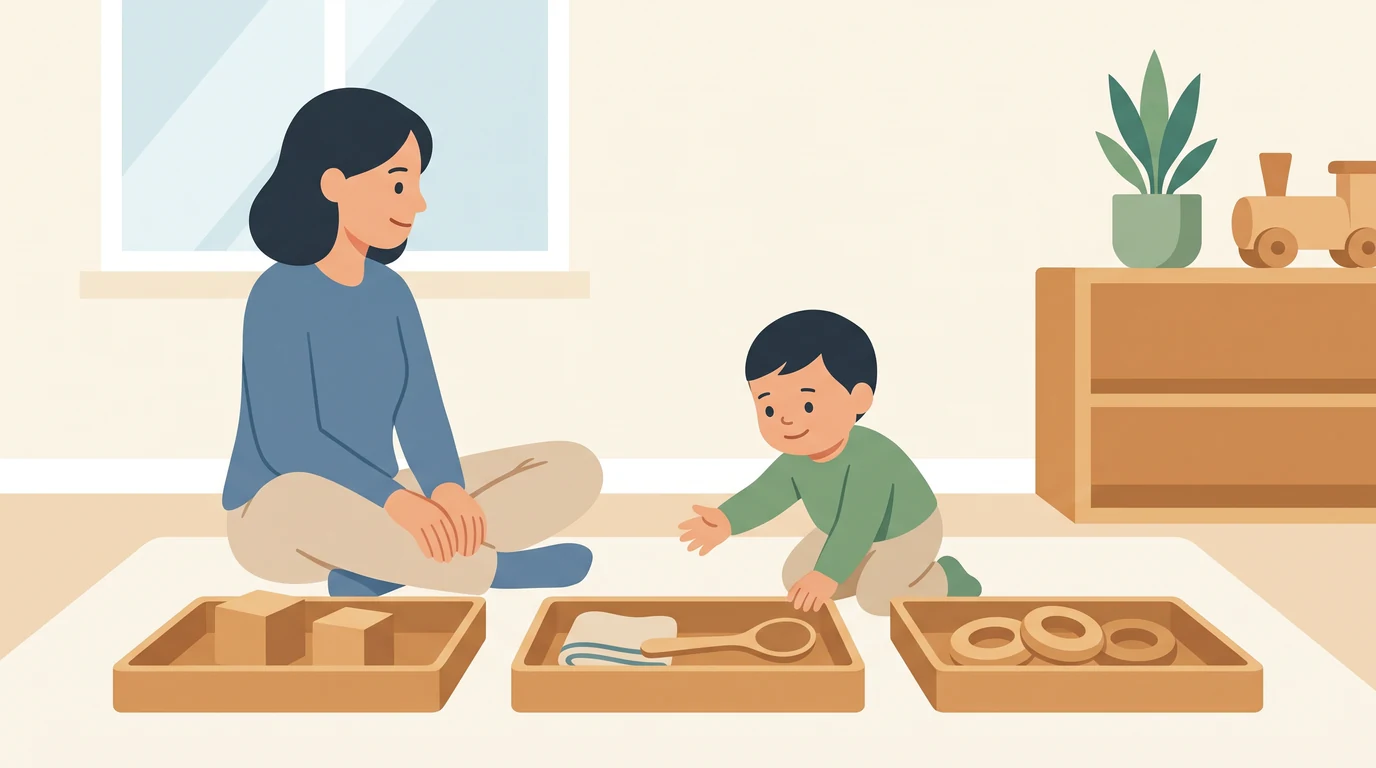
At 2, language moves fast. Many toddlers go from single words to two and three word combinations within months, and understand far more than they can say. They also want ownership of whatever is in front of them: pouring it, choosing it, carrying it, being the one who did it. And they can follow a two-step instruction now, something like “get the ball and bring it here,” out of reach a few months ago.
That combination changes what actually works when you’re choosing activities for 2 year olds. The shortage was never ideas. It’s matching an idea to how much attention you have left, how long you can spend on setup, what cleanup will cost you, and how loud your house can be. That decides whether an activity works today, more than the category it falls into.
Activities for 2 year olds: pick by what you can give, not by category
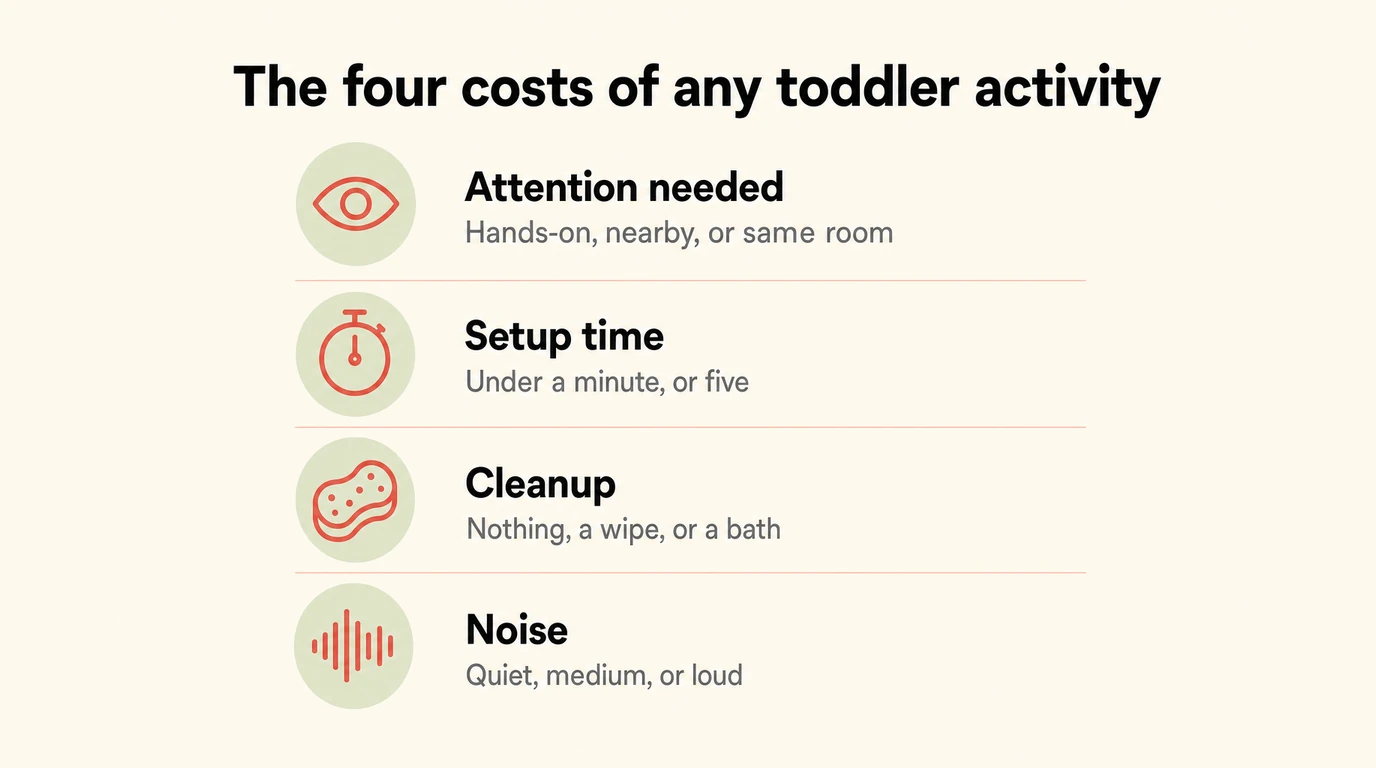
Most lists of toddler activities are organized by type: art, sensory, gross motor. That’s useful for whoever wrote the list, not for you standing in the living room with twenty minutes before dinner. The real question is what you have to give right now.
- Attention: hands on, nearby, or room only?
- Setup: how long until it’s ready to hand over?
- Cleanup: nothing, a wipe, or a sweep and a bath?
- Noise: fine for a napping sibling and thin walls?
One rule before the list: nothing here requires a purchase. “Already have” means kitchen items, paper, crayons, tape, containers, laundry, pillows and water. Swap in a similar object if you don’t have the exact one named.
Scan the table by cost, then read the sections below for full instructions.
| Activity | Attention needed | Setup | Cleanup | Noise |
|---|---|---|---|---|
| Two-step instruction game | hands-on | under 1 min | none | quiet |
| Freeze dance | hands-on | under 1 min | none | loud |
| Copy-me mirror game | hands-on | under 1 min | none | quiet |
| Sock matching from the laundry basket | nearby | under 1 min | none | quiet |
| Bring me scavenger hunt | nearby | under 1 min | none | medium |
| Nesting pots and pans | room only | under 1 min | none | loud |
| Reread and point book game | hands-on | under 1 min | none | quiet |
| Hide the stuffed animal | nearby | under 1 min | none | medium |
| Homemade playdough | hands-on | 5 min | wipe | quiet |
| Dry pasta pouring and scooping | nearby | 2 to 3 min | sweep | quiet |
| Muffin tin color sort | nearby | 2 to 3 min | wipe | quiet |
| Tape resist art | nearby | 2 to 3 min | wipe | quiet |
| Yogurt finger paint | hands-on | 2 to 3 min | bath | quiet |
| Ice excavation | nearby | 5 min | wipe | quiet |
| Cardboard mail sorting | nearby | 2 to 3 min | none | quiet |
| Painting with water outside | nearby | under 1 min | none | quiet |
| Couch cushion obstacle course | room only | 2 to 3 min | none | loud |
| Animal walk relay | hands-on | under 1 min | none | medium |
| Bottle bowling | nearby | 2 to 3 min | none | medium |
| Pots and pans marching band | room only | under 1 min | none | loud |
| Animal pose stretching | hands-on | under 1 min | none | quiet |
| Follow the leader walk | hands-on | under 1 min | none | medium |
| Busy basket | room only | 5 min | none | quiet |
| Shallow water transfer station | nearby | 2 to 3 min | wipe | quiet |
| Sorting bowls and lids | room only | 2 to 3 min | none | quiet |
| Chalk or crayon table | nearby | under 1 min | wipe | quiet |
Activities that need only the room you’re already in
No setup, nothing you don’t already have out. Good for five spare minutes, or when you’re too tired to set anything up.
- Two-step instruction game. Give one instruction with two parts, said once: “get your teddy bear and put it on the couch.” Following two steps is a new skill at 2. Mix in silly versions to keep it playful.
- Freeze dance. Play any music, dance together, then stop the sound without warning. The surprise stop is the whole game, and two year olds find it genuinely funny.
- Copy-me mirror game. Face your child and do something simple: clap, wave both arms, stomp a foot. Let them copy you, then swap. Being copied is its own reward.
- Sock matching from the laundry basket. Dump clean socks on the floor and ask your child to find the pairs. They won’t sort correctly, and that’s fine: the real skill is comparing objects.
- Bring me scavenger hunt. Ask for one household object at a time: something red, something soft, something loud. Each round buys you a walk to another room.
- Nesting pots and pans. Open the pot drawer and let your child stack, nest, and mismatch lids to pots: real fine motor work, covered further in our fine motor activities for 1 and 2 year olds.
- Reread and point book game. Read a familiar book, but stop on each page and ask “where’s the dog” instead of reading straight through. Pointing turns a passive read into an active one.
- Hide the stuffed animal. Hide it somewhere obvious while your child watches, then help them find it. Once that’s boring, let them hide it from you and act surprised anyway.
Activities worth a few minutes of setup
Two to five minutes to get ready, worth it when you have that much runway.
- Homemade playdough. Mix two cups flour, half a cup salt, one cup water, two tablespoons oil, and food coloring if you have it, over low heat until it forms a ball. Keeps for weeks in a sealed container.
- Dry pasta pouring. Fill a bowl with dry rigatoni and hand over cups and a spoon. Skip this if your child still mouths objects: the CPSC treats anything under 1.25 inches as a choking risk under 3. Our sensory bin ideas has more setups built around pouring.
- Muffin tin color sort. Drop a crayon or paper scrap into each cup of a muffin tin, then hand over large pompoms to sort by color. Use pompoms, not buttons or beads, for the same reason as above.
- Tape resist art. Stick a few strips of painter’s tape onto paper in a rough shape, then let your child scribble the page with crayons. Peeling the tape off reveals the shape, which is what holds their attention. More in our craft activities for 2 year olds.
- Yogurt finger paint. Spread plain yogurt on a tray, add food coloring, and let them paint with something safe if it reaches their mouth. Cleanup is a bath, not a wipe.
- Ice excavation. The night before, freeze a few small toys into a container of water. Hand over the block plus a cup of warm water to pour over it: nearby, not hands-on, attention. More in our sensory play for 1 year olds.
- Cardboard mail sorting. Save junk mail and an empty tissue box with a slot cut in the top. Your child “mails” each piece through the slot. Quiet, repeatable, and free.
- Painting with water outside. Give your child a paintbrush and a cup of water to “paint” the fence or sidewalk. It dries and disappears: the look of a mess with none of the cleanup. More in our outdoor activities for 2 year olds.
Activities for when they need to move
Some days the answer isn’t attention, it’s energy. These need more space and more noise, so the limit is usually your neighbors or floor plan, not your patience. For more, see our gross motor activities for 2 year olds.
- Couch cushion obstacle course. Pull the cushions off the couch and line them up as stepping stones, or stack them to climb over. A poor fit for an upper floor apartment.
- Animal walk relay. Pick three animals and walk the room’s length as each: bear crawl, crab walk facing up, frog jump. It tires them out faster than it looks like it would.
- Bottle bowling. Line up empty water bottles and roll a soft ball at them. A soft ball keeps this apartment quiet: it’s the bottles falling, not the ball, that makes the noise.
- Pots and pans marching band. Hand over a wooden spoon and a pot and march around banging it to any song. Not apartment friendly, best saved for when nobody nearby is trying to sleep.
- Animal pose stretching. A few simple stretches named after animals, cat, dog, frog, with your child copying you. Genuinely apartment friendly, and a good choice right before nap.
- Follow the leader walk. Walk the house or yard doing different things: big steps, tiptoes, walking backward, with your child copying from behind. Keep it to walking, not jumping.
Activities that buy you fifteen minutes
This is the closest this page comes to independent play at 2. None of these are babysitting: you stay in the room, because momentum can flip into throwing rather than sorting. What these buy you is fifteen minutes where you aren’t the one running the activity. For longer stretches, see our screen-free activities for 2 year olds.
- Busy basket. Fill a basket with real household objects instead of toys: a whisk, an old wallet, measuring cups, a sealed spice jar. Real objects tend to hold attention longer than toys built for the purpose. Swap contents weekly.
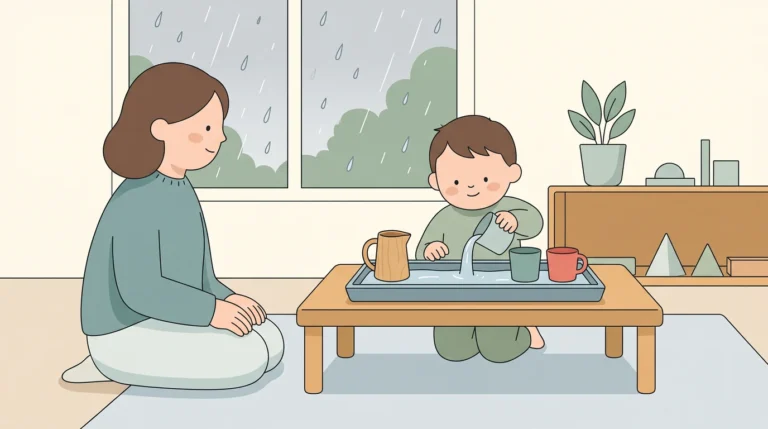
- Shallow water transfer station. On a towel on the kitchen floor, set out two bowls, one with about an inch of water, plus cups and a sponge for transferring between them. An inch isn’t a drowning risk on its own, but stay within sight and sound the whole time.
- Sorting bowls and lids. Pull a few mismatched food storage containers with lids and let your child match and nest them. Looks like a chore, but it’s a real size and shape puzzle.
- Chalk or crayon table. Paper or a section of driveway plus chalk or crayons, set at a height they can reach unaided. Choosing colors and stopping on their own is what makes this last.
When the activity fails in ninety seconds
Here’s the part almost nobody writes down: a large share of these will collapse almost immediately. You’ll set up the muffin tin sort and your child will dump it upside down and walk off. You’ll pour the water station and they’ll ask for something else before the second cup. This isn’t a sign you picked wrong. It’s the normal shape of toddler play, and it happens to every parent, including the ones reading lists with fifty ideas that never mention it.
The hard part is telling a genuine no from a slow start. Give it about ninety seconds before deciding anything. A slow start looks like circling the activity, touching it, glancing at you, then coming in. A genuine no looks like turning the whole body away, walking off, or pushing the tray off the table. If you see the second one, stop. Pushing past a genuine no rarely produces play, it produces a battle.
If it’s a slow start, the single most effective recovery move is joining in and narrating rather than redirecting. Don’t offer a new toy to save it. Sit down, pick up a piece yourself, and talk through what you’re doing: “I’m putting the blue one in this cup.” Narration hands a hesitant child a script to copy without being told what to do, and it tends to outperform verbal encouragement.
Know when to stop trying. Two real attempts is enough: the original setup, then one round of joining in. If it still isn’t landing, put it away without commentary and move to something else, ideally from a different row of the table. A muffin tin sort that failed doesn’t mean sorting failed, it might mean the child needed movement instead.
And reframe what a short session actually is. An activity that ran four minutes before your child wandered off wasn’t a failure, it was an activity that ran four minutes. The honest expected attention span at 2 is short and genuinely variable: it changes with hunger, sleep, and how novel the object still feels, shorter on a bad day for reasons that have nothing to do with how good the activity was. Stop measuring sessions against how long they should have lasted. Measure them against whether your child got something out of the time they spent.
Build a week you can actually repeat
You don’t need a new activity every day. You need a small number that work, on a schedule loose enough to survive a bad morning. Pick one room-only, one setup, and one move activity for the week, and treat the rest of the table as backups.
The other piece worth doing is toy rotation: put about two thirds of your child’s toys out of sight in a bin or closet, leave a third out, and swap the two groups weekly. This works because interest in an object depends heavily on novelty, and a toy that’s sat in the same spot for a month stops registering as an option, even though nothing about it changed. Putting it away for a few weeks and bringing it back is often enough to make it interesting again, at no cost.
Frequently asked questions
How long should a 2 year old play alone?
There’s no fixed number, and “alone” here means within sight and sound of you, not a separate room. Ten to fifteen minutes of independent occupation while you’re nearby is realistic on a good day. Some days it’s two minutes, and that’s fine.
How many activities does a 2 year old need in a day?
There’s no target count, and treating it like one is how parents end up exhausted by 10am. A handful of short sessions, mixed with ordinary chores alongside you, beats five back to back setups.
What if my 2 year old only wants screens?
This is common and isn’t a sign of anything wrong with your child. The American Academy of Pediatrics recommends limiting screen use at this age to around an hour a day of quality content, ideally watched together. Try offering a room-only activity right before the screen time your child already expects, instead of framing it as a swap.
What if my toddler refuses every activity I set up?
Check timing before you check the activity. Refusal clusters around hunger, tiredness, and transitions far more than around the activity being wrong. Try the same idea after a snack or a nap instead of right before one. If refusal is constant for weeks, mention it to your pediatrician, not because it’s necessarily a concern but because they can rule things out you can’t from home.
Do I need special toys for a 2 year old?
No. Every activity here uses things a typical household already owns, on purpose. Open ended objects, kitchen items, paper, and cushions hold a 2 year old’s interest as well as anything marketed for this age, mostly because they work more than one way. If you’re tempted to buy something, rotate what you already have first.
Is it normal for a 2 year old to lose interest so fast?
Yes. Short, sudden shifts in interest are typical at this age. See the section above on ninety second failures for how to tell a slow start from a real no.
Sources and notes
Guidance on screen time reflects recommendations from the American Academy of Pediatrics through HealthyChildren.org. Guidance on choking risk from small objects reflects published rules from the U.S. Consumer Product Safety Commission, which also documents balloons as a leading choking hazard for young children, which is why balloons don’t appear here. Developmental notes on language and two-step instructions are consistent with pediatric milestones tracked by the CDC. This article does not cite a specific study for attention span at 2, since figures vary across sources, and stays deliberately general on that point.
Sources checked on October 25, 2026. Primary references: