20 Fine Motor Activities for 1- and 2-Year-Olds

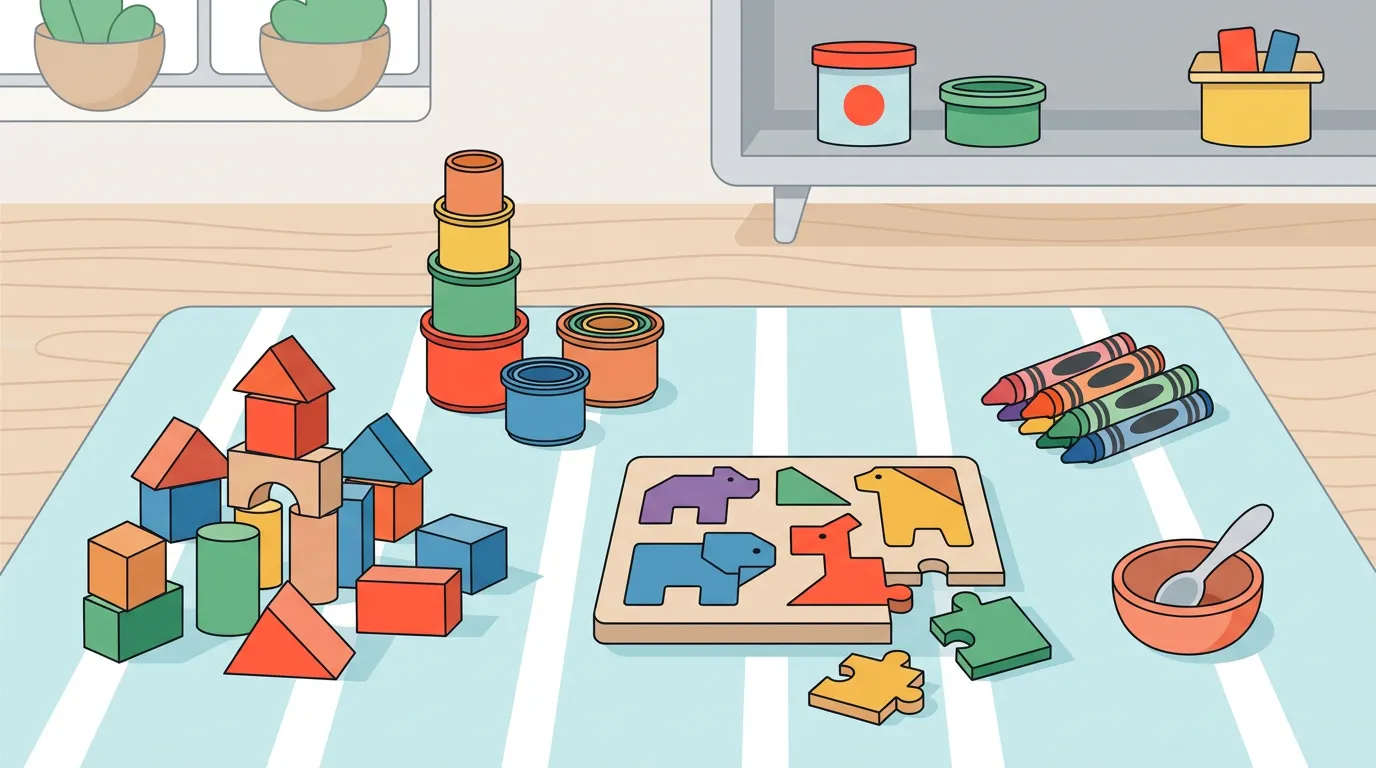
Fine motor play does not need beads, elaborate activity boards, or a long craft session. When a toddler drops a block into a bowl, pulls a cloth from a box, turns a board-book page, or steadies a container while lifting its lid, they are practicing hand control through ordinary play.
This guide offers 20 fine motor activities for 1- and 2-year-olds, organized by the movement each one invites. Every activity includes a simple setup and a way to adjust the challenge, so you can choose for the child in front of you rather than treating age as a pass-or-fail rule.
Choose an activity by the movement, not the age label
A child may be ready for one type of hand movement and not another. Start with an action they already repeat, then add one small challenge.
| If your toddler likes to… | Start with | Try next | Typical setup |
|---|---|---|---|
| drop and dump | block drop | large-object sorting | 1–2 minutes; household items |
| pull and peel | cloth pull box | painter’s-tape peel | 2–3 minutes; no purchase if supplies are on hand |
| squeeze and press | dough pressing | toddler tongs or sponge squeeze | 2–5 minutes; washable tray helpful |
| turn and twist | easy container lids | large toy nuts and bolts | 1 minute; use age-rated pieces |
| make marks | jumbo-crayon scribbling | large-sticker collage | 2 minutes; paper plus one tool |
The CDC lists stacking two small objects as a milestone most children reach by 15 months, scribbling and trying a spoon by 18 months, and holding an object in one hand while using the other by age two. These checkpoints describe skills that at least 75% of children do by the stated age; they are not a competition or a substitute for developmental screening. See the current CDC 15-month milestones, 18-month milestones, and 2-year milestones.
Safety comes before precision
Stay close enough to intervene immediately. Toddlers may mouth, throw, break, or misuse a familiar object without warning. Choose sturdy toys intended for the child’s age and inspect them before each use for cracks, splinters, loose seams, exposed magnets, or detachable parts.
Do not use beads, buttons, coins, dry beans, kernels, small pom-poms, marbles, loose magnets, button batteries, or water beads for toddler fine motor play. The U.S. Consumer Product Safety Commission defines a small part as an object that fits completely into its small-parts test cylinder and bans hazardous small parts in products intended for children under three. The CPSC also advises caregivers to remove water beads from environments where children are present. Read the CPSC small-parts guidance and water-bead warning.
Use only a shallow amount of water for washing or sponge play, remain within arm’s reach, and empty the container as soon as play ends. Keep activities seated when a toddler is using a spoon, tongs, spray bottle, or other tool. If a child repeatedly mouths a material, stop and choose a large-piece, non-art activity instead.
Five grasp-and-release activities
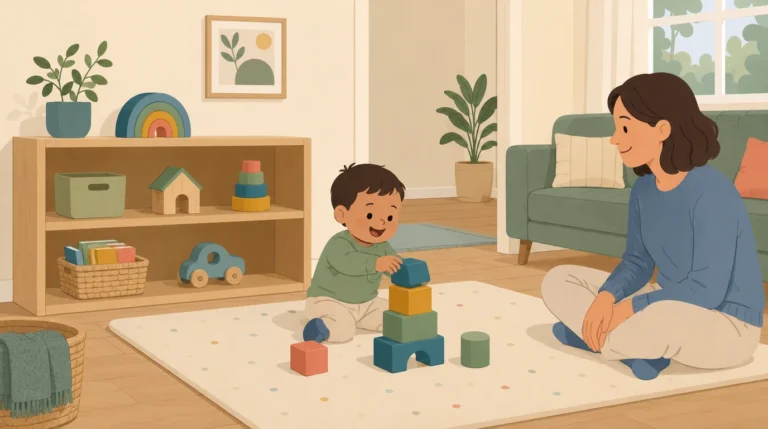
- Block drop. Put four or five large blocks beside a wide, unbreakable bowl. Let the child drop them in and tip them out. Make it easier with a laundry basket; add challenge with a slightly narrower opening while keeping every block safely large.
- Muffin-tin rescue. Place large washable balls or chunky blocks in a muffin tin. Lifting them out changes the hand position without adding extra rules. Steady the tin for a younger toddler; let an older toddler hold it with the other hand.
- Nesting cups. Offer two large cups to separate, stack, and knock down. Add one cup at a time only while interest continues. There is no need to sort by size or color.
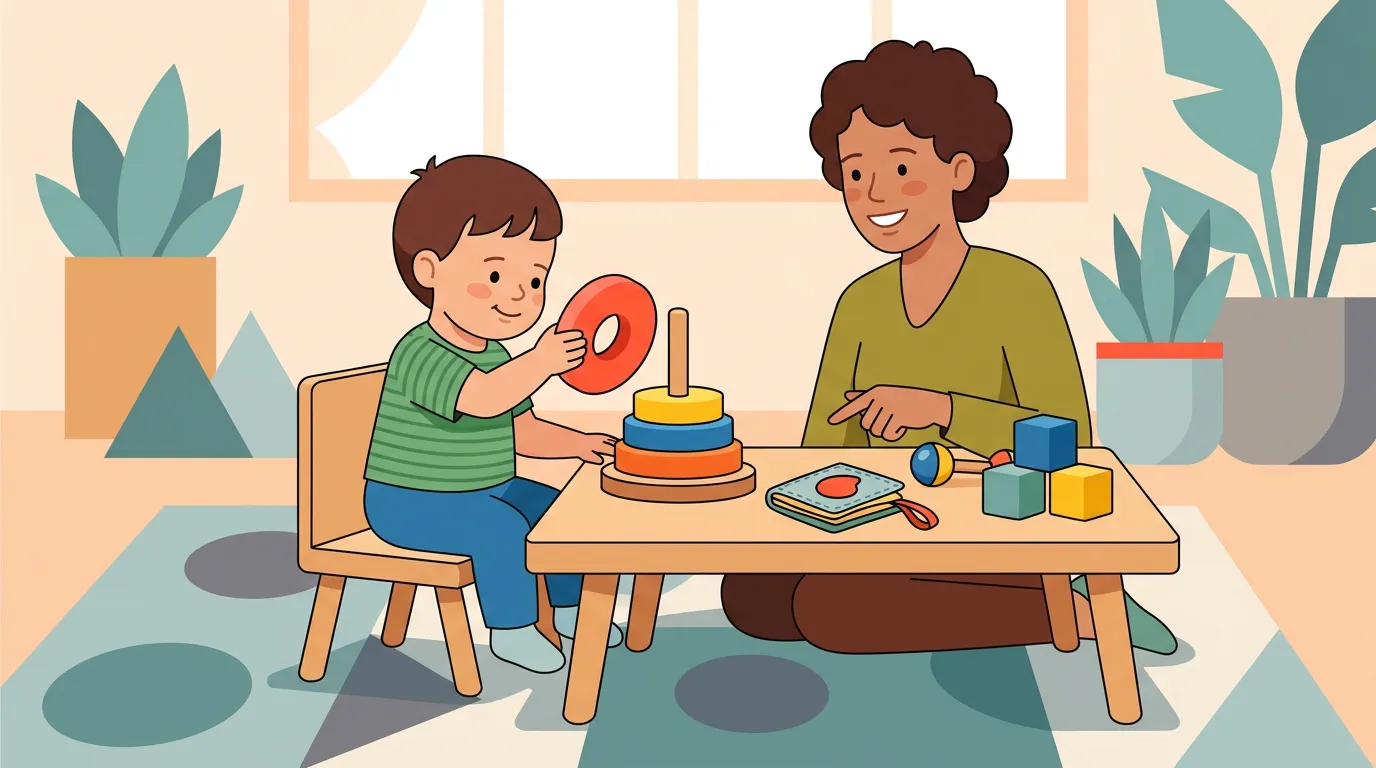
- Large ring stack. Use a short, stable stacking toy made for toddlers. Begin with one or two rings. Turn the base toward the child or hold it steady if aiming is frustrating.
- Soft-toy delivery. Put a basket a few steps away and invite the child to carry one stuffed toy to it. A sitter or crawler can move the same toy between two containers placed within reach.
Five two-hand coordination activities
- Open-and-close containers. Offer large food-storage containers with easy fitted lids and no loose parts. The useful action is holding the base with one hand while the other lifts or presses the lid. Avoid screw-top food jars that could break or have sharp threads.
- Cloth pull box. Loosely place washcloths in a wide tissue-box-style container with all plastic film removed. Leave one corner visible for pulling. Use short cloths, supervise throughout, and put them away after play.
- Board-book page turns. Pause during reading so the child can turn a thick page. Hold the book steady if needed. Skipping pages and turning several at once are normal parts of the activity.
- Toy washing. Put one durable toy, one damp sponge, and an empty bowl on a towel. The child holds the toy while wiping or squeezing. Use plain water only and dry spills promptly.
- Painter’s-tape peel. Press three short strips of painter’s tape onto a tray, folding back one end of each strip. The lifted tab reduces frustration. Keep tape pieces out of the mouth and discard them immediately after use.
Five pinching, pointing, and placing activities
- Large-sticker collage. Partly lift the edges of three or four large stickers and place them along a sheet of paper. Peeling and pressing encourage finger isolation. Hand over one at a time and remove any sticker that goes toward the mouth.
- Dough pinch and press. Put a small amount of commercially labeled, age-appropriate dough on a tray. Model pressing with one finger, squeezing, and pulling it into two pieces. Non-toxic dough is not food; stop if it is mouthed.
- Large-knob puzzle. Offer one or two pieces beside a sturdy puzzle. Turning, tapping, and setting a piece near its space all count as exploration. Rotate the board rather than moving the child’s hand for them.
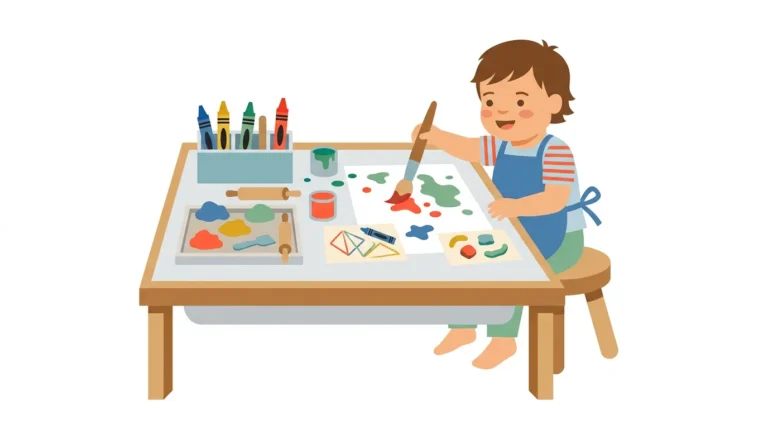
- Jumbo-crayon marks. Secure a large sheet of paper and offer one washable jumbo crayon. Broad lines, dots, and brief scribbles are enough. Remove broken or mouthed crayons. For more process-based ideas, see our toddler art and craft guide.
- Large shape posting. Use a commercially made posting toy or shape sorter with its original, age-rated pieces. Begin with one easy opening. Do not cut narrow slots into rigid homemade lids, which may leave sharp edges or invite unsafe small substitutes.
Five early tool and wrist-control activities
- Spoon transfer. Put several large bath toys or oversized wooden balls in one bowl and set an empty bowl beside it. A toddler can move them with a large spoon. Hands are a valid alternative; never use dry beans or other small fillers.
- Toddler tongs. Use age-rated tongs to move large soft blocks. Start by squeezing the empty tool, then offer one object. Stop if the tongs are waved near the face or carried while walking.
- Plain-water spray. Put plain water in a child-sized spray bottle and aim it at a washable outdoor wall or shower surface. Repeated pumping works the fingers and grip. Never put cleaner in a bottle used for play.
- Large toy nuts and bolts. Choose a toddler-designed set with pieces that cannot fit in the mouth. Loosen a nut first, then let the child turn it while holding the bolt. This invites wrist rotation and two-hand work without adult hardware.
- Large-object sorting. Put red and blue chunky blocks beside two bowls. Sorting by color is optional; accurate release into either bowl is useful practice. Use only two groups and four to six objects so the setup stays manageable.
Make the same activity easier or harder
- Change the target, not the object safety. Use a wider bowl or bring it closer to make posting easier. Narrow the opening slightly to add precision, but keep the objects large.
- Change stability. Place a non-slip mat under bowls and puzzles. Later, invite the child to steady the item with one hand.
- Change resistance. Start with soft dough, an easy lid, or loose tongs. Add modest resistance only after the action is comfortable.
- Change the number of steps. Offer one item at a time, then add a simple sequence such as pick up, place, and tip out.
Demonstrate once and wait. If the child looks away, throws repeatedly, becomes upset, or asks for help through a gesture or sound, simplify or stop. Hand-over-hand guidance is not required; forcing a resistant hand can make play uncomfortable.
Build a low-cost weekly rotation
You do not need 20 prepared stations. Keep two familiar choices available for several days, then swap one. A practical rotation might use cups and a board book on Monday, tape and a block drop on Wednesday, and dough or large stickers at the weekend. Most household setups cost nothing if you already have a bowl, washcloths, paper, and blocks. Purpose-made puzzles, tongs, and nuts-and-bolts toys are optional; compare age rating, piece size, washability, and replacement-part availability before buying.
For a broader mix of movement, language, and sensory ideas, use our 45 at-home activities for one-year-olds. The lists overlap only where a familiar action serves more than one kind of play.
When to ask for professional guidance
One difficult activity does not identify a delay. Bring observations to your child’s pediatric healthcare professional if the child loses a skill they previously used, movement causes pain, they consistently avoid using one hand, or you have broader concerns about how they play, move, communicate, or manage everyday tasks. CDC milestone checklists can help you describe what you are seeing, but they do not replace screening or evaluation.
Frequently asked questions
How long should fine motor play last?
There is no required duration. A few focused drops, page turns, or dough presses can be a complete session. Continue while the child is interested and handling materials safely; stop when they move away, become distressed, or begin using the setup unsafely.
Do I need special Montessori or fine motor toys?
No. Bowls, washcloths, board books, large blocks, paper, and a sponge support many of the same grasping, releasing, turning, and two-hand actions. If you buy a toy, choose for safe piece size, durability, and the movement it invites rather than a marketing label.
Are beans, rice, or pom-poms safe for toddler transfer games?
They are not a good choice for children under three who may mouth or scatter them. Use large bath toys, chunky blocks, fabric squares, or other intact age-appropriate objects instead. Supervision does not turn a choking-size object into a suitable toddler material.
Should I encourage a preferred hand?
Let toddlers choose either hand and place materials near the center so both sides are available. Do not force a hand preference. Consistently avoiding one hand, pain, or loss of a previously used skill deserves a conversation with a pediatric healthcare professional.
Sources and review notes
Developmental and safety claims were reviewed on July 26, 2026. Primary references:
- CDC: Milestones by 15 Months, updated May 15, 2026
- CDC: Milestones by 18 Months, updated May 15, 2026
- CDC: Milestones by 2 Years, updated May 15, 2026
- CPSC: Small Parts Ban and Choking Hazard Labeling
- CPSC: Water Beads Information Center