Indoor Activities for 2 Year Olds, Sorted by Why You’re Stuck Inside

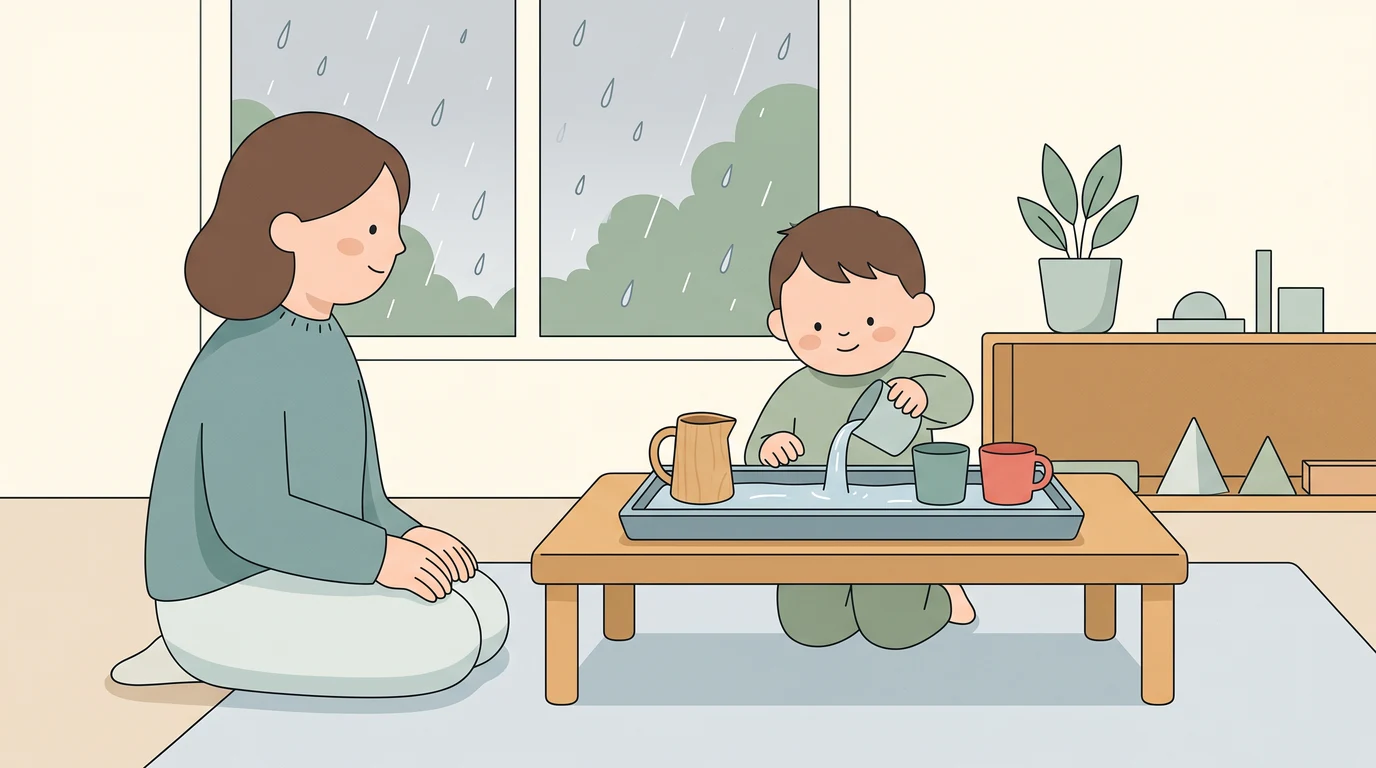
Not every indoor day is the same day. Good indoor activities for 2 year olds depend on why you are inside, because the reason changes what will actually work. A child with too much energy on a rainy morning needs the opposite of a child running a fever, and a parent who is exhausted or working needs something different again from a family in a small apartment with someone asleep downstairs.
This article is organized around five situations: bad weather, an ill toddler, an ill or exhausted adult, thin walls with neighbors below, and a long dark or hot stretch. Jump to the one that matches your day. Think of it as indoor play for 2 year olds sorted by the problem it solves, with a noise rating on every activity.
Indoor activities for 2 year olds at a glance
The noise rating is the same scale throughout. Low means quiet enough for a sleeping baby or a napping neighbor. Medium means normal indoor sound: talking, footsteps, a dropped toy. High means running, jumping, or things landing on the floor, so plan it for a time and a floor that can take it.
| Activity | Best for which situation | Noise | Setup | Cleanup | Space needed |
|---|---|---|---|---|---|
| Sofa cushion obstacle course | Bad weather | High | 3 min | 3 min | Living room floor |
| Indoor bowling with empty bottles | Bad weather | Medium | 3 min | 2 min | Hallway or living room |
| Animal walk relay | Bad weather | High | 0 min | 0 min | Any open floor |
| Freeze dance | Bad weather | High | 1 min | 0 min | Any open floor |
| Masking tape road with ride-on toys | Bad weather, neighbors below | Low to medium | 5 min | 2 min | Hallway floor |
| Sock or ball toss into a basket | Bad weather | Medium | 1 min | 2 min | Small floor area |
| Sticker page in your lap | Ill toddler, nothing left | Low | 1 min | 1 min | Your lap |
| The same three books, again | Ill toddler | Low | 0 min | 0 min | Sofa or bed |
| Warm washcloth spa for a stuffed animal | Ill toddler | Low | 2 min | 2 min | Bathroom sink |
| Large lacing cards or wooden beads | Ill toddler, neighbors below | Low | 1 min | 2 min | Sofa or table |
| Flashlight shapes on the ceiling | Ill toddler | Low | 0 min | 0 min | Bed or dim room |
| Treasure basket of household objects | Nothing left | Low to medium | 2 min | 2 min | Floor by your chair |
| Sock matching or laundry sorting | Nothing left | Low | 0 min | 0 min | Floor by the sofa |
| Wet paintbrush painting on bathroom tile | Nothing left | Low | 1 min | 1 min | Bathtub wall |
| Sticker peel and stick page | Nothing left, ill toddler | Low | 1 min | 1 min | Floor or table |
| Toddler unloads a basket of safe kitchen items | Nothing left | Low to medium | 2 min | 3 min | Kitchen floor |
| Playdough on a tray | Neighbors below | Low | 2 min | 3 min | Table or floor tray |
| Quiet sensory bin, dry rice or oats | Neighbors below | Low | 5 min | 3 min | Table or tray |
| Puzzle time | Neighbors below | Low | 0 min | 1 min | Table or floor |
| Shallow water play in a basin | Neighbors below, hot stretch | Low | 3 min | 5 min | Bathroom, towels down |
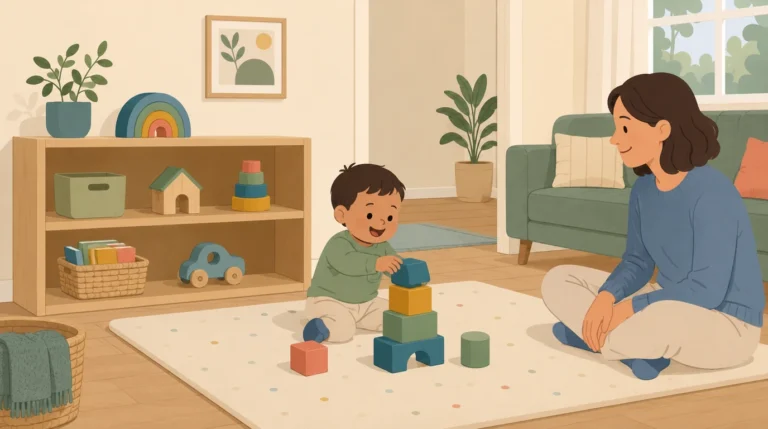
| Soft block building on a rug | Neighbors below | Low to medium | 1 min | 2 min | Rug or carpet |
| Cardboard box den | Long stretch, bad weather | Medium | 5 min | 1 min | Room corner |
| Simple mixing or stirring at the counter | Long stretch | Low to medium | 5 min | 5 min | Kitchen counter |
| Hide and seek with a favorite toy | Long stretch, bad weather | Medium | 0 min | 0 min | Any room |
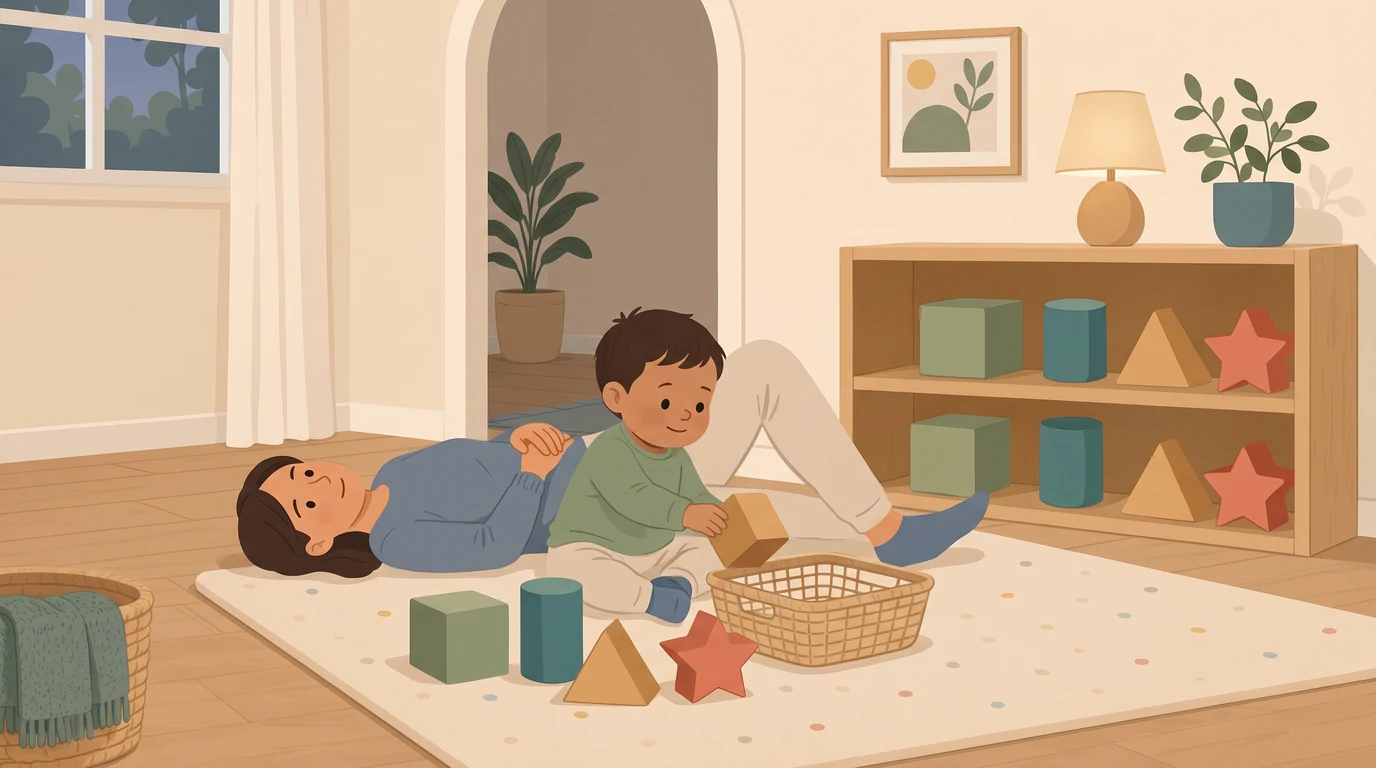
Stuck inside because of the weather
On a normal or high-energy day, the problem is not boredom. It is a body that wants to run with nowhere to put it. These six lead with movement.
Sofa cushion obstacle course
Pull the cushions onto the floor and let your toddler crawl over and between them. Noise: high. Keep it low, on carpet or a rug, and stay within reach.
Indoor bowling with empty bottles
Line up a few empty plastic bottles and roll a soft ball at them. Noise: medium. It works as a simple throw for a younger toddler and a real game once they can aim.
Animal walk relay
Bear crawl, crab walk, and frog jump from one end of the room to the other. Noise: high. No setup, no equipment, and it burns off the exact energy causing the problem.
Freeze dance
Play music, dance, stop the music, freeze. Noise: high, but it teaches stopping on command, a useful skill on a day like this. Repeat until you are both tired of it.
Masking tape road with ride-on toys
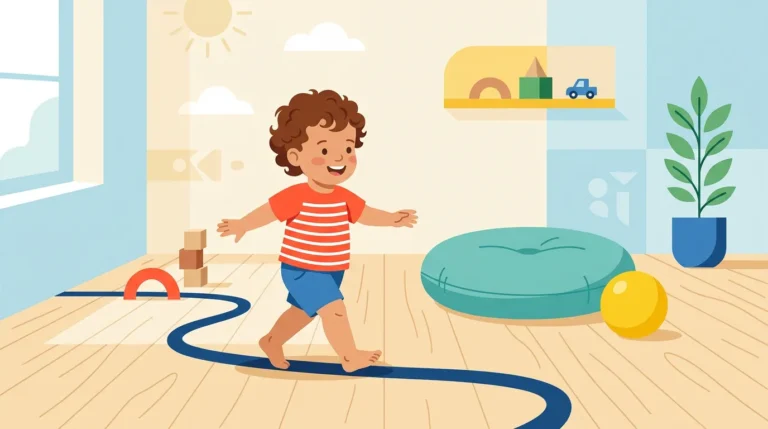
Tape a simple road across the hallway floor and drive cars along it. Noise: low to medium, so it also works when neighbors below rule out the loud options. Peel the tape up fully afterward.
Sock or ball toss into a basket
Set a laundry basket a few feet away and throw rolled socks or a soft ball into it. Noise: medium. Move the basket back as their aim improves.
Stuck inside because they are ill
A sick toddler usually needs less stimulation, not more. The goal on this kind of day is getting through it, not enriching anyone, and that is a reasonable goal on its own. These five are low demand, close contact, repetitive, and forgiving if abandoned halfway through.
This is comfort and play only. Signs that need a doctor’s attention are outside what an activities article can tell you: if you are worried, call your pediatrician rather than searching for the answer.
Sticker page in your lap
A sheet of large stickers and a piece of paper, done sitting in your lap. Noise: low. No standing up required, and it survives being abandoned mid-sticker.
The same three books, again
Pick three familiar books and read them on repeat. Noise: low. A sick toddler wants the predictable, not the new. Rereading is the point, not a compromise.
Warm washcloth spa for a stuffed animal
Wipe a favorite stuffed animal with a warm, damp washcloth and wrap it in a towel afterward. Noise: low. It mirrors what is happening to them, gently, on somebody else.
Large lacing cards or wooden beads
Threading big, toddler-sized beads onto a shoelace, seated next to you. Noise: low. Use pieces sized for this age and stay within reach while it is out.
Flashlight shapes on the ceiling
Dim the room and trace shapes on the ceiling with a flashlight. Noise: low. It works lying down next to a feverish toddler, which is the position this day usually calls for.
If your child is over 18 months, a short stretch of screen time with you next to them is a reasonable tool on a day like this, not a failure. The AAP recommends that caregivers of children 18 to 24 months pick high-quality, age-appropriate content and watch it together. Under 18 months, AAP guidance is to skip recreational screen time and lean on the ideas above, or use a video call with a familiar face instead. For screen-free options beyond a sick day, see our guide to screen-free activities for 2 year olds.
Stuck inside because you have nothing left
This is the case most lists skip. The child is fine. You are not, whether that is a migraine, a work call, or a night with no sleep in it. Every one of these runs from a chair or the floor.
Treasure basket of household objects
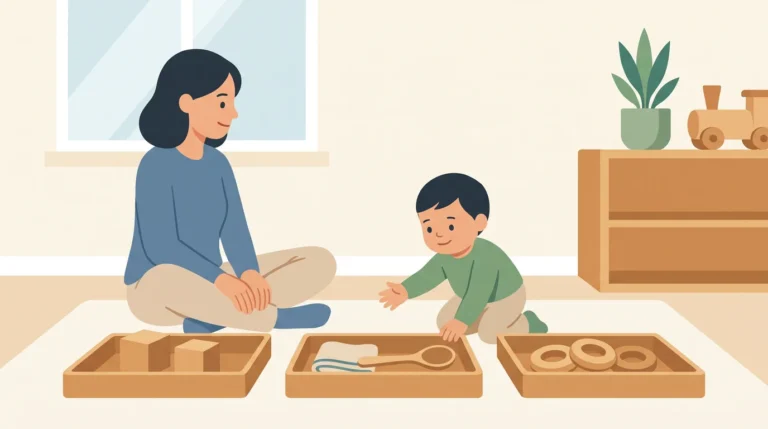
Fill a basket with safe, everyday objects: a wooden spoon, a small pot, a soft brush. Let your toddler empty it on the floor by your chair. Noise: low to medium. Check every item is too big to swallow with no loose small parts.
Sock matching or laundry sorting
Tip a basket of clean socks onto the floor by the sofa and let them match or sort while you sit. Noise: low. It genuinely helps you, which is rare for a toddler activity, and needs no setup.
Wet paintbrush painting on bathroom tile
A cup of water and a paintbrush, “painting” the tub or tile wall while you sit on the closed toilet lid. Noise: low. It dries on its own, so there is nothing to clean up.
Sticker peel and stick page
The same sticker page from the sick day list works here too, for the same reason: it needs nothing from you beyond sitting nearby. Noise: low.
Toddler unloads a basket of safe kitchen items
A low cupboard of plastic containers and lids to pull out and stack, while you sit at the table nearby. Noise: low to medium. It will not be tidy. Tidying it is a second activity for later.
None of these need a special toy. A cupboard of things you already own does the same job as a boxed activity kit, and there is no reason to spend money on one for an afternoon like this.
Stuck inside with neighbors below
A small apartment with someone underneath needs quiet built into the activity, not asked for afterward. Nothing here relies on your toddler remembering not to jump.
Playdough on a tray
A ball of playdough, a tray to keep it contained, and a couple of blunt tools. Noise: low. Squishing and rolling are both silent, which is most of the appeal here.
Quiet sensory bin with dry rice or oats
A shallow bin of dry rice or oats with cups and spoons for scooping, on a tray to catch spills. Noise: low. Stay within reach, since this is supervised, for a toddler past the stage of putting handfuls in their mouth. For more, see our sensory bin ideas.
Puzzle time
A chunky wooden puzzle at the table. Noise: low. It also runs longer than most people expect if you resist the urge to help every piece in.
Shallow water play in a basin
A basin with an inch or two of water, a few cups, and a towel underneath. Noise: low. This is indoor water play at its simplest, and it carries the same rule as any water play at this age: never leave your toddler alone with the basin, even for a moment, and empty it right after.
Soft block building on a rug
Fabric or foam blocks on a rug, which land silently when the tower falls. Noise: low to medium. Wooden blocks do the same job but land louder, so save those for a weather day instead.
Stuck inside for a long dark or very hot stretch
Winter darkness by four in the afternoon, or heat that makes the yard unusable, is a different problem from a single rainy morning. There is too much time to fill with any one activity, so a rotation works better than a plan. Loop through four modes: a block of movement, such as an animal walk or cushion course, a quiet table activity, such as playdough or a puzzle, a block of independent play, such as the treasure basket, and a change of scenery, even a snack eaten on a blanket on the floor.
A cardboard box den gives the rotation a home base between blocks. Simple mixing or stirring at the counter, supervised, works as a mid afternoon change of pace. When the stretch is about heat, four minutes on a shaded porch still counts as a change of air; our outdoor activities for 2 year olds guide has options for when it clears or cools enough to go further.
Indoor movement without wrecking the room
A safe indoor gross motor setup is low, on a soft surface, with an adult close enough to catch a fall. Sofa cushions on the carpet work. A cushion on a dining chair does not, because the chair can slide or tip. The honest limit: nothing that can move under a climbing toddler, and nothing taller than they can comfortably fall from.
Bookshelves, unsecured dressers, and sofa backs are not climbing equipment, no matter how climbable they look. If your toddler wants to climb regularly, a dedicated indoor climbing toy rated for their age is a better answer than furniture, and one of the few purchases here worth considering. For more movement ideas, see our gross motor activities for 2 year olds.
When nothing is working
Some days, every activity here fails within two minutes. That is not a sign you are doing it wrong. A few concrete resets work better than a new activity.
- Change the room. Moving from the living room to the kitchen or a bedroom resets the mood more often than it should.
- Change the temperature. Opening a window, or running the tap over their hands, breaks a meltdown loop for a lot of toddlers.
- Add water in any form. A cup at the sink, a damp cloth, or the basin from the neighbors section above.
- Get outside for four minutes, even in bad weather. A coat by the door and a stand under the awning counts.
- Lower the bar. Screen time, an early snack, or sitting on the floor together in silence are legitimate endings to a day gone wrong, not failures of it.
For a wider set of ideas once this particular day is behind you, our activities for 2 year olds hub covers indoor and outdoor options together.
Frequently asked questions
What to do with a toddler on a rainy day
Start with movement rather than a table activity. A rainy day usually means normal or high energy with nowhere to spend it, so a cushion course, an animal walk relay, or freeze dance does more than a quiet craft. Save the quiet activities for after the energy is out.
How do I entertain a toddler in a small apartment
Choose activities that are quiet by design rather than asking your toddler to be quiet. Playdough, puzzles, a dry rice sensory bin, quiet craft activities for 2 year olds, and shallow water play in a basin all rate low on noise without constant reminders. Save running and jumping for a park or a time when noise matters less.
How much indoor play does a toddler need
There is no official number for indoor time specifically. The World Health Organization recommends that 1 to 2 year olds get at least 180 minutes of physical activity at any intensity, spread throughout the day, indoors or outdoors, so it need not be continuous. A couple of movement blocks plus quiet activities across the day meets that without a schedule.
What indoor activities are safe for a 1 year old
Most of the low and medium noise activities here work as indoor activities for a 1 year old with two changes: skip anything with small, loose pieces, since everything still goes toward the mouth at this age, and stay within arm’s reach rather than nearby. The treasure basket, sock matching, and shallow water play all adapt well.
Are indoor activities for an 18 month old different from a 2 year old’s
Mostly in duration, not the activity itself. An 18 month old will do two or three minutes of a puzzle or sticker page before moving on, where a 2 year old might hold attention for ten. Offer the same activity and let them set the pace.
Is screen time okay when a toddler is sick
For a child over 18 months, yes, in moderation with high-quality content, and it is fine to use as a tool rather than only as a last resort. Watch it with them when you can. Under 18 months, the AAP recommends against recreational screen use, so lean on the low-demand ideas in the sick day section instead. Concerns about the illness itself are a question for your pediatrician, not a screen time decision.
Sources and notes
The screen time guidance here reflects current recommendations from the American Academy of Pediatrics and HealthyChildren.org, which distinguish between children under 18 months and those 18 to 24 months and favour co-viewing and high-quality content over strict prohibition for the older group. The physical activity figure in the FAQ comes from the World Health Organization’s guidelines for children under 5; the AAP’s guidance on toddler activity covers everyday active play. Safety points on choking, water supervision, and furniture climbing draw on published guidance from the Consumer Product Safety Commission (on small parts, drowning prevention, and furniture tip-overs) and the AAP. This article is not medical advice; for any illness concern, contact your pediatrician.
Sources checked on October 25, 2026. Primary references:
- American Academy of Pediatrics: Media and Young Minds (policy statement)
- HealthyChildren.org (AAP): Helping Kids Thrive in a Digital World
- WHO: Guidelines on physical activity, sedentary behaviour and sleep for children under 5
- HealthyChildren.org (AAP): How Active Is Your Toddler?
- CPSC: Small Parts Ban and Choking Hazard Labeling
- CPSC: Drowning Prevention
- CPSC: Anchor It! furniture and TV tip-over prevention
- HealthyChildren.org (AAP): Choking Prevention for Babies and Children