Activity Tables for a 1-Year-Old: Buy, Buy Used or Skip

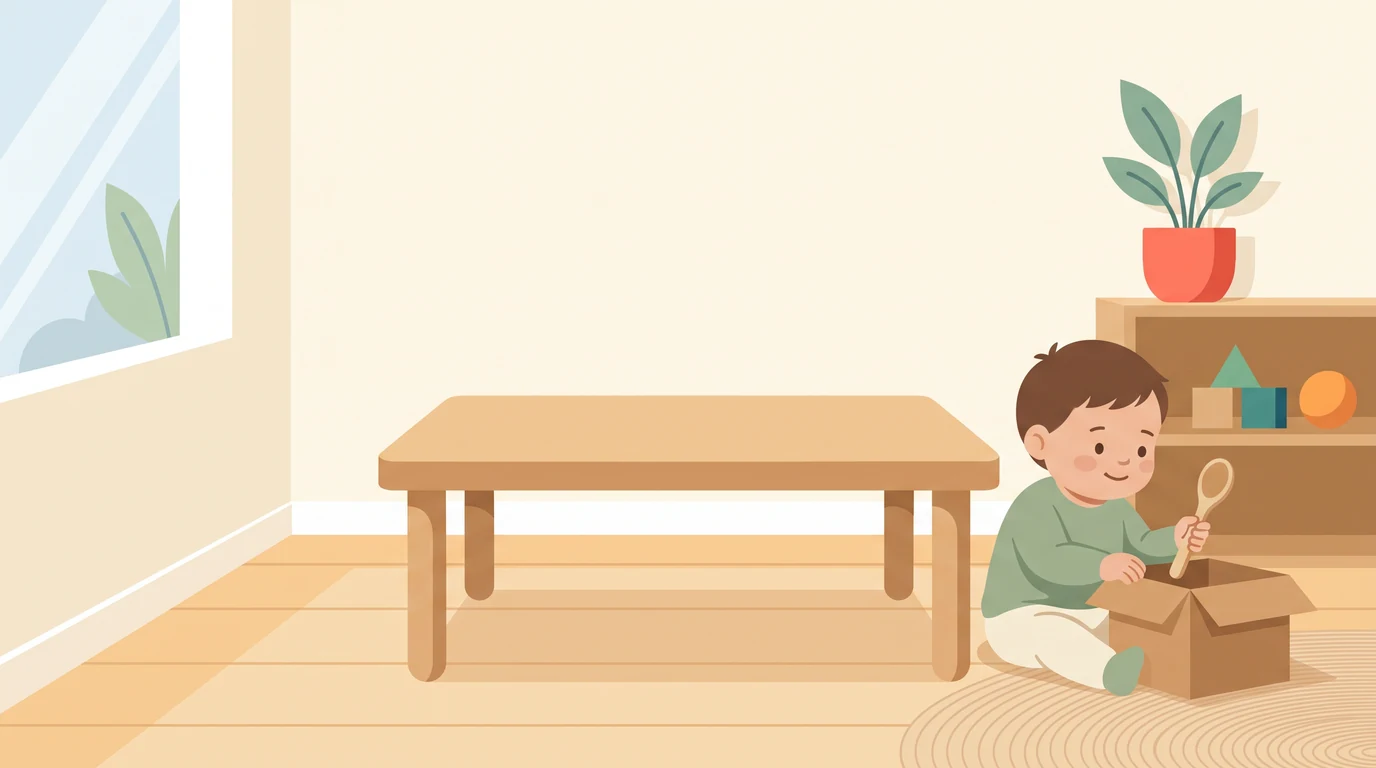
An activity table for 1 year old shows up on almost every baby registry, and it shows up again a year later in the same family’s local buy-nothing group. That is not bad luck. This is one of the most heavily resold categories in baby gear, and that single fact should decide how you shop for one, not a features list.
The short answer: buying used beats buying new by a wide margin in most categories, borrowing beats buying for anything seasonal, and at least two categories are not worth the shelf space at all. The table below gives a verdict for each type, with real price ranges and a rough cost per month. Everything after it explains the reasoning, including what to do when your toddler will not touch the thing you bought.
The short answer for an activity table for 1 year old, by category
Prices below are typical ranges from current US retail and secondhand listings, not the cheapest or priciest example you can find. The same resale logic applies whether you are shopping for a 1-year-old or activity tables for 2-year-olds.
| Category | Typical new price | Typical used price | Usable window | Rough cost per month | Verdict |
|---|---|---|---|---|---|
| Standing activity center (lights and sound) | $50 to $130 | $15 to $40 | 6 to 9 months | $7 to $17 new, $2 to $5 used | Buy used |
| Wooden activity cube | $25 to $70 | $10 to $25 | 10 to 14 months | $2 to $6 new, $1 to $2 used | Skip |
| Busy board | $20 to $60 | $10 to $25 | 12 to 18 months | $1 to $4 new, $1 to $2 used | Buy used |
| Water table | $50 to $130 | $15 to $45 | About 5 to 6 months of real play across two summers | $9 to $24 new, $3 to $8 used | Borrow |
| Sensory or flip-top play table | $40 to $100 | $15 to $40 | 12 to 18 months | $3 to $7 new, $1 to $3 used | Buy used |
| Multi-piece activity gym | $80 to $200 | $30 to $90 | 8 to 12 months | $8 to $20 new, $3 to $9 used | Skip |
| Ride-on with an activity panel | $40 to $90 | $15 to $40 | 10 to 14 months | $3 to $8 new, $1 to $3 used | Buy used |
| LEGO-style build table | $140 to $260 | $50 to $120 | 6 to 9 months, and only once your toddler is close to 3 | $19 to $35 new, $7 to $16 used | Skip |
Notice what is missing from the verdict column: buy new appears nowhere. Families replace these items so often, and so predictably, that the secondhand market has already done your price negotiation before you start looking.
Standing activity centers and why they date so fast
Parents often search for these as activity centers for 1-year-olds. Standing centers are built around a narrow physical stage: pulling up, cruising, and bearing weight on straight legs, roughly 8 to 14 months old. Once a child is walking confidently, usually between 12 and 18 months, a stationary center stops being interesting because it cannot go anywhere. That is why so many appear on resale groups within weeks of a first birthday.
Stationary centers with lights and sound
This is the classic unit: a seat or standing ring surrounded by a fixed panel of buttons, lights and music. New units typically run $50 to $130. Secondhand, the same unit sells for $15 to $40, often still in its original box. Buy used. Check the battery compartment before you hand it to a toddler: it should need a screwdriver or two separate actions to open, not a fingernail.
Multi-piece activity gyms
These combine a standing panel with extras: a small slide, sometimes a ball pit, sometimes a tunnel. They take up floor space a stand-alone panel does not, and the extra pieces are usually the first thing to go missing in a move. New, expect $80 to $200. Used, $30 to $90, often missing a piece or two. Skip this category unless you already have the space and a specific gap it fills. A slide you already own plus a step stool usually does the same job.
Ride-ons with an activity panel
A push car or walker with a small panel of horns, lights and shape sorters built into the dashboard. The panel matters most before a child can push the toy under their own power, so its useful life is short: 10 to 14 months. New prices run $40 to $90, used $15 to $40. Buy used. Push it across a hard floor and check it does not tip sideways when a toddler leans on the panel: the main failure mode on ride-ons this size.
Wooden activity cubes and busy boards
These two get grouped together because they solve the same problem in different materials: one object with several small activities built into it.
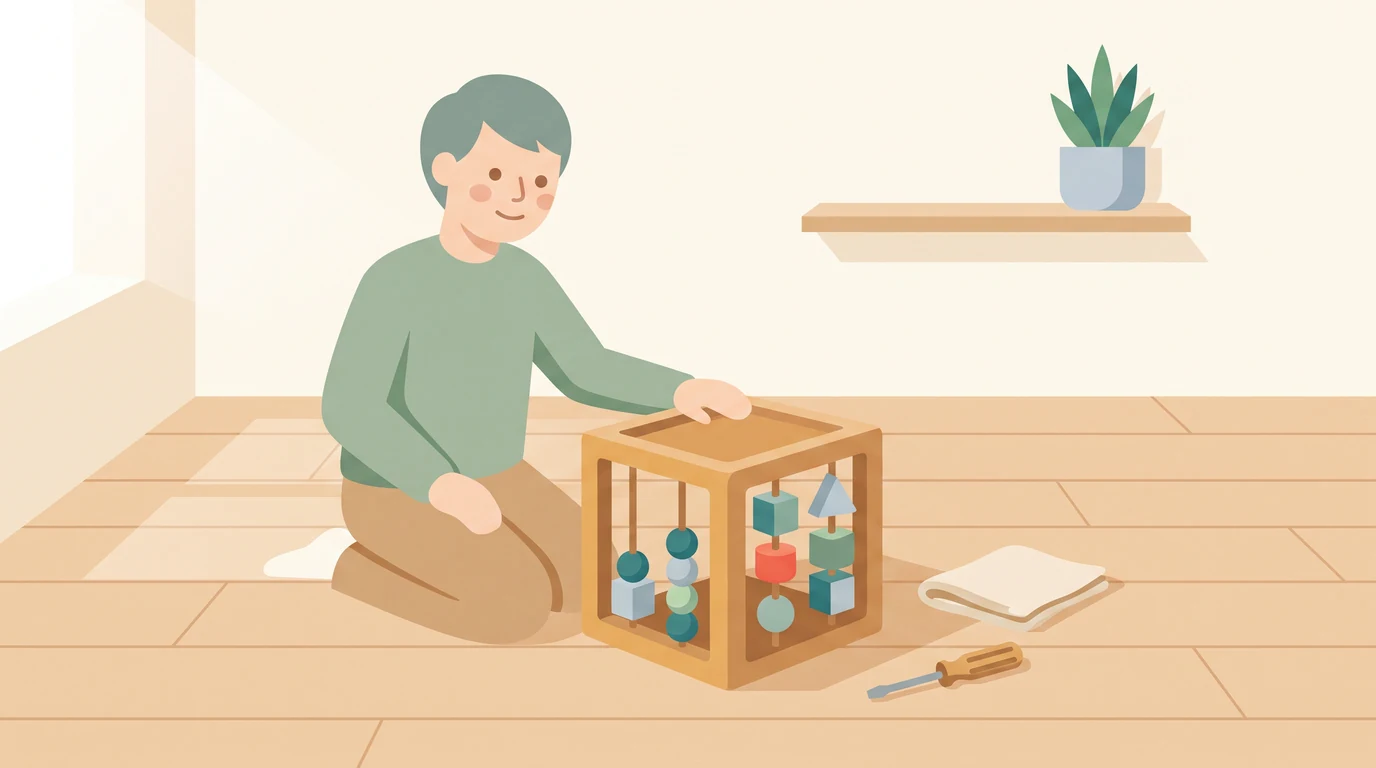
Wooden activity cube
A wooden cube with a different activity on each face: a bead maze, a shape sorter, a small clock, a spinner. New, these run $25 to $70. Used, $10 to $25, and condition is usually fine because wood does not wear the way plastic does. Cheap enough to justify buying new, except price is not the problem. A fixed cube cannot be swapped or simplified the way loose toys can, so a child who masters all six faces has nowhere to go next. Skip it and put the money toward two or three single-purpose toys instead, the kind covered in our guide to Montessori toys for 1-year-olds, which can be rotated as skills change.
Busy board
A board of latches, zippers, switches and locks, sometimes framed, sometimes flat. Some parents search for these as activity boards for 1-year-olds rather than busy boards. Same thing. Done well, this is genuine fine-motor practice: the pinching, twisting and pulling covered in our fine-motor skills activities guide. New boards run $20 to $60, used $10 to $25. The window is longer than a cube, 12 to 18 months, because growing hand strength keeps giving them new latches to try. Buy used here, but check that every latch actually works first. A busy board with three broken mechanisms is just a board.
Water and sensory tables
Water tables
A water table is genuinely seasonal, which changes the math. Realistic use is 8 to 10 weeks a summer, and most families get two useful summers out of one before the child prefers a hose or a real pool: roughly 4 to 6 months of actual play across a year and a half of ownership. New tables run $50 to $130, used $15 to $45. Borrow one if you can. A neighbor or local parents’ group likely has one sitting unused in a garage, and a one-summer loan avoids storing a large plastic table for nine months of the year.
Say the safety point plainly, because it gets softened everywhere else: a toddler can drown in 1 to 2 inches of standing water. A water table holds more than that. Never leave a toddler alone with one, not even to answer the door, and empty it completely the moment play ends. Do not let water sit in it between uses.
Sensory or flip-top play tables
Contained tables with a lid, usually holding rice, water beads, kinetic sand or a rotating bin insert. New, $40 to $100. Used, $15 to $40. The usable window runs 12 to 18 months. Buy used, and check that the lid still seals and the bin is not cracked. Whatever filler you choose, keep it choking-safe for this age: dry rice and large sensory beads, not anything that fits inside a toilet paper tube.
Build tables and what age they actually start working
A dedicated LEGO-style or Duplo build table, a low surface with a baseplate built into the top, usually with storage underneath. New tables run $140 to $260. Used, $50 to $120, holding value better than most plastic gear because the blocks stay useful for years. Price is not the real problem here.
Large building blocks work for stacking and mouthing from around 18 months, but sustained, purposeful building, the kind a dedicated table is meant to support, usually does not show up until closer to 2.5 to 3 years old. Before that, a toddler is just as happy building on a placemat on the floor. Most readers here are buying a table for a stage that has not started yet. Skip it for now. Buy the blocks, use the floor, and revisit a table after the third birthday if the interest turns out real.
The case for buying nothing
Before you buy any of the above, run this test on what you already own: a low shelf, a set of nesting bowls, a wooden spoon, a basket of clothespins. The floor plus three ordinary household objects often beats a $100 activity center, and not because it is cheaper.
Most standing activity centers are built to be visually busy and reactive: buttons that light up, phrases that play back, music that starts the moment a hand lands on the panel. Our guide to choosing Montessori toys uses a six-question test for exactly this problem, and the first question matters most here: does the child act on the toy, or does the toy act on the child? A center that lights up and talks back is doing the acting. The child is a spectator with a hand on a button.
The American Academy of Pediatrics has said plainly that the best toys do not need batteries, an app or a soundtrack, and that children talk less, and are talked to less, when the toy in front of them does the entertaining. That does not mean every electronic toy is harmful. It means a $100 activity center is not obviously buying more development than a shelf and a wooden spoon, and in a category this heavily resold, that is worth knowing before you spend the money.
If floor space or budget is the real constraint, activity books for 1-year-olds and activity books for 2-year-olds solve a similar problem in a smaller footprint: flaps, textures and simple tasks for $8 to $15 new, kept on a shelf rather than resold. If you are setting up a play space from scratch, our guide to setting up a toddler playroom covers how to arrange what you already have first, and our activities for 1-year-olds and activities for 2-year-olds hubs are full of things to do with objects already in your house.
What to check before buying used
Most readers should end up here rather than in a store, but secondhand baby gear carries its own checklist.
- Recalls. Check the model against the CPSC recall database at cpsc.gov before you buy, not after. It takes two minutes and applies to every category here.
- Missing pieces. Ask for a photo of every panel, lid and accessory, not just the main unit. A broken latch or a cracked baseplate is a different price than the one being asked.
- Battery compartments. Open every battery door yourself. It should need a screwdriver or two separate actions, not a fingernail. Corrosion, a missing screw, or a door that pops open under light pressure means it is not safe for a toddler. Button and coin batteries are a severe swallowing hazard: if one is ever missing, call Poison Control at 800-222-1222 right away.
- Stability. Push down on one side and one corner. Anything that rocks, tips, or lifts a leg under normal toddler weight is a tipping hazard, not a bargain.
- Hygiene. Plastic wipes down easily. Fabric panels and seams where residue can sit are harder to clean. Factor that into the price you offer.
- Replacement parts. Search the brand and model first if a missing piece would make the item pointless. Some brands sell replacement panels or latches. Most do not, especially for older models.
You already bought one and they ignore it
This happens constantly and is not a sign you chose badly. Sometimes the timing was off, sometimes the item was too busy for that week. Here is what actually works before you write it off.
Reposition it first. Move it to a different room, face it a different direction, or put it away for two weeks and bring it back out. A toy that reappears after a break often gets a second look it would not get sitting in the same spot every day.
Strip it back. Remove the batteries so lights and sound cannot fire off on their own, and see whether your toddler engages with the physical parts on their own terms. Some children genuinely play better with a quiet center than a noisy one, and you will not know until you test it.
If neither works after a real two to three week trial, resell it. This category moves fast on local marketplaces because so many families are in the same position. Typical recovery is 25 to 40 percent of what you paid new for something clean and complete, less for anything missing parts. List it promptly: buyers are always shopping for the next age bracket, not the one your child has grown out of.
Frequently asked questions
Are activity tables worth it?
For some categories, yes, bought used. A busy board or activity center bought secondhand for $15 to $40 earns its keep. A wooden cube or activity gym rarely does, because the play value does not beat what you already own.
What age is an activity table for?
Standing activity centers suit roughly 8 to 14 months, from pulling up to confident cruising. Wooden cubes and busy boards run longer, closer to 10 months to 2.5 years. For an activity table for a 2-year-old, busy boards, sensory tables and build tables suit that stage better, since most 2-year-olds have outgrown standing centers.
Are activity centers bad for development?
Not inherently, but many are built to be visually busy and reactive rather than open-ended, which works against sustained attention. The American Academy of Pediatrics recommends simple toys over battery-powered ones for this reason. An activity center is not dangerous. It is just rarely the best use of the money or floor space.
How long will a toddler actually use an activity table?
Realistically 6 to 18 months, standing centers at the short end and busy boards at the long end. That short window is why the secondhand market stays flooded, and why buying new rarely pays off.
Is it safe to buy a used activity table?
Generally yes, if you check it first. Confirm the model against the CPSC recall database, inspect the battery compartment, test for stability, and price in any missing pieces. Skip anything with a battery door that opens too easily or a base that rocks.
What should I do if my toddler ignores their activity table?
Give it a real two to three week trial after repositioning it and removing the batteries. If still ignored, resell it. Typical recovery is 25 to 40 percent of the original price for a clean, complete unit.
Sources and notes
Safety guidance on button and coin battery hazards, and on securing battery compartments, came from the US Consumer Product Safety Commission’s public safety education materials and its drowning prevention resources, which also informed the water safety guidance on standing water depth. The recommendation to favor simple, non-electronic toys came from the American Academy of Pediatrics, via HealthyChildren.org. Price ranges were checked against current US retail and secondhand listings in August 2026 and will drift over time and by region. Treat them as a starting point for negotiation, not a quote.
Sources checked on October 25, 2026. Primary references: