Montessori Floor Bed: Safe Age, Room Setup and How to Switch

Quick answer: a Montessori floor bed is a firm mattress placed on the floor (or in a very low frame) inside a fully childproofed room, so a child can get in and out of bed on their own. It comes from the Montessori idea of freedom of movement and independence. For safety, the American Academy of Pediatrics (AAP) recommends that babies under 12 months sleep on their back in a crib, bassinet, portable crib or play yard that meets safety standards, so most families who want a floor bed wait until at least 12 months, and many make the switch between 18 months and 3 years. Whatever the age, the whole room becomes the sleep space and has to be as safe as a crib.
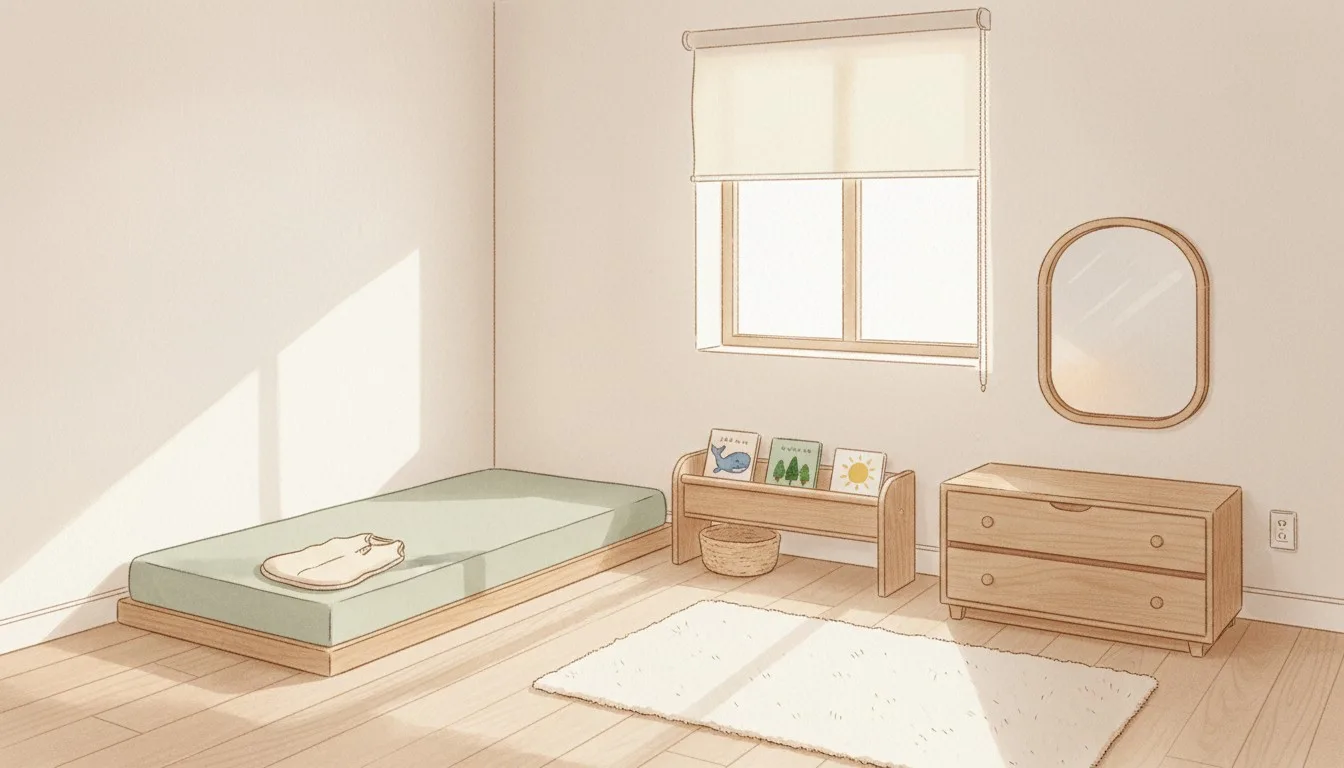
Floor beds look lovely in photos: a low wooden frame, a soft rug, a little shelf of books. But the real question for most parents is practical. Is it safe? When is the right time? Will my toddler actually stay in bed? This guide walks through what a Montessori floor bed is, what the safety guidance says, how to set up the room step by step and how to handle the first few weeks.
What is a Montessori floor bed?
A floor bed is simply a child’s mattress at floor level, with no tall rails. Some families put a crib or toddler mattress directly on the floor; others use a low frame (often shaped like a little house) that keeps the mattress just a few centimeters above the floor and allows airflow underneath.
In Montessori infant and toddler classrooms, floor beds or mats are a standard part of the sleeping area. The American Montessori Society describes these spaces as environments where equipment that limits a child’s freedom of movement is avoided, and where individual floor beds or mats let toddlers prepare for rest and get up on their own once rested. The Association Montessori Internationale has also published articles that describe the floor bed as a way for an adult to sit beside a child at bedtime and gradually step back as the child gains confidence.
The ideas behind it
- Freedom of movement. The child can see the room and move in and out of bed without waiting to be lifted.
- Independence. Getting into bed, choosing a book from a low shelf in the morning and walking to the door are small daily wins.
- Collaboration at bedtime. A parent can lie or sit next to the child, then slowly reduce their presence, instead of choosing between holding the child or leaving them behind bars.
- Order. The bed is always in the same place, inside a calm, uncluttered room with a predictable routine.
Is a floor bed safe? What the safety guidance says
This is the most important section, so here is the clear version.
Under 12 months: follow infant safe sleep rules
The AAP’s 2022 safe sleep recommendations say infants should sleep on their back, on a firm, flat, non-inclined surface in a product designed for infant sleep, such as a crib, bassinet, portable crib or play yard, covered only by a fitted sheet. The AAP also says infants should not be placed on adult-sized beds or mattresses because of the risk of entrapment and suffocation, and that the sleep area must be free of cords and wires.
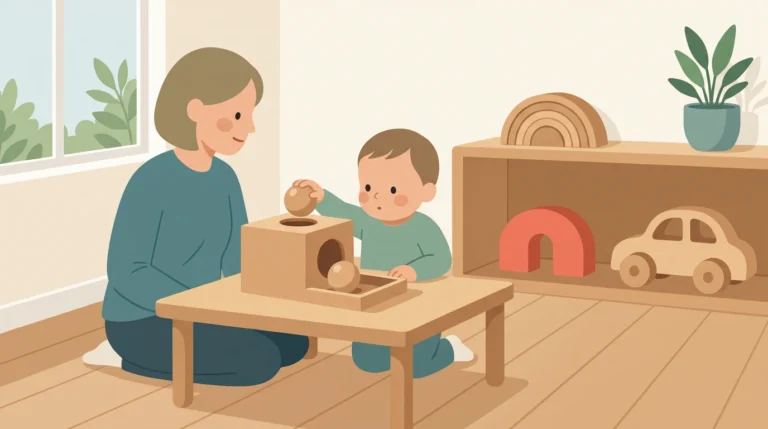
A floor bed is not one of those products. Some Montessori resources describe floor beds for young babies, but they do not override medical safe sleep guidance. For a baby under 12 months, the safest place to sleep is a crib, bassinet or play yard in the parents’ room, which the AAP recommends for at least the first 6 months. You can still bring Montessori ideas into the first year through awake time: a firm play mat on the floor, a low mirror, plenty of supervised tummy time and a few simple toys within reach.
After 12 months: possible, with a fully childproofed room
Once your child is past their first birthday, a floor bed can be a reasonable choice if the entire room is made safe. With a floor bed, your toddler can reach everything in the room at night and early in the morning, possibly while you are asleep. The bed is no longer the “safe zone”; the room is.
When do most children leave the crib?
There is no magic age. HealthyChildren.org, the AAP’s site for parents, suggests it may be time to move to a bed once a toddler can climb out of the crib. Cleveland Clinic notes that most toddlers switch between 18 months and 3 years, and that a child has outgrown the crib when they are taller than 35 inches (about 89 cm) or the rail reaches the middle of their chest when they stand. Australia’s Pregnancy, Birth and Baby service says it is safer to wait until at least 2 years old, unless the child is actively trying to climb out.
| Age | Where to sleep | Montessori ideas that fit |
|---|---|---|
| 0 to 12 months | On the back, in a crib, bassinet or play yard with only a fitted sheet, in your room for at least 6 months | Floor play mat for awake time, low mirror, tummy time, a few simple toys |
| 12 to 18 months | Crib, or a floor bed in a fully childproofed room if you choose | Low shelf with a few books, consistent bedtime routine, child-height hooks |
| 18 months to 3 years | Crib, floor bed or toddler bed; switch if your child is climbing out | Getting into bed independently, choosing pajamas, helping tidy the room |
Pros and cons of a floor bed
| Possible benefits | Possible downsides |
|---|---|
| Child can get in and out of bed alone, which supports independence | Not appropriate as an infant sleep space under 12 months |
| Very short distance if the child rolls out | The whole room must be childproofed and kept that way |
| Easy for a parent to sit or lie alongside at bedtime | Some toddlers get up repeatedly to play |
| Can last for years with a standard mattress size | Mattress directly on the floor needs airing to avoid moisture and mold |
| No need to lift a heavy toddler over a rail | Early risers may wander the room or the house before you wake |
How to set up a safe Montessori floor bed room
Get down on your hands and knees and look at the room from your child’s height. Anything they can reach, pull, open or climb is now part of their sleep environment.
1. Choose the right mattress and frame
- Use a firm mattress made for children, such as a crib or toddler mattress. Avoid memory foam toppers and very soft mattresses.
- Push the mattress into a corner or against walls with no gaps where a child could get wedged. If there is any gap between the mattress and the wall or frame, fix it or move the bed.
- If you use a frame, keep it very low, sturdy and free of tall posts or decorations a child could climb or get caught on.
- Lift and air the mattress regularly, or use a slatted base, so moisture does not build up underneath.
2. Childproof every part of the room
- Anchor furniture such as dressers, bookcases and shelves to the wall, and keep the TV out of the room.
- Cover electrical outlets and hide or secure cords from lamps, monitors and sound machines.
- Remove window blind and curtain cords or switch to cordless window coverings, and keep the bed away from windows.
- Remove small objects, coins, batteries (especially button batteries), plastic bags, medicines and cosmetics.
- Keep plants, heavy decorations and framed pictures out of reach and away from the wall above the bed.
- Add finger-pinch guards on the door if needed.
3. Make the rest of the home safe too
A child in a floor bed can leave the room. A baby gate at the bedroom door is a common solution, along with gates at the top and bottom of stairs, locked cabinets for medicines and cleaning products, and window guards. Some parents use a door alarm or a simple bell so they know when the child is up.
4. Keep the room calm and simple
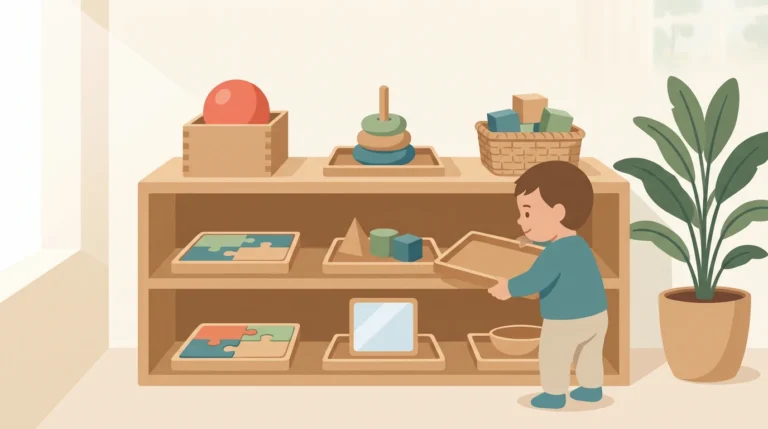
Montessori rooms are deliberately uncluttered. Instead of a toy bin, use one low shelf with a few books and quiet activities, and rotate them. Our guides on setting up a toddler playroom and choosing Montessori toys explain how to keep the selection small. In the bedroom, choose calm items: soft books, a puzzle, a basket of fabric balls. Leave noisy, light-up toys in another room.
5. Bedding for toddlers
For toddlers, a wearable sleep bag is a practical way to stay warm without loose blankets. Pregnancy, Birth and Baby recommends waiting until at least 2 years before giving a pillow. Keep the bed free of piles of stuffed animals; one small lovey is a common choice once your child is past the infant stage, but ask your pediatrician if you are unsure.
How to transition to a floor bed
- Pick a calm period. Avoid switching at the same time as a new sibling, starting daycare, toilet training or a move.
- Introduce it in the daytime. Read books on the new bed, play on it and use it for naps before the first night.
- Keep the same bedtime routine. Bath, pajamas, teeth, books, song, lights off. Predictability is what helps most.
- Use the Montessori “collaboration” approach. Sit or lie next to the bed at first, then a little farther away each few nights, then by the door.
- Return calmly. If your child gets up, quietly walk them back to bed with as little talk as possible. HealthyChildren.org suggests telling your child to stay in bed until you come for them, and praising them briefly for staying in bed.
- Expect a few bumpy weeks. New freedom is exciting. Many toddlers test it for a while before it becomes normal.
Separation anxiety often appears in the second half of the first year and can stay strong into the toddler months, which can make bedtime harder. Our article on object permanence in babies explains why your toddler may protest more when you leave the room, and simple games that help.
Floor bed vs crib vs toddler bed
| Crib | Floor bed | Toddler bed | |
|---|---|---|---|
| Safe for infants under 12 months | Yes, if it meets safety standards | No | No |
| Child can get out alone | No | Yes | Yes |
| Fall height | High if a toddler climbs over the rail | Very low | Low, often with side rails |
| Room must be fully childproofed | Recommended | Essential | Essential |
| Typical age | Birth to about 2–3 years | From 12 months, often 18 months+ | Usually 18 months to 3 years+ |
When to talk to your pediatrician
Check in with your child’s doctor if your toddler snores loudly most nights, has pauses in breathing during sleep, is very difficult to settle night after night, or wakes very frequently in a way that affects daytime mood and energy. Ask too if your child was born prematurely or has a medical condition, because the best sleep setup may be different. If your child has an injury after a fall, such as vomiting, unusual sleepiness, or a bump that worries you, seek medical care promptly.
Frequently asked questions
What age is a Montessori floor bed for?
Based on AAP safe sleep guidance, a floor bed should not replace a crib, bassinet or play yard before 12 months. After that, it can work in a fully childproofed room. Many families switch between 18 months and 3 years.
Can I put a crib mattress on the floor?
Yes, for a toddler, a firm crib or toddler mattress on the floor is a common floor bed setup. Make sure there are no gaps between the mattress and the walls, and air it regularly.
What if my toddler keeps getting out of bed?
That is normal at first. Keep the routine consistent, walk them back calmly and quietly each time, and make sure the room has nothing exciting to play with at night.
Do I need a baby gate on the bedroom door?
Many families use one, especially if there are stairs or the child wakes before the adults. It keeps the safe zone limited to the childproofed room.
Will a floor bed help my child sleep through the night?
There is no good evidence that floor beds improve sleep on their own. A consistent routine, an appropriate bedtime and a calm room matter more.
Sources
- American Academy of Pediatrics. Sleep-Related Infant Deaths: Updated 2022 Recommendations for Reducing Infant Deaths in the Sleep Environment. Pediatrics, 2022.
- HealthyChildren.org (AAP). A Parent’s Guide to Safe Sleep.
- HealthyChildren.org (AAP). Big Kid Beds: When to Switch From a Crib.
- HealthyChildren.org (AAP). Childproofing Your Home.
- Cleveland Clinic. Signs Your Child Is Ready To Transition to a Toddler Bed.
- Pregnancy, Birth and Baby (Australian Government). Moving your child from cot to bed.
- NICHD Safe to Sleep. Ways to Reduce Baby’s Risk.
- American Montessori Society. Montessori for Infants & Toddlers.
- Association Montessori Internationale. Collaborating Toward Sleep Independence.
This article is for general information and does not replace advice from your child’s pediatrician.