Taste-Safe Baby Paint: 10 Food-Based Options and a Safer Setup

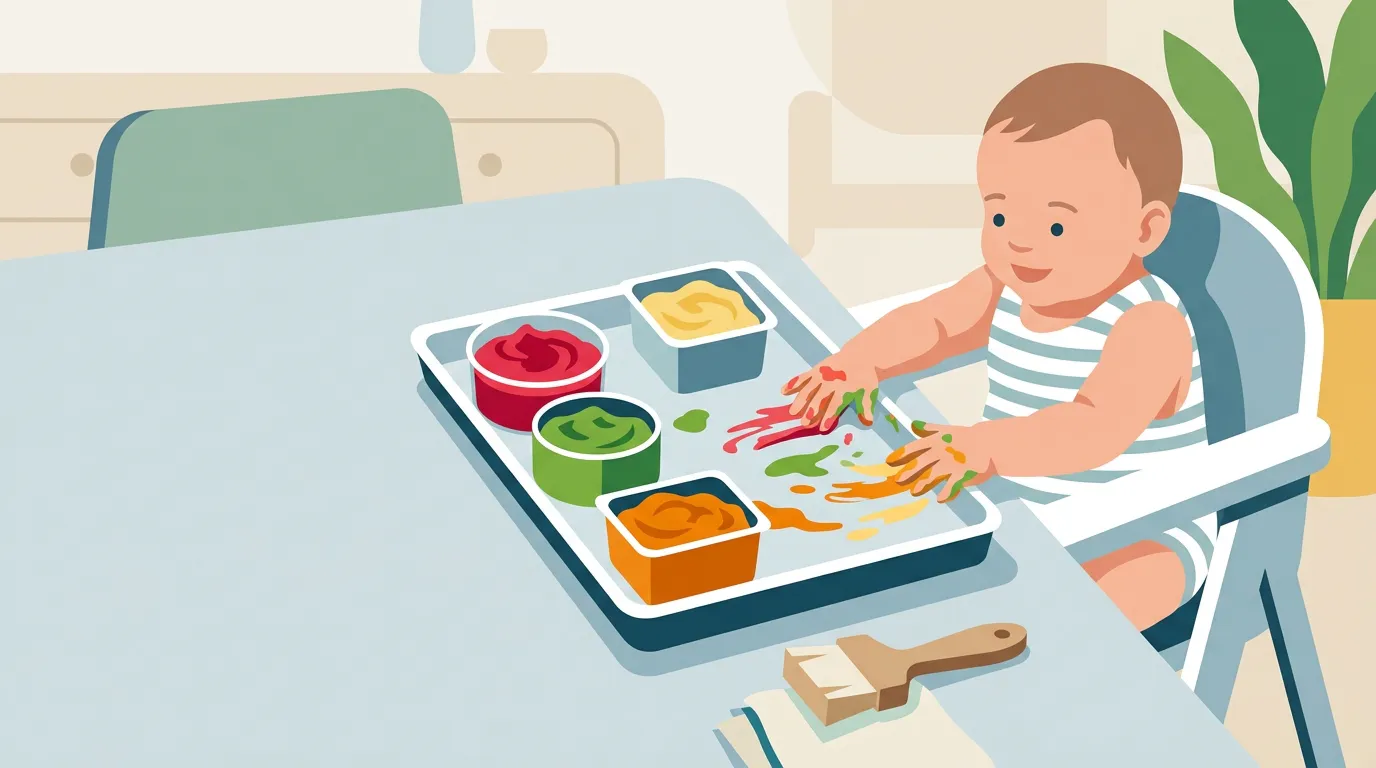
When a baby explores paint, some of it will probably reach their mouth. That changes the activity. Craft paint marked non-toxic is still an art product, not food; taste-safe baby paint is made from a food the child already eats and is offered in a small amount under close adult supervision.
This guide is for babies who have already started complementary foods and can manage a smooth purée in an upright feeding position. It is not a way to introduce solids, test a new allergen, or keep a baby occupied while an adult leaves the room. The CDC says complementary foods generally begin at about 6 months, after signs of developmental readiness appear, and advises matching food texture to the child’s development. See the CDC readiness guidance.
First, decide whether food paint fits this child today
A familiar ingredient can still be the wrong choice on a particular day. Skip the activity if the child is hungry enough to grab large handfuls, too tired to sit upright, unwell, or repeatedly stuffing food into their mouth. Ordinary mealtime is the better option when the main need is food.
| Question | Go ahead when… | Choose something else when… |
|---|---|---|
| Has the child started solids? | They already eat smooth or mashed food in an upright position. | They have not started complementary foods or are not showing feeding readiness. |
| Is every ingredient familiar? | Each food has been eaten before without a concerning reaction. | You planned to introduce yogurt, wheat, egg, peanut, sesame, or another allergen through play. |
| Can the texture be managed? | It is smooth, spreadable, and similar to food the child already handles. | It is hard, round, sticky, stringy, lumpy, or contains loose pieces. |
| Can an adult supervise continuously? | An adult can stay beside the tray and watch hands, mouth, and breathing. | The activity is meant to fill time while the adult cooks, showers, answers the door, or works elsewhere. |
For a child with a swallowing disorder, feeding therapy plan, medically prescribed diet, or previous food reaction, ask the child’s clinician or dietitian before using food as a play material. A general article cannot replace that individual plan.
A five-minute, no-food-coloring recipe
You do not need flour, sugar, gelatin, or a cooked recipe. A smooth food that already has color is enough.
- Wash your hands, the tray, and the mixing spoon.
- Set aside 1 tablespoon of a familiar smooth base before it has been served or touched.
- Divide it between two or three small cups. One color is completely fine for a first session.
- Stir in 1 teaspoon or less of a familiar smooth purée for color. Add more base if the mixture becomes runny or lumpy.
- Spread three teaspoon-size dabs directly on a high-chair tray or on food-safe silicone. Offer the child their hands first; tools can wait.
Useful color pairings include plain yogurt with beet purée for pink, applesauce with blueberry purée for purple, or sweet potato purée on its own for orange. These mixtures will look softer and earthier than bottled food coloring. That is not a defect. The point is a safe-to-taste texture, not a photographically perfect rainbow.
Do not use raw flour, cake mix, cookie dough, or a homemade flour paste. Flour is a raw food and can carry harmful bacteria. The FDA specifically advises against letting children eat or play with raw dough or baking mix and notes that home heat-treating may not make flour safe. Read the FDA flour safety advice.
Do not add honey for a child under 12 months. Honey can cause infant botulism; the CDC says not to add it to a baby’s food, water, formula, or pacifier before the first birthday. CDC: foods and drinks to avoid or limit.
Compare 10 spreadable fillers
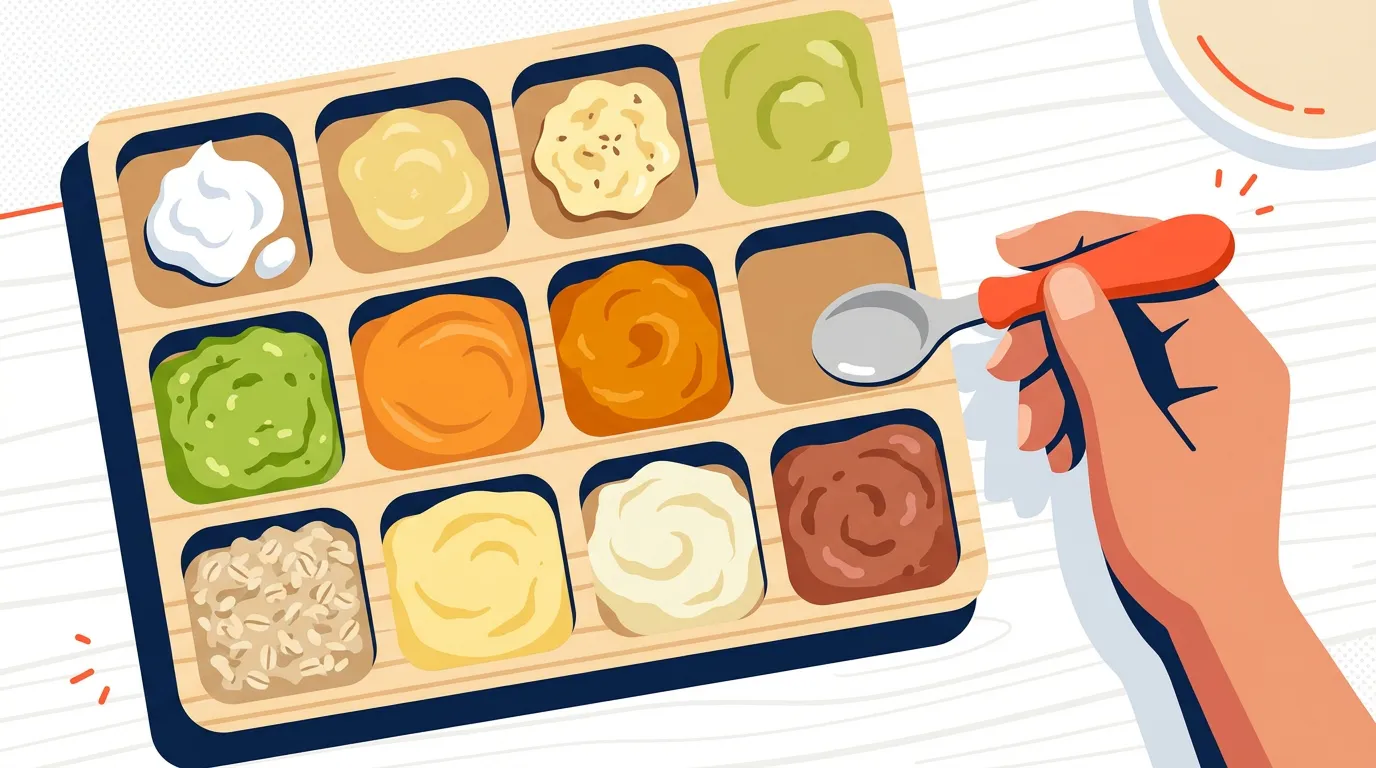
The safest useful choices are not loose pantry fillers. They are smooth foods placed in shallow smears. Every option below is conditional: use it only if the child already eats that ingredient and texture.
| Food-based option | What it feels like | What to check | Typical cost |
|---|---|---|---|
| 1. Plain unsweetened yogurt | Cool, creamy, easy to tint | Dairy tolerance; use pasteurized yogurt | Low if taken from a food already in the refrigerator |
| 2. Unsweetened applesauce | Slippery and thin | Choose smooth sauce with no chunks | Low |
| 3. Mashed ripe banana | Sticky and thick | Mash until no firm pieces remain | Low |
| 4. Smooth avocado mash | Soft and buttery | Use promptly; it browns quickly | Low to moderate, depending on local price |
| 5. Sweet potato purée | Dense and velvety | Cool fully and leave unseasoned | Low |
| 6. Pumpkin or squash purée | Silky and loose | Use plain purée, not sweetened pie filling | Low |
| 7. Smooth oatmeal | Warm-looking, grainy-soft | Cool fully; oats must already be tolerated | Low |
| 8. Soft polenta or grits | Thick with a fine grain | Cook fully, cool, and remove lumps | Low |
| 9. Plain mashed potato | Fluffy and moldable | Keep smooth; avoid unsuitable salt or additions | Low |
| 10. Smooth bean purée | Creamy and substantial | Beans must be fully cooked, blended, and familiar | Low |
Do not turn these into a mixed bin with whole berries, cereal pieces, dry rice, uncooked beans, seeds, nuts, popcorn, grapes, hard raw vegetables, or spoonfuls of nut butter. The CDC lists small, hard, sticky, and round foods among choking hazards and recommends preparing foods to the right shape, size, and texture for the child’s development. Review the CDC choking-hazard list.
Match the setup to age and feeding experience
About 6 to 11 months
Use one familiar smooth food, a thin smear, and the child’s usual upright feeding seat. Keep the session to a few minutes. This age range is not permission by itself: readiness and the child’s established feeding skills matter more than the calendar.
Do not introduce a potentially allergenic food through messy play. Skin contact is not a substitute for a planned oral introduction, and spreading a new food across the face and hands makes the amount and timing hard to track. The CDC recommends introducing single-ingredient foods one at a time at first and discussing peanut introduction with a clinician for babies with severe eczema or egg allergy.
12 months and older
A one-year-old may already know more foods and tolerate a slightly thicker smear, but the same boundaries remain: familiar ingredients, tiny portions, an upright position, and an adult close enough to intervene. Mobility creates a different practical problem. Once a toddler starts trying to climb out or walk away with covered hands, the session is over.
Run one short session without turning it into a performance
Plan for 5 to 10 minutes, but follow the child rather than a timer. Place one or two colors on the tray. Touch a fingertip to the mixture and make one slow line. Then pause. There is no need to demonstrate a flower, handprint, or finished picture.
You can describe what happens without quizzing:
- ‘The purple smear is cold.’
- ‘Your finger made a long line.’
- ‘The banana sticks to your hand.’
End the activity if the child repeatedly takes large mouthfuls, coughs, struggles with the texture, becomes distressed, or tries to leave the seat. If breathing is affected, the child becomes limp or blue, or you suspect choking or a severe allergic reaction, seek emergency help immediately and follow the emergency plan provided by the child’s clinician.
Allergy, paint, and hygiene boundaries
A food is not risk-free because it is edible. Hives, swelling, vomiting, coughing, wheezing, trouble swallowing, or sudden unusual distress after contact with food can signal a reaction. The AAP notes that food-allergy symptoms can involve the skin, breathing, digestive tract, or circulation. AAP guidance on food-allergy symptoms.
‘Non-toxic’ craft paint is a separate category. Poison Control explains that art products should be used according to their labels and that swallowed products can still irritate the mouth, stomach, skin, or eyes. If a child mouths commercial paint, keep the container and contact Poison Control in the United States at 1-800-222-1222 or use webPOISONCONTROL for product-specific advice. Poison Control: safe use of art products.
For food hygiene, portion the play material before the family meal, keep it cool until use, and discard everything that reached the tray. Do not scrape it back into a jar or save it for another session. Wash hands before and after, clean beneath fingernails, wipe the chair and floor, and keep pets away. Children under 5 are more likely to become seriously ill from foodborne germs, so a play tray deserves the same clean-hands rule as a meal.
How to spend less and waste less
A baby does not need a kit. One tablespoon of a food already being prepared is enough. Set it aside in a clean cup before seasoning or serving. Use the high-chair tray instead of paper, and add a second color only when the first setup is comfortable. Total active preparation is usually under five minutes; cleanup often takes longer than the painting.
If using food for play does not fit your budget, values, or household routine, skip it. For a child who still mouths materials, ordinary mealtime exploration offers similar opportunities to touch and smear. For older children who reliably keep art materials out of their mouth, follow the age label on washable children’s paint. For more non-food options arranged by developmental stage, see Sensory Play by Age. If the child is ready for crayons, paper, and glue-based projects, the art and craft activity guide for 1- and 2-year-olds is the more appropriate next step.
Frequently asked questions
Is edible paint safe for a 6-month-old?
Only when the baby has already started complementary foods, shows feeding readiness, sits upright with the support they normally use for meals, and already eats the chosen smooth ingredient. Six months is an approximate starting point for solids, not an automatic green light for sensory food play.
Can I use food coloring?
You do not need it. Familiar fruit and vegetable purées provide enough visual contrast. Avoiding extra coloring also keeps the ingredient list shorter, which is useful when the aim is a simple, familiar setup.
Can I make edible paint with flour?
Do not use uncooked flour or a raw flour paste. The FDA advises that raw flour may contain harmful bacteria and should not be eaten or used for children’s dough play before cooking. A ready-to-eat smooth food is simpler.
How long can baby paint stay out?
Make only what the session needs and discard it immediately afterward. General food-safety guidance allows up to two hours for many perishable foods at room temperature, or one hour above 90°F/32°C, but a mouthed and hand-mixed play tray should not be treated as a clean leftover.
What is the cheapest base?
The cheapest practical choice is usually a teaspoon or tablespoon of a familiar food already being served, such as applesauce, oatmeal, or mashed sweet potato. Do not buy ten ingredients to recreate the comparison table; choose one that already belongs in the child’s diet.
Sources and review notes
This article was checked in July 2026 against current public guidance. Key references include:
- CDC: introducing solid foods (April 14, 2026)
- CDC: choking hazards (March 11, 2026)
- FDA: handling flour safely
- American Academy of Pediatrics: food allergies in children