30 Screen-Free Activities for 2-Year-Olds and Independent Play

A screen-free afternoon does not require thirty activities. It requires one workable choice at the right moment: books when a child needs quiet, a ball when they need movement, or a familiar basket activity when a caregiver needs to fold laundry nearby.
This guide gives you 30 options, but its more useful job is helping you choose among them. It also separates independent play from unsupervised play. At age 2, independence means the child leads a safe activity while a responsible adult remains available and supervises in a way that fits the material and setting.
Choose by energy, mess, and the supervision you can provide
| Situation | Good first choices | Setup | Supervision |
|---|---|---|---|
| You need a quiet few minutes nearby | Board books, nesting cups, large blocks, stuffed-animal care | Under 2 minutes | Caregiver nearby in a childproofed space |
| Your child is restless | Ball roll, tape path, toy delivery, freeze dance | 1-3 minutes | Active visual supervision; closer for climbing or outdoor play |
| Your child wants to use their hands | Chunky puzzle, crayons, paper collage, sock match | 2-5 minutes | Nearby for large age-rated toys; direct for art materials |
| You can handle some cleanup | Play dough, washable paint, toy wash, water painting | 5 minutes | Direct; arm’s reach for water |
| You have no activity supplies | Cardboard box, towel basket, marching, pretend cooking | Under 2 minutes | Depends on the space, not the price |
Prepare a space where most answers can be yes
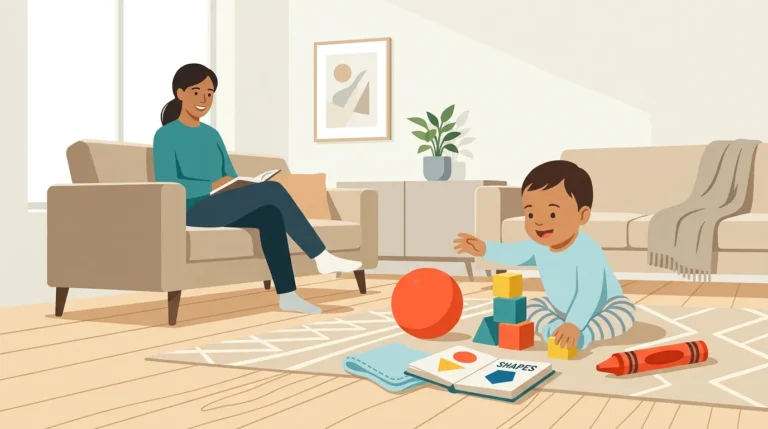
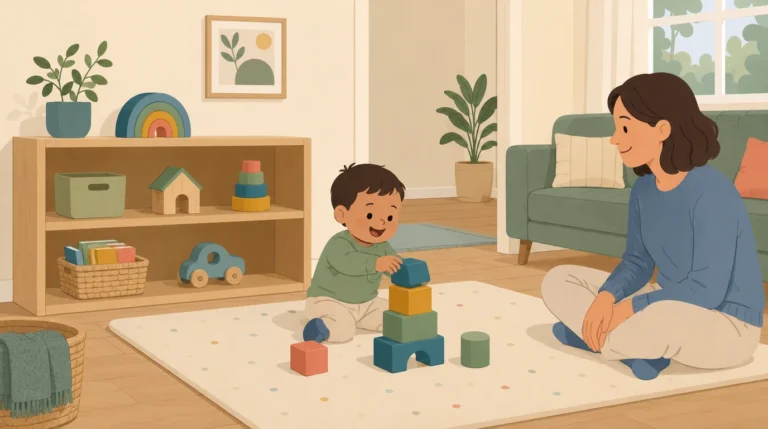
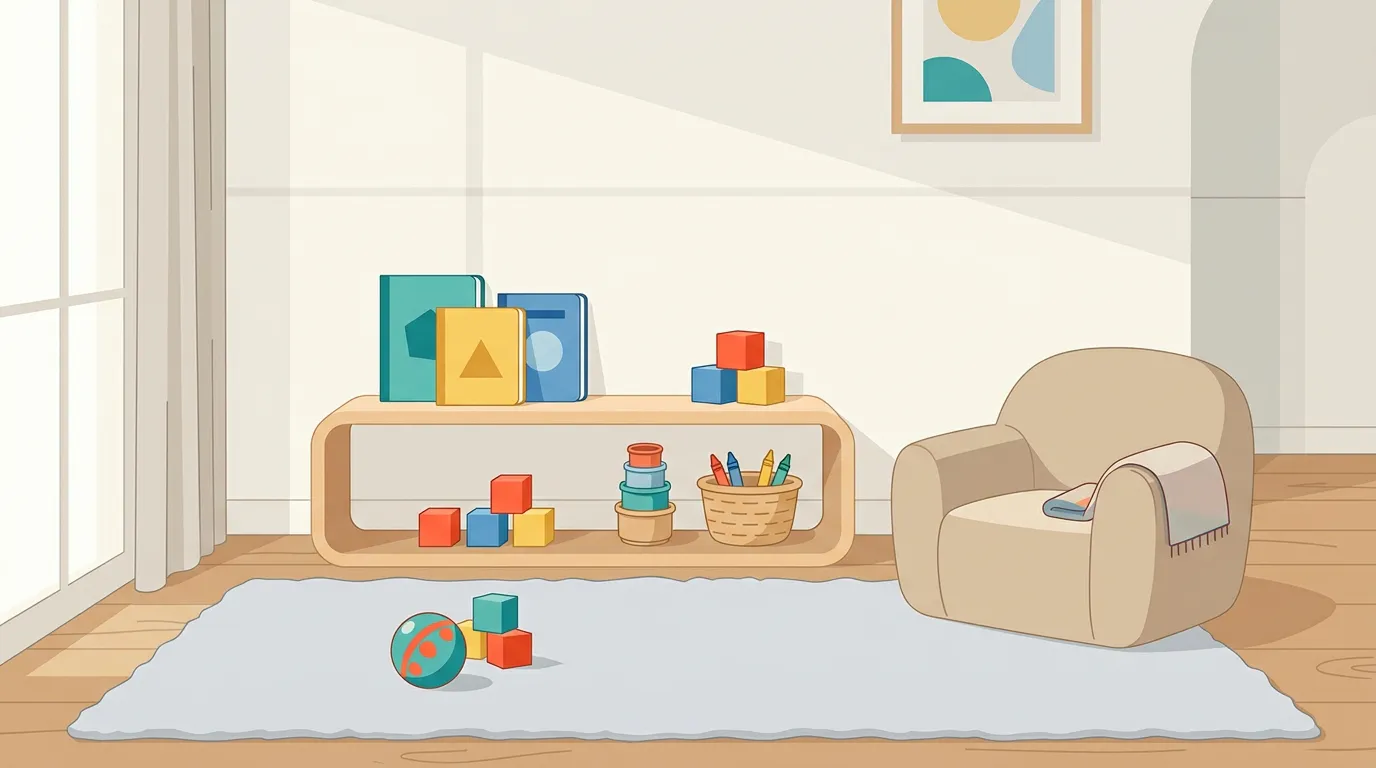
Independent play is easier when a child can reach a small number of safe materials without climbing furniture, opening adult storage, or asking for help every few seconds. A floor-level basket with two board books, nesting cups, and a few large blocks is enough.
Before stepping back, check:
- Small objects, damaged toys, loose batteries, magnets, coins, and older siblings’ toys are out of reach.
- Furniture and televisions are anchored; cords, blind strings, medications, cleaning products, stairs, windows, and water are inaccessible.
- The child cannot enter a kitchen work zone, bathroom, balcony, driveway, garden, or another area that needs closer supervision.
- Every toy follows its age guidance and is intact. Products intended for children under 3 must not contain or release small parts under U.S. safety rules. CPSC toy safety FAQ.
The CPSC warns that determined toddlers can defeat some child-safety devices and that no device is completely childproof. It also recommends anchoring furniture, televisions, and appliances to reduce tip-over risk. CPSC childproofing guide. Childproofing supports supervision; it does not replace it.
10 dry, low-prep activities for caregiver-nearby play
- Board-book basket. Offer two to four sturdy books. The child can turn pages, point, or narrate. Setup: 1 minute. Next step: rotate one title, not the whole basket.
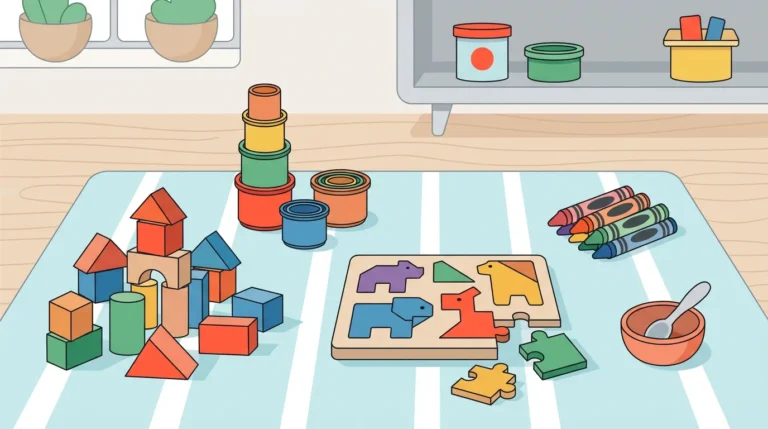
- Large block build-and-knock. Put out six to ten age-rated blocks. Build one short tower only if the child needs a starting idea. Setup: 1 minute. Mess: low.
- Nesting cups. Begin with three cups for stacking, hiding, and putting inside one another. Next step: add the rest of the set.
- Chunky knob puzzle. Remove one or two large pieces and invite the child to replace them. Use a puzzle rated for the child’s age and inspect knobs for looseness.
- Large cardboard box. Use it as a garage, bed, boat, or empty container. Remove staples, plastic, cords, and loose tape; discard it when damp or damaged.
- Large-vehicle parking. Put two large toy vehicles beside painter’s-tape parking spaces. Next step: add one short road. Vehicles must be age-rated and too large to create a small-parts risk.
- Clean washcloth basket. Carry, stack, fold loosely, or move washcloths between two baskets. This is a good option when you need almost no reset.
- Stuffed-animal care. Offer one stuffed animal and a small blanket for tucking in, carrying, or pretend feeding with an empty cup. Inspect seams and attached features.
- Shape sorter. Start with two shapes and the container. Add another after the action is understood. Let the child turn the pieces rather than positioning every one for them.
- Pretend kitchen. Set out two sturdy bowls, a large spoon, and one age-rated toy food item. The child can stir, serve, and wash up without real food or water.
These activities are not automatically safe while an adult cooks. Hot food, knives, appliance cords, open ovens, and climbing access make the kitchen a different supervision environment. Put the play area outside the work zone and pause the task if the child needs help.
10 art and sensory activities for direct supervision
These are screen-free, but they are not independent in the sense of an adult doing something elsewhere. Art supplies, water, dough, adhesives, and DIY materials need closer attention.
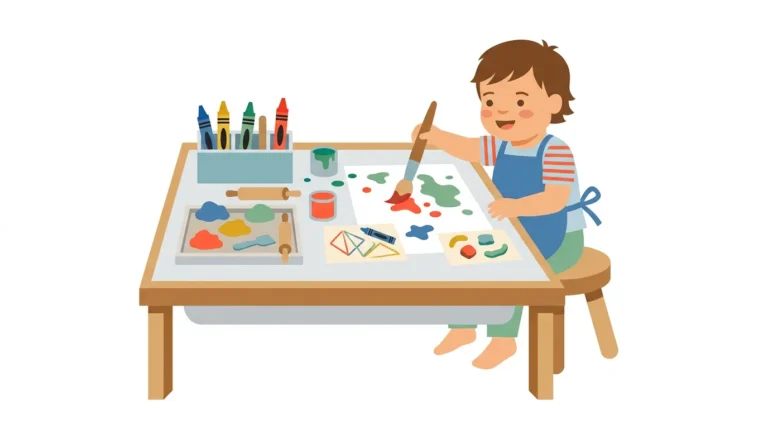
- Chunky crayons on large paper. Offer three washable, age-appropriate crayons. Tape the paper to a table or floor so it stays put. Remove broken pieces.
- Large stickers. Partly peel one edge and place only a few stickers on the table. Stop if the child mouths them; sticker backing and small pieces need direct cleanup.
- Paper tear and glue-stick collage. Use broad paper scraps and a child-appropriate glue stick. The process is tearing and pressing, not making a recognizable picture.
- Washable stamp painting. Use one or two colors and a large stamp designed for young children. Count tools before and after.
- Play dough with large tools. Press and roll a small amount with one large cutter or rolling tool. Non-toxic does not mean edible; stop repetitive mouthing.
- Texture cloth tray. Offer intact felt, a washcloth, and smooth cotton large enough for the child. Remove fabric with loose threads, beads, buttons, or decorations.
- Sound basket. Tap a wooden spoon on a metal bowl, shake a manufacturer-sealed age-rated instrument, and crinkle fabric. Do not improvise a shaker with loose beans or rice.
- Water painting. Use a wide brush and a small cup on cardboard or a suitable patio. Keep the child within arm’s reach and empty the cup immediately.
- Toy wash. Put a little water in a shallow stable dish with two washable toys and a cloth. Stay within arm’s reach; empty and store the dish when finished.
- Large-ice tracks. Slide one large block of plain ice across a rimmed tray. Prevent biting, remove small broken pieces, and stop if hands become uncomfortable.
For more hand-focused options that do not duplicate this list, see 20 fine motor activities for 1- and 2-year-olds. For projects with paper, paint, and glue, use the separate art and craft guide.
10 movement and everyday-life activities
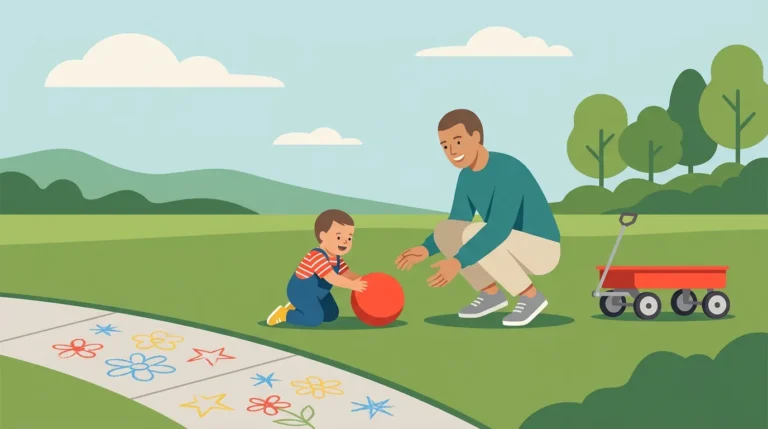
- Large-ball roll or kick. Roll across a clear floor or kick toward a wide target outdoors. There is no score to keep.
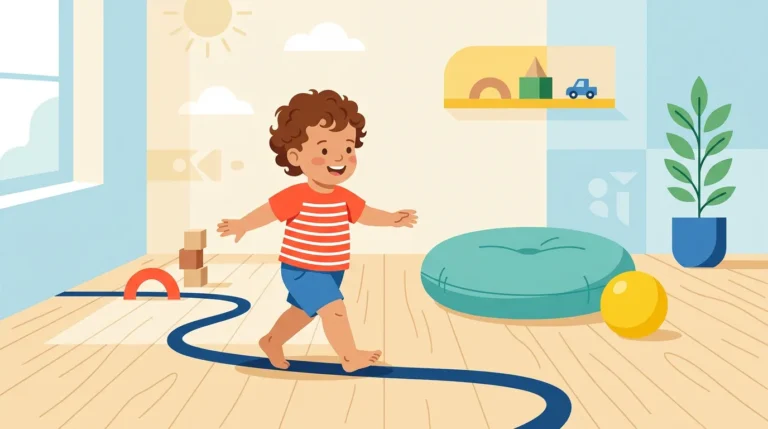
- Tape path. Follow one straight line, step over it, or park a vehicle beside it. Add one curve only after the simple version works.
- Rolled-sock toss. Throw clean rolled socks into a nearby laundry basket, then squat to collect misses.
- Freeze dance. Dance to part of one familiar song and pause. Let the child keep moving if stopping turns the game into a conflict.
- Toy delivery. Carry three large toys from one basket to another. Next step: add a tape line to cross.
- Low obstacle route. Walk around a cushion and step over a towel on a clear floor. Do not stack cushions or invite furniture climbing.
- Water one plant. Carry a small cup to one plant outdoors. Keep larger water containers inaccessible and empty them after use.
- Color walk. Find one safe example of a chosen color on a short walk. The child can point; no object collection is required.
- Carry towels to a basket. Two small towels make a real but manageable household contribution. Dropping or unfolding them is part of the process.
- Wipe a low table. Use a damp cloth and plain water. Keep cleaning products locked away. Treat this as participation, not a cleaning standard the child must meet.
For larger indoor and outdoor movement progressions, visit 25 gross motor activities for toddlers. For nature, weather, water, and nearby outing ideas, use 35 outdoor activities for 1- and 2-year-olds.
Build independent play without pretending there is a magic number
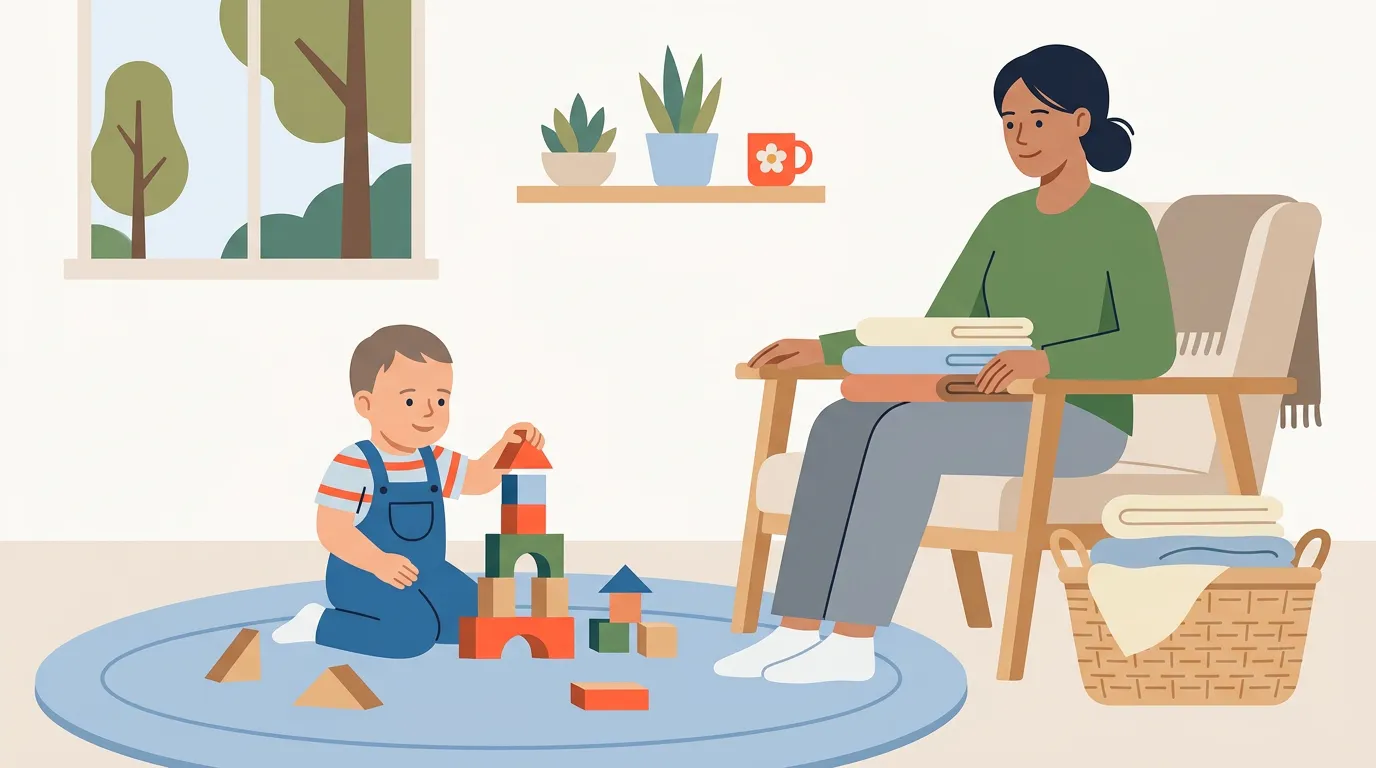
A toddler may play for several minutes, return for reassurance, then go back. That back-and-forth is normal. Do not measure success by reaching a social-media promise of 20, 30, or 60 minutes. There is no universal independent-play duration for a two-year-old.
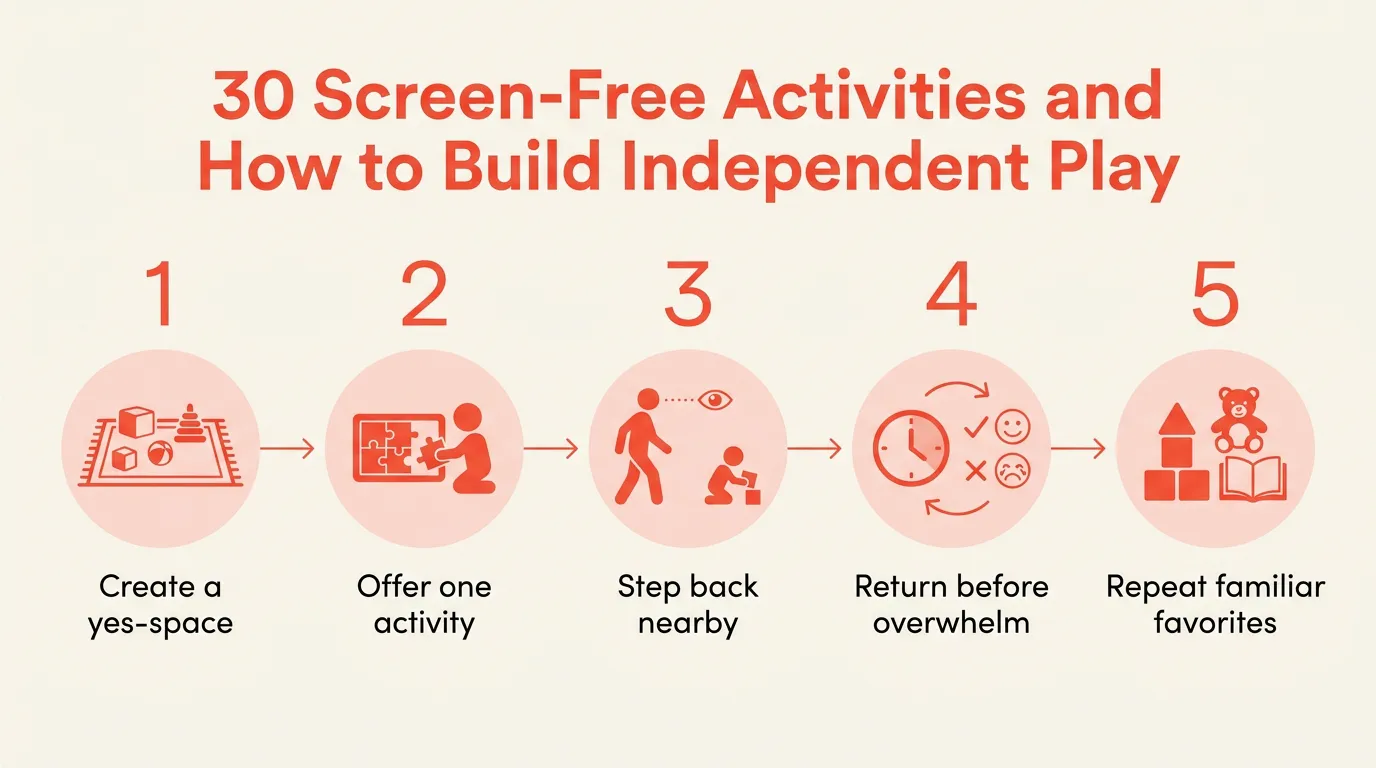
- Connect first. Join for one book, one block tower, or a short pretend exchange.
- Offer one invitation. ‘The cups are here while I fold these two towels.’ One activity is clearer than a roomful of options.
- Stay visible and available. Do a nearby task that can be stopped. Glance up and respond when the child seeks contact.
- Reduce commentary. A pause does not require a new suggestion. Let repetition and silence remain part of play.
- Return before the situation falls apart. Notice something concrete: ‘You put every cup in the basket.’ Then reconnect or reset.
Repeat the routine at a predictable anchor—after breakfast, before lunch, or while folding a small load of laundry. Extend naturally only when the child is comfortable. Hunger, fatigue, illness, temperament, a new setting, and a difficult activity can shorten play on any day.
The AAP describes child-led, unstructured play and simple materials such as blocks, empty containers, wooden spoons, shape sorters, and puzzles as valuable for ages 1 to 3. Adult presence and attention matter more than fancy electronics. AAP: The Power of Play.
Respond to screen requests without making screens morally bad
A request for a video can mean the child wants the video. It can also appear when they are tired, hungry, dysregulated, unsure how to begin, or seeking connection. You do not need to diagnose the motive before setting a calm boundary.
‘The tablet is finished. You can choose the books or the ball.’
Acknowledge, state the limit once, and offer one or two visible alternatives. Avoid listing ten activities or promising a more exciting replacement. If the child is genuinely exhausted or hungry, meet that need rather than insisting they learn to tolerate boredom in that moment.
Use the current guidance, not only an old slogan
The CDC’s May 2026 two-year milestone page advises no more than one hour a day of a children’s program with an adult present. CDC milestones and parenting tips. The AAP’s January 2026 policy adds important context: family media decisions should also consider the child, content quality, caregiver involvement, commercial and engagement design, and what media displaces. Higher-quality educational content may support learning for some preschoolers, especially with a caregiver; heavy solo, noneducational use is associated with less favorable developmental and sleep outcomes, though much of the evidence is observational rather than proof that screens alone caused an outcome. AAP 2026 digital ecosystems policy.
A practical toddler media check uses the AAP’s 5 Cs:
- Child: How does this child react before, during, and after media?
- Content: Is it age-appropriate, high quality, and free from disturbing or manipulative material?
- Calm: Is a device becoming the only way to handle every hard feeling?
- Crowding out: Is media replacing sleep, movement, meals, conversation, reading, or play?
- Communication: Are adults co-viewing when possible and using clear, consistent boundaries?
Turn off autoplay, keep tablets and phones in adult storage rather than open child access, choose the content before handing over a device, and use a consistent endpoint such as one episode. The AAP notes that autoplay and endless feeds can make disengaging harder.
Create a small weekly rotation without buying more toys
Choose five dependable categories:
- one book or quiet basket;
- one building or puzzle option;
- one directly supervised art or sensory activity;
- one movement option;
- one household participation task.
Keep only the next few choices visible and store the rest. Rotate when interest has faded, not on a rigid schedule. Before returning an item, inspect it for cracks, loose parts, torn seams, leaking batteries, and missing pieces.
Open-ended materials can cost little or nothing. NAEYC notes that cardboard, blocks, water, paint, and dough can be used in many ways, but material selection still has to match the child’s age and behavior. NAEYC on open-ended materials. A toy does not need lights, sounds, or a single advertised learning outcome to be useful.
Frequently asked questions
How do I entertain a 2-year-old without a screen while I get something done?
Choose a familiar dry activity in a childproofed space and do a nearby task that you can stop, such as folding a few towels. Connect first, offer one invitation, and remain visible and responsive. Do not use water, art supplies, small pieces, food, or outdoor play as a distraction while your attention is elsewhere.
How long should a 2-year-old play independently?
There is no universal target. Start with a comfortable interval and a familiar activity. Returning to the adult after a few minutes is normal. Build predictability before duration.
What works for a child who abandons every activity?
Reduce the setup to one action: put cups in a basket, knock down blocks, roll a ball, or carry two towels. Match high energy with movement and tired moments with books or connection. A two-minute activity is not a failure.
Should I get rid of screens completely?
That is a family decision, not a requirement of this article. Current guidance supports firm limits, high-quality content, caregiver involvement, and protecting sleep, movement, conversation, meals, and play. Screen-free activities are tools for balance, not a reason to shame a child or caregiver.
Can household chores count as play?
Yes, when they are safe, optional invitations: carrying towels, matching obvious socks, wiping with plain water, or caring for a doll. Keep cleaning chemicals and adult tools locked away and expect the process to be slow and imperfect.
Sources and review notes
Media, play, and home-safety guidance was reviewed in July 2026. Key references include:
- American Academy of Pediatrics: Digital Ecosystems policy (January 20, 2026)
- CDC: milestones and parenting tips at age 2 (May 15, 2026)
- CPSC: childproofing your home
- NAEYC: open-ended materials (2022)